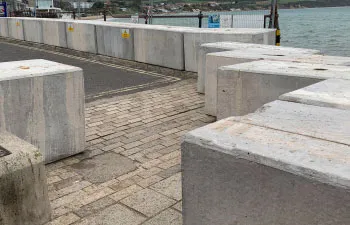
Durlston Country Park
Dorset Nature Reserve
A coastal paradise
Just a mile south of Swanage, Durlston is where the town gives way to open sea, sky, and one of the most remarkable stretches of the Dorset coast.
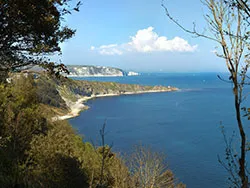
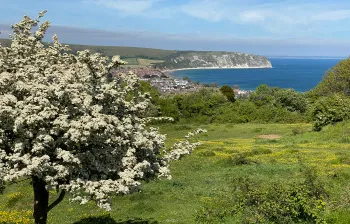
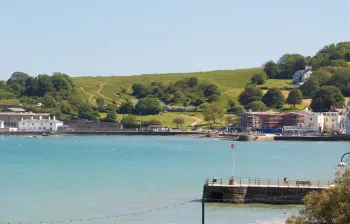
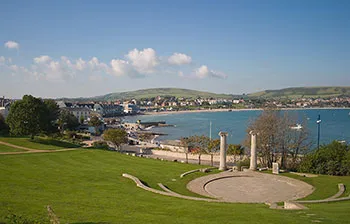
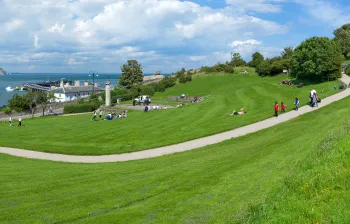
Durlston Country Park sits on the south-eastern corner of the Isle of Purbeck, overlooking the English Channel from the high cliffs of Durlston Head. It forms part of the Jurassic Coast World Heritage Site and the Dorset National Landscape (formerly the Dorset Area of Outstanding Natural Beauty), and the whole reserve is designated a National Nature Reserve, a recognition reserved for the country's most important wildlife sites. Within its boundaries you'll find dramatic sea cliffs, coastal limestone downland, ancient hay meadows, hedgerows and pockets of woodland, all knitted together by a network of well-marked trails.
The park was established in the 1970s by Dorset County Council as the county's first country park, on land that had been a Victorian recreation ground before that. Decades of careful management by the Durston ranger team have turned a former semi-industrial quarrying landscape into a site of national wildlife importance. Entry to the park, the castle and all the exhibitions is free; you simply pay to park, or walk up from the town.
Spring
Downland wildflowers, returning seabirds, and the first orchids on the cliffs.
Summer
Meadows full of butterflies, nesting guillemots, and dolphins offshore.
Autumn
Migrant birds gather on the clifftops; quieter trails and clear sea views.
Winter
Bracing coastal walks, dramatic seas, and a warm café in Durlston Castle.
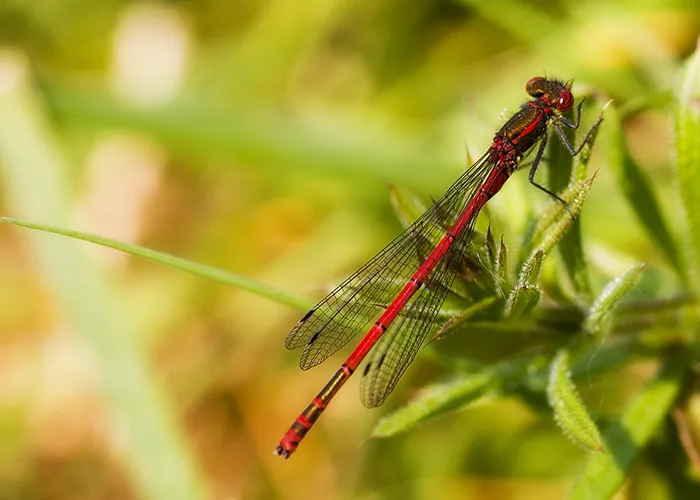
A National Nature Reserve
Abundant wildlife
Few places in Britain can match Durlston for the sheer diversity of life packed into a small area. More than 250 species of bird have been recorded here, alongside 33 species of breeding butterfly and over 500 kinds of wildflower, the bare statistics only hint at the thousands of species that have been found across the reserve over the years.
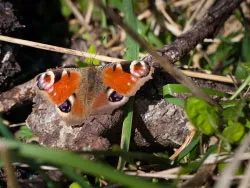
The coastal grassland and sea cliffs make this one of the best places in the country for wildlife watching. In spring and summer the cliffs come alive with nesting seabirds, guillemots, razorbills, shags and herring gulls, while the meadows fill with butterflies including the prized Adonis Blue, and the grassland is studded with rare orchids. The waters below are some of the best in Dorset for spotting bottlenose dolphins and harbour porpoises, and Durlston even has its own Dolphin Watch hut where you can learn more about the marine life offshore.
A video camera fixed to the cliff opposite the main guillemot colony beams live pictures back to the visitor centre, so you can watch the seabirds up close whatever the weather. Look up, too, peregrine falcons hunt along these cliffs, and the clifftops are an important resting point for migrant birds in spring and autumn.
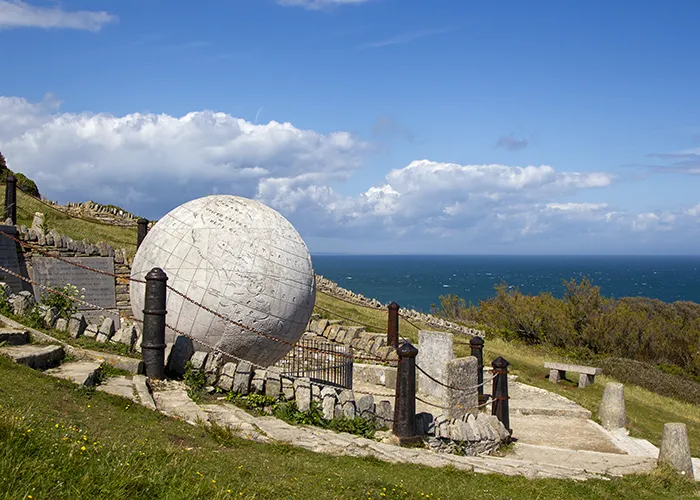
A Victorian legacy
The Great Globe & Durlston Castle
Durlston's most famous landmarks are the legacy of George Burt, a Victorian entrepreneur known locally as the "King of Swanage." Burt bought the Durlston estate in 1863, then a rough, treeless landscape pitted with old stone workings and set about transforming it into a destination that would draw holidaymakers up from the town.
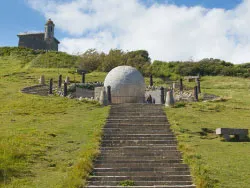
The Great Globe sits on a terrace below the castle, reached by a long flight of steps. Carved from Portland limestone at the Mowlem company's Greenwich works in 1887, it weighs around 40 tons and measures ten feet across, engraved with an 1880s map of the world. Surrounding it are stone tablets inscribed with poetry, facts and figures about the planet, Burt's characteristic blend of education and spectacle. (His business partner's founder, John Mowlem, was himself a Swanage-born stonemason.)
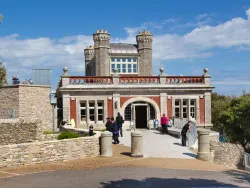
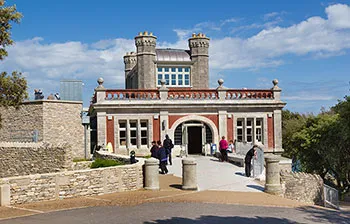
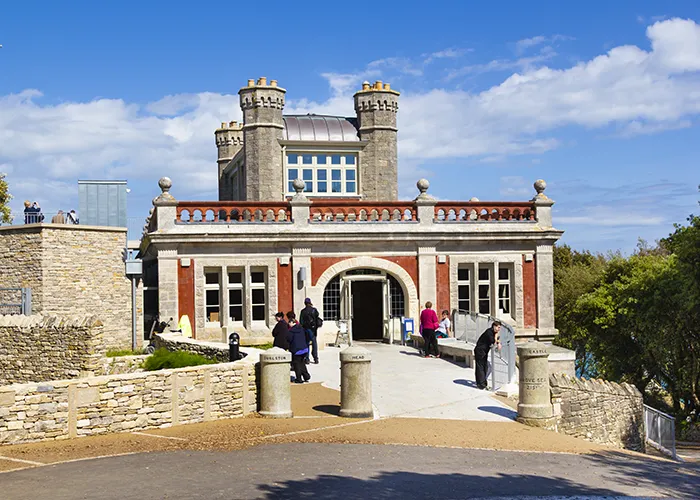
Above stands Durlston Castle, completed around 1891. Despite the name it was never a fortress, Burt built it as a restaurant and the centrepiece of his estate. Sympathetically restored in 2011, it now houses a free visitor centre with interactive displays, a fossil room, the Fine Foundation Gallery of changing art exhibitions, live wildlife cameras, a rooftop terrace, and the seventhwave café and restaurant. A ranger is always on hand to help you make the most of your visit.
Stone & industry
Quarrying & Tilly Whim Caves
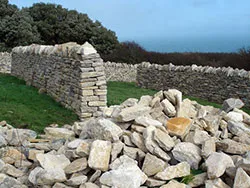
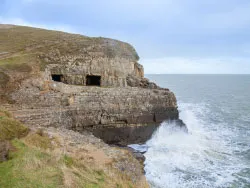
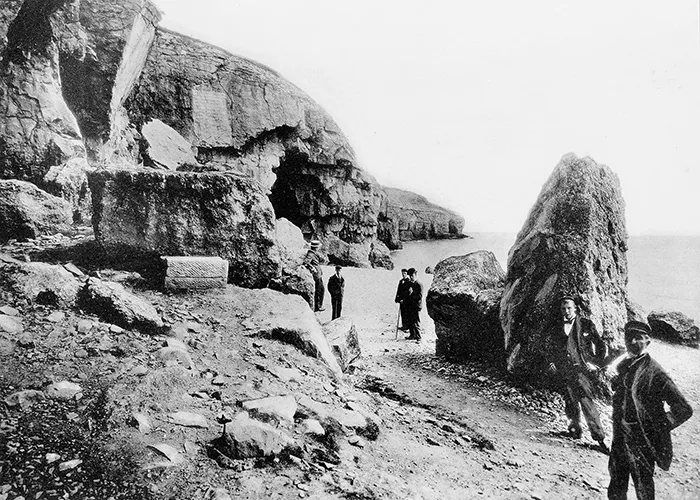
Long before it was a nature reserve, this was a working landscape. Stone has been quarried in Purbeck since Roman times, and the "humps and hollows" still visible across Durlston's downland are the spoil heaps and shafts left behind by generations of quarrymen. The cliffs themselves were worked horizontally into the rock, and the most striking survival of that industry is the Tilly Whim Caves.
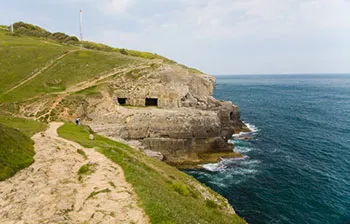
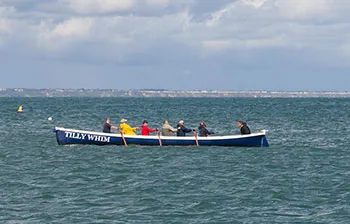
The Tilly Whim Caves are three old Portland stone quarries set into the cliff face. The name is thought to refer to a "whim," a simple timber crane used to lower finished blocks of stone directly into waiting boats below, which then carried it to the stone yards on Swanage Quay. From there, much of it was shipped to London, Purbeck and Portland stone from this coast helped build landmarks such as St Paul's Cathedral and Buckingham Palace, and fortified the south coast during the Napoleonic Wars.
The caves were last quarried around 1812. In 1887 George Burt blasted a new entrance tunnel and opened them as a tourist attraction for his estate. They were closed to the public in 1976 after rockfalls made them unsafe, and today they serve as an undisturbed roost for bats and a nesting site for seabirds, best admired from the coast path above. High on the ridge nearby you can also still find the footings of a Napoleonic signal station, built around 1795 as part of a chain of telegraph stations along the coast.
Guiding ships since 1881
Anvil Point Lighthouse
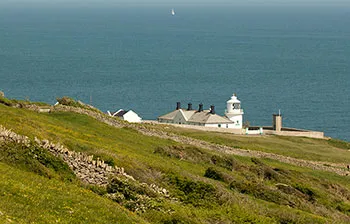
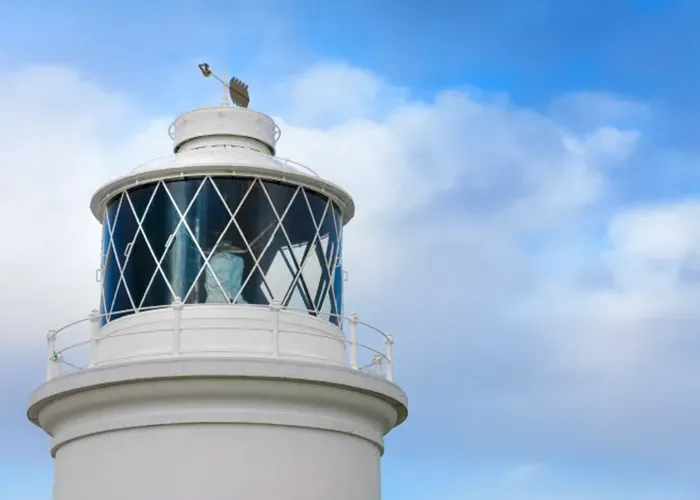
At the western edge of the park, on the headland of Anvil Point, stands a squat, white-painted lighthouse built from locally quarried stone. Completed in 1881 and designed by the Trinity House engineer James Douglass, it was opened by Joseph Chamberlain, father of the future prime minister Neville Chamberlain, in his role as a government minister. It was installed to give a waypoint for vessels passing along the English Channel, following a number of shipwrecks on this stretch of coast.
The tower is around twelve metres (40 feet) tall but sits some 45 metres above the sea, so its light reaches roughly nine nautical miles out, far enough to give a clear line west towards Portland Bill and to guide ships east away from the Christchurch Ledge and into the Solent. Its deliberately low tower keeps the light below the low cloud that often forms over the headland. The original paraffin vapour burner gave way to electric light in 1960, and the lighthouse was fully automated in 1991. The keepers' cottages, Veronica and Rowena, are now let by Trinity House as holiday accommodation.
The lighthouse is a Grade II listed building and a favourite landmark on the coast path. You can walk right up to it from the Durlston trails, and the surrounding cliffs are popular with walkers and rock climbers alike.
On foot
Trails & Walking
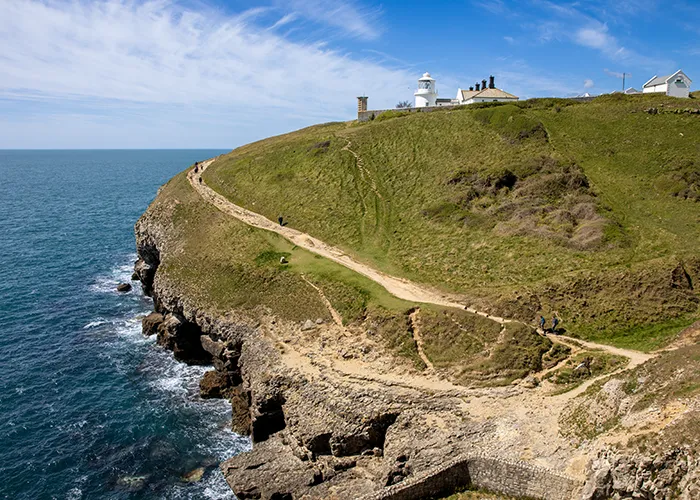
The park has an extensive, well-waymarked network of trails, all starting at or near the car park and visitor centre, so you're never far from the café and toilets before you set off. Three signposted routes form the heart of the park: the Clifftop Trail, a roughly one-kilometre circular tour of the dramatic coastal scenery (and one of the best spots in Dorset to look for dolphins); the Woodland Trail, a more sheltered route through quiet woodland; and the Wildlife Trail through the meadows and downland.
For a longer outing, the South West Coast Path runs straight through Durlston. Head west along the cliffs and the breathtaking walk to Dancing Ledge takes you past Tilly Whim Caves and Anvil Point Lighthouse, with crashing seas below and big open views the whole way. The terrain is rugged in places, so proper footwear is recommended — but much of the core park is surfaced and most paths are suitable for pushchairs.
Accessibility is taken seriously here: all-terrain Tramper mobility scooters can be hired from Durlston Castle (booking recommended), opening up the trails to visitors who couldn't otherwise reach them. The rangers also run more than 150 events a year, from guided wildlife walks and minibeast safaris to astronomy evenings and family treasure hunts.
Visiting Durlston
- Address
- Durlston Country Park, Lighthouse Road, Swanage, Dorset, BH19 2JL
- Telephone
- 01929 424443
- Official website
- www.durlston.co.uk
- Entry
- Park, castle & exhibitions free; pay-and-display car park
- Castle opening
- Apr–Oct: 10:00–17:00 daily · Nov–Mar: 10:00–16:00 daily (closed Christmas & Boxing Day) — please check ahead
- Facilities
- Café, toilets, visitor centre, gift shop, picnic areas, Tramper hire
Tips before you go
- Opening times can change with the seasons and for events - check durlston.co.uk before travelling, especially in winter
- Tilly Whim Caves are closed to the public for safety reasons; enjoy the view of them from the coast path rather than attempting to enter
- The clifftop paths are unfenced in places and can be slippery after rain - keep well back from the edge and wear proper footwear
- Tramper all-terrain mobility scooters can be hired from the castle, but booking ahead is recommended
- Bring binoculars in spring and summer for the seabird colonies and dolphin watching, and check the latest sightings board in the visitor centre
- Dogs are welcome but should be kept on a lead or under close control near wildlife and livestock, and on a lead in the castle and café - please clear up after them
References & further reading
Sources used for the wildlife, heritage and visitor information added to this page:
- Durlston Country Park - official website (visitor information, events, current wildlife sightings)
- Durlston Country Park - History (George Burt, the Great Globe, Tilly Whim, quarrying)
- Dorset National Landscape - Durlston Country Park (National Nature Reserve, habitats, seasonal wildlife)
- South West Coast Path - Durlston Clifftop Trail (trails, accessibility, seabird camera)
- Wikipedia - Durlston Country Park
- Wikipedia - Tilly Whim Caves
- Wikipedia - Anvil Point Lighthouse
- Trinity House - Anvil Point Lighthouse (history, technical details, holiday cottages)
- Visit Dorset - Durlston Country Park National Nature Reserve
- Dorset Life - Purbeck's country park (George Burt and the making of Durlston)