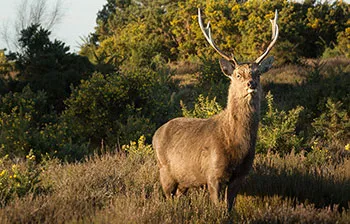
The Sika Deer
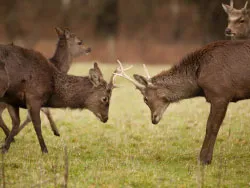
A wild herd descended from Victorian escapees, see and hear the dramatic stag rut each autumn.
About the reserve

A tiny heathland village and one of Britain's best-loved nature reserves, on a wild finger of land reaching into Poole Harbour, alive with deer, rare birds and all six native reptiles.
On a low peninsula of heath and oak woodland reaching out into Poole Harbour, about four miles east of Wareham, Arne is one of the great wildlife destinations of the Dorset coast.
The hamlet of Arne is tiny, just a scatter of houses and an ancient church at the end of a winding lane, but the RSPB nature reserve that surrounds it is famous far beyond Purbeck, regularly featured on the BBC's Springwatch, Autumnwatch and Countryfile. It is a rich patchwork of rare lowland heath, ancient woodland, farmland, reedbeds, saltmarsh and harbour-edge mudflats, and that mix of habitats packed into one peninsula makes it extraordinarily good for wildlife. Much of the surrounding land lies within the Dorset National Landscape.
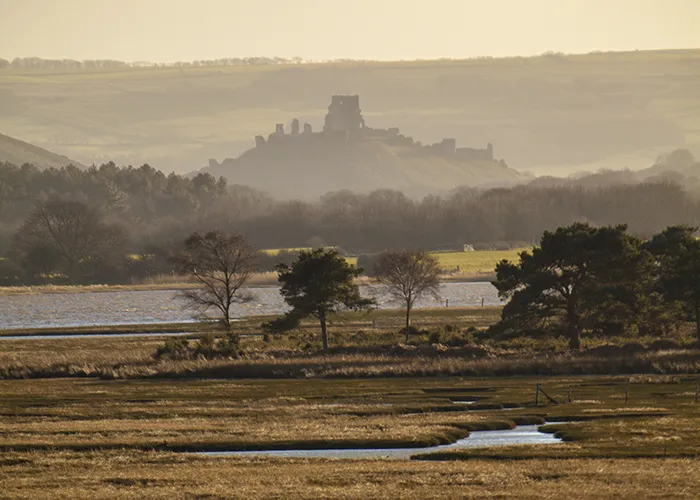
It is a place for slow exploration, for walking the trails with binoculars, watching deer melt into the heather, scanning the harbour for waders and ospreys, and soaking up some of the finest views in Dorset across the water to Brownsea Island and back towards the Purbeck Hills and Corfe Castle.
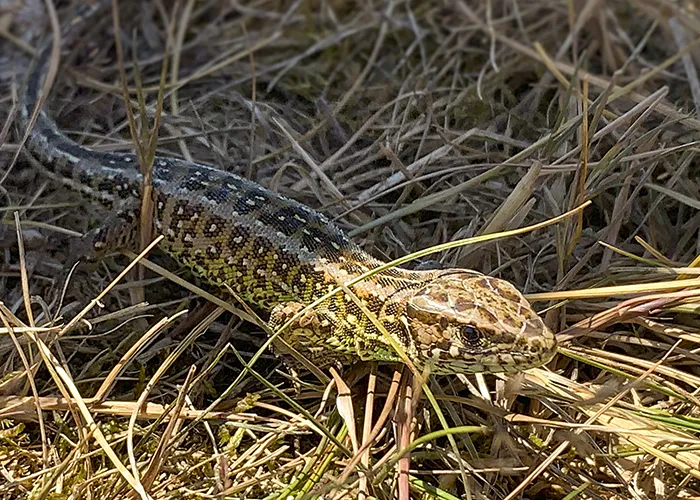
At its heart, Arne protects one of Britain's most threatened habitats: lowland heath. Once the "Great Heath" stretched across much of south-east Dorset, but only fragments survive, making places like Arne internationally important. The reserve is famous as one of the very few places in the UK where you can find all six native British reptiles, the common lizard, the rare sand lizard, the slow worm, the grass snake, the adder and the rare smooth snake.
The birdlife is the headline draw. Arne is one of the best places in the country to see the Dartford warbler, a small, dark, long-tailed bird that darts between the gorse bushes; the quiet Coombe Heath trails are the prime spot. It is also home to nightjars, whose strange churring call fills summer dusks, and to woodlarks. Beyond the birds and reptiles, look for the rare Dorset heath, the silver-studded blue butterfly, and even the spectacular ladybird spider, and more than 500 species of plant have been recorded here.
The RSPB carefully manages the heath, clearing scrub, grazing and controlling trees, to keep it open, as it has been for thousands of years, so all this specialised wildlife can thrive.
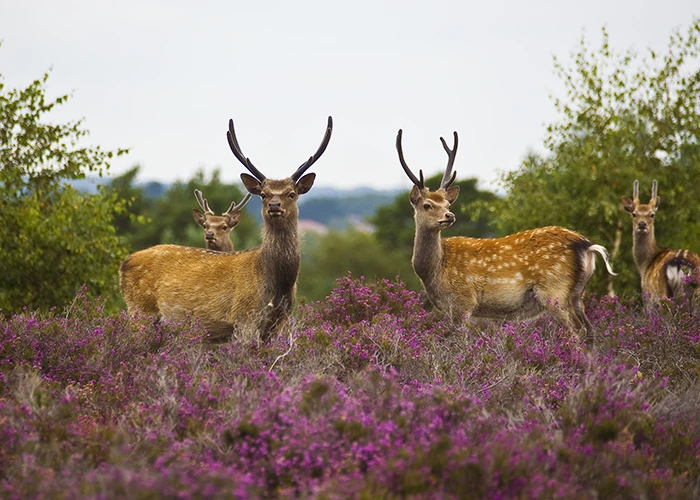
Arne's most charismatic residents are its sika deer. Originally from East Asia, they escaped from local deer parks in the 1860s and have lived wild on the heath and in the oak woods around Poole Harbour ever since. A substantial herd roams the reserve, and the great spectacle of the year is the autumn rut, when the stags bellow and clash across the heath, an unforgettable sight and sound, and a favourite of the BBC's autumn wildlife programmes.
The harbour shore brings a whole second world of wildlife. In winter the mudflats and the Middlebere Channel fill with thousands of wading birds and wildfowl, and elegant spoonbills now feed here regularly. In recent years ospreys have become a celebrated sight, pausing to fish in the harbour on migration and perching on specially provided nesting platforms, part of a wider project that has seen these magnificent raptors return to breed around Poole Harbour for the first time in centuries. Seals, too, can sometimes be spotted offshore.
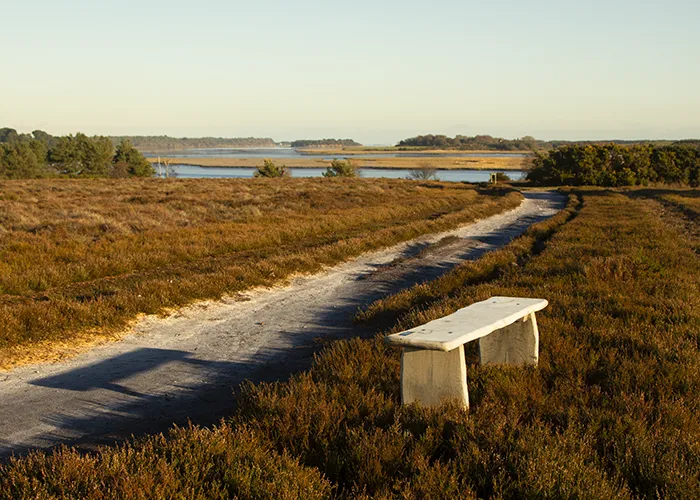
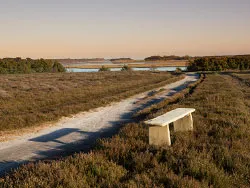
From the viewpoints and hides you look out across the water to wooded Brownsea Island, with the cranes of Poole beyond and the Purbeck Hills rising to the south, a glorious, ever-changing panorama.
Arne village has a poignant modern history. A few miles to the north-west, on Holton Heath, stood the Royal Naval Cordite Factory, a vital and vulnerable target in the Second World War. To protect it, "Starfish" decoy sites were built near Arne: networks of pipes and barrels that could be set alight at night to mimic a burning, bombed factory and lure enemy aircraft away.
The ruse worked, but at a cost to Arne. On one raid in 1942 the decoy drew the bombs so successfully that more than 200 craters were blasted across the Arne peninsula. The village was evacuated, the area was taken over for military training ahead of D-Day, and Arne never really recovered as a settlement. Most of what stands today is post-war, and the village remains a quiet hamlet.
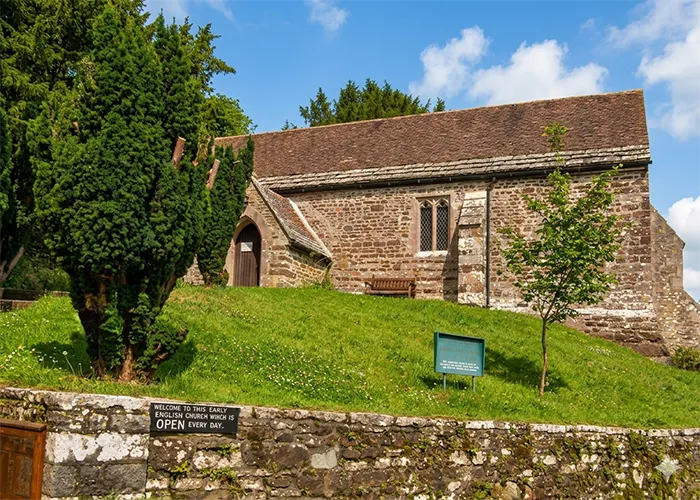
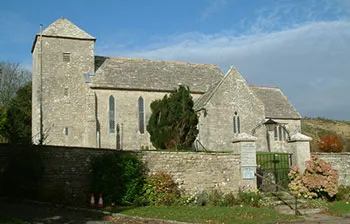
The one building to survive from far earlier is the little church of St Nicholas, a simple, atmospheric medieval church (its origins usually dated to the 12th–13th century) standing among the trees. Tiny, candlelit and without electricity, it is a moving and peaceful place, a survivor at the heart of a landscape that war and nature have both reshaped.
Arne has been an RSPB reserve since the mid-1960s and now covers more than 1,200 acres. A network of colour-coded walking trails sets out from the visitor area, ranging from short, easy, family-friendly loops to longer rambles, so there's something for every pace and ability. The trails north lead to Shipstal Point, where a path climbs a low hill to a viewpoint over the harbour and drops to a small sandy beach, passing a hide on the way. The Coombe Heath and Raptor trails to the south are quieter, crossing open lowland heath with views to the Purbeck Hills and Corfe Castle, the best ground for Dartford warblers and reptiles.
At the centre of it all is a welcoming visitor hub with a car park, shop, café and toilets, plus information on what's been seen recently and a busy year-round programme of guided walks and family events. There's no charge to walk the reserve, though there is a parking fee (free for RSPB members). Dogs are welcome on the trails on a short lead.
Allow plenty of time, bring binoculars, and go slowly, Arne rewards patience more than almost anywhere in Dorset.
There's something all year: Dartford warblers and woodlarks in spring, reptiles and nightjars in summer, the roaring sika deer rut in autumn, and vast flocks of waders and wildfowl on the harbour in winter. Early morning and dusk are best for wildlife.
What to look for on the reserve, and the best of the surrounding Purbeck countryside.
A wild herd descended from Victorian escapees, see and hear the dramatic stag rut each autumn.
About the reserve
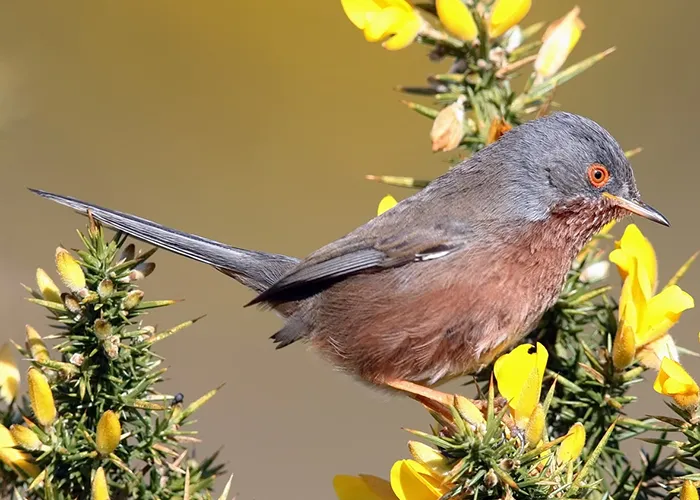
One of Britain's best places to spot this rare little heathland bird, especially on Coombe Heath.
Wildlife guide
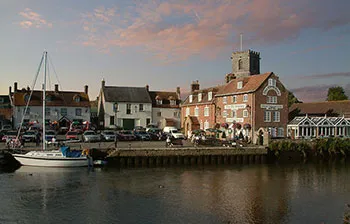
The historic Saxon walled town on the River Frome, the nearest place for shops and supplies.
Explore Wareham
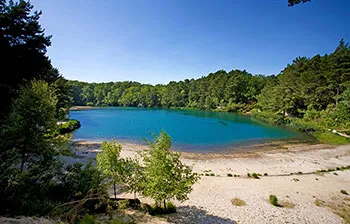
A former clay pit whose mineral waters shimmer through shades of blue and green, with woodland walks.
About Blue Pool
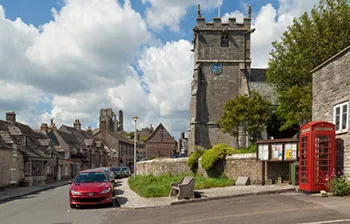
The dramatic ruined castle and stone village in the gap of the Purbeck Hills, visible across the heath.
Discover Corfe
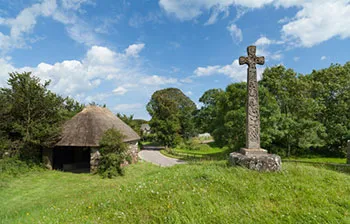
More rare heath and four miles of sandy beach on the far side of Poole Harbour.
Visit Studland
Sources used for the history, wildlife and visitor information added to this page:


.jpg)