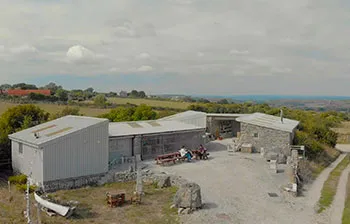
Burngate Purbeck Stone Centre
Try stone carving under expert guidance, a hands-on way to experience the quarrying tradition that built this village. 0.7 miles away.
Visit Burngate

A quiet, stone-built village two miles from Swanage, shaped by two thousand years of quarrying, with dinosaur footprints in the fields, a medieval church, ancient footpaths and one of Purbeck's best-loved coastal walks right on its doorstep.
Langton Matravers sits on the limestone plateau of the Isle of Purbeck, strung out along the road from Kingston to Swanage between the Purbeck Hills to the north and the Jurassic Coast cliffs to the south.
The name tells the story in miniature. Langton comes from the Old English for "long town", a village spread along a single road rather than clustered around a green. Matravers comes from the Norman family of Lord Mautravers, who held the manor after the Conquest, derived from the French mal traverse, meaning "bad crossing." The name hints at the difficult, rocky character of this exposed limestone country.
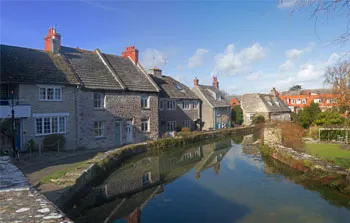
With a population of around 850, Langton Matravers is a genuinely rural village, quiet, traditional, and remarkably unchanged in its essentials. Its long main street is lined with cottages and houses of local Purbeck limestone, many of them centuries old, interspersed with dry-stone walls and small gardens. There is a parish church, a pub with a deli, a post office and village store, a small but exceptional museum, and an adventure farm. Beyond the village, the landscape opens up into one of the best walking territories in Dorset: sweeping limestone downland, ancient trackways, disused quarries, and a dramatic clifftop coast just over a mile from the village centre.
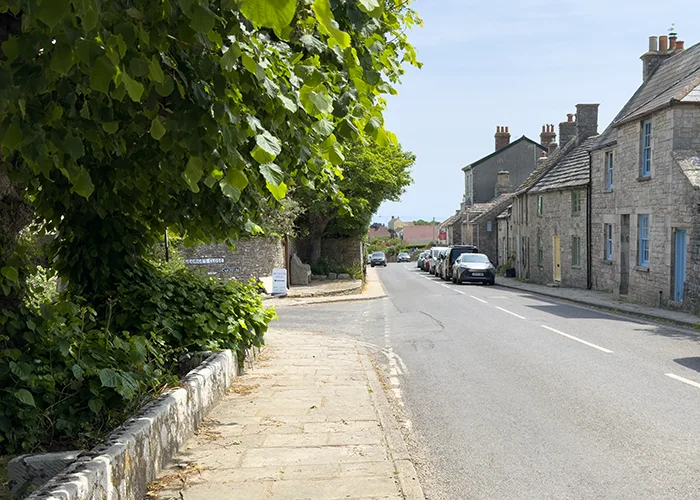
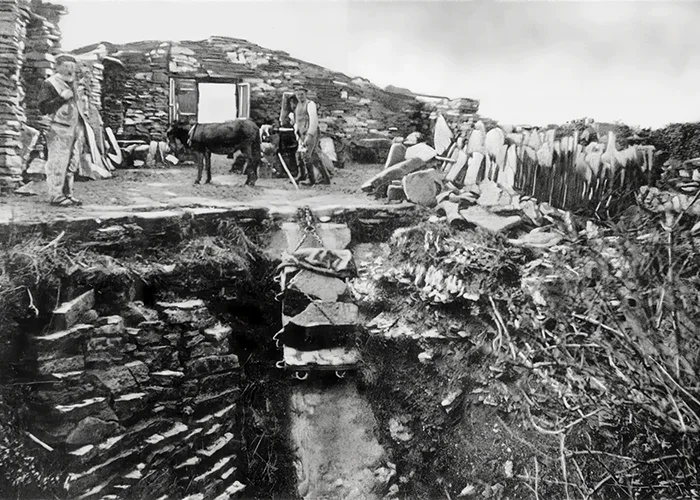
The oldest occupation in Langton Matravers was farming, but it is the stone that defines the place. The parish sits on a roughly rectangular strip of land between the sea and the Purbeck Hills, and the southern half, a treeless limestone tableland between 300 and 400 feet above sea level, has been quarried continuously since Roman times. The landscape shows it: dry-stone walls carve the fields into a patchwork, and old spoil heaps, quarry pits and mineshafts are woven into the downland as naturally as hedgerows.
Two kinds of stone have driven the local economy. Purbeck limestone, dense, hard, cream to grey in colour, has been a building material since antiquity, prized for its durability. Above it in the geological sequence lies Purbeck marble: not a true marble at all, but a limestone packed so densely with fossilised freshwater snail shells that it polishes to a deep brown-grey lustre. Purbeck marble was among the most sought-after decorative stones in medieval England, and can be found in cathedrals across the country, Salisbury, Canterbury, Winchester, Westminster Abbey, as well as dozens of parish churches across Purbeck.
The trade was controlled for centuries by the Ancient Order of Purbeck Marblers and Stonecutters, one of the oldest surviving craft guilds in England, whose customs are still observed today. The Kings Arms pub in the village has a fireplace made of Purbeck marble, and its first landlord was a member of the Ancient Order, a reminder of how deeply the quarrying culture permeated every aspect of village life.
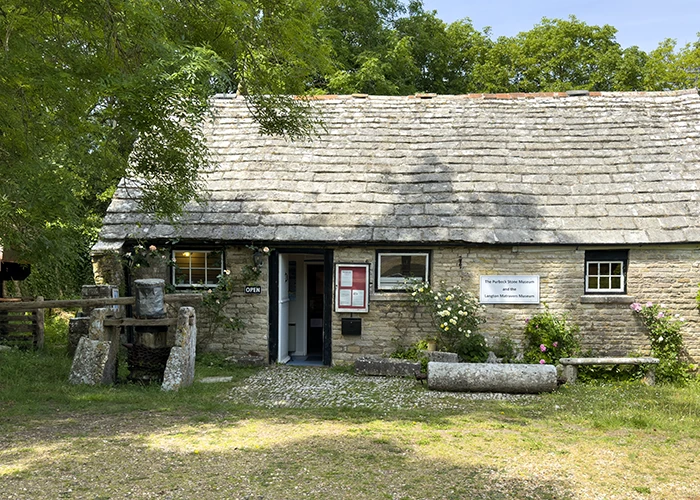
Behind the parish church of St George, tucked into St George's Close, is one of the finest small local-history museums in Dorset. Langton Matravers Museum occupies a former coach house and is run entirely by volunteers of the Langton Matravers Local History and Preservation Society. Its collection of around 25,000 artefacts is anything but small in ambition.
The museum's focus is the quarrying industry: the tools, the techniques, the social structures and the economic life that stone-cutting brought to this corner of Purbeck over two millennia. Displays cover the working of both Purbeck limestone and Purbeck marble, with archive photographs, stonemasons' tools and stone samples at different stages of dressing. Audio guides allow visitors to hear the stories in the voices of those who researched and recorded them.
The collection extends beyond quarrying to cover the full life of the parish, its farms, its church, its school, the history of Leeson House, and the village's role in smuggling (Dancing Ledge was a notorious landing point for contraband). The society has also published a substantial series of local history booklets, available at the museum or from the village post office stores, covering subjects from the Ancient Order of Marblers to the 1841 census returns and the local dialect.
Open April to September (limited hours; free entry; donations warmly received).
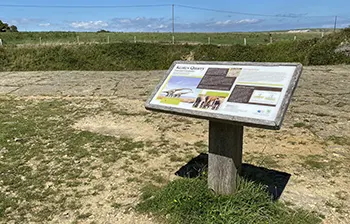
One of Langton Matravers's most surprising attractions lies in a shallow, disused quarry a short walk from the village: Keates Quarry, where over 100 fossilised dinosaur footprints are preserved in a flat layer of Purbeck limestone, discovered in 1997. The prints include tracks attributed to Megalosaurus and Iguanodon, both animals in the range of ten metres, but the most dramatic finds belong to a Diplodocus whose footprints measure a metre in diameter, evidence of a 30-metre, 30-tonne creature that walked this ground around 145 million years ago. In 1986, the first British footprints of Diplodocus were found in a Langton quarry, a discovery of national significance.
The footprints are a free, open-air attraction accessible on foot from the National Trust Spyway car park or from the village along the Priest's Way. From Spyway, follow the path south toward the sea, turn right onto the Priest's Way heading west, and continue for about three-quarters of a mile, the footprints are signposted on the right, just past the turning for Acton. Allow around 25 minutes from the car park. There are no facilities at the site, so come prepared.
The site connects naturally with the wider Jurassic Coast story: the same limestone beds that yielded the Purbeck stone of the village also contain this remarkable record of prehistoric life. Standing in a footprint left by a Diplodocus is one of those moments that makes the geology of Purbeck feel genuinely, viscerally real.
Langton Matravers is one of the best walking villages on the Isle of Purbeck. The South West Coast Path is just over a mile from the village, and the National Trust farmland at Spyway stretches south from the village edge to the clifftops above the English Channel, offering some of the most dramatic walking in Dorset with the sea always ahead of you.
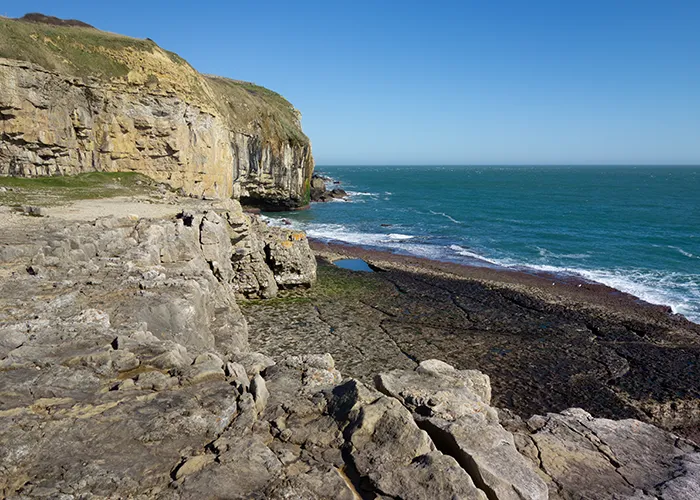
The most popular walk is south from the Spyway car park to Dancing Ledge, a broad, flat limestone platform at the foot of the cliffs reached after a superb walk through grassy hills and hay meadows. Dancing Ledge takes its name from a quirk of the tide: at certain stages, waves wash over the undulating surface and make the ledge appear to dance. Cut into the rock is a rectangular tidal swimming pool, blasted out in the early twentieth century for boys from a nearby school at Durnford House, it is still swimmable at high tide, and on warm summer days the walk down to take a dip is a Purbeck tradition. The ledge was also historically a landing point for smugglers bringing contraband ashore from Channel vessels.
The Priest's Way is an ancient track running between Swanage and Worth Matravers, passing through the heart of Langton Matravers parish. It takes its name from the medieval priest who walked this route to minister to his spread-out parishioners. Today it connects the village to the dinosaur footprints, the coast path, and the wider downland landscape stretching west toward Kingston and Corfe Castle.
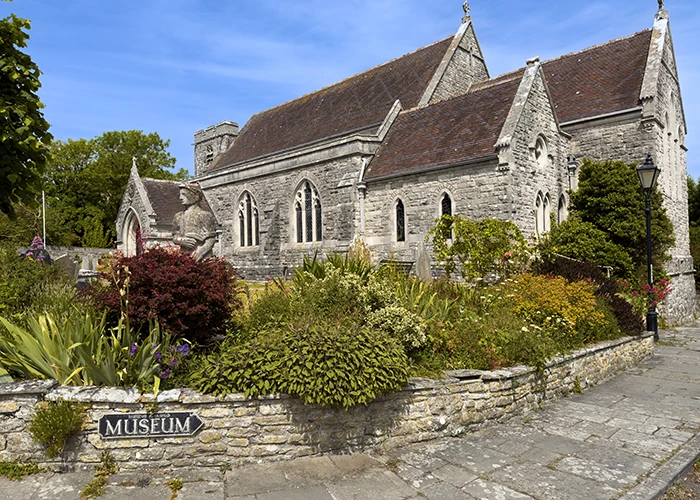
At the heart of Langton Matravers stands the parish church of St George, at least the third, and possibly the fourth, building on a site of Christian worship stretching back to the medieval period. The squat fourteenth-century tower is the oldest surviving element; the rest was substantially rebuilt in the nineteenth century after the medieval fabric was found in an unsafe condition. Outside the churchyard wall, memorial tablets commemorate local figures including Ernest William Suttle (a George Medal holder), the quarryman and poet George Hooper, and architect and historian David Lewer.
A millennium sculpture of a Purbeck quarryman by the late Mary Spencer Watson stands near the church, a fitting tribute to the industry that shaped this place. Each year the church hosts the popular St Aldhelm's Christmas Tree Festival, with trees decorated by the local community to raise money for charity. The church also hosts concerts by local choirs and forms part of the Purbeck Arts Weeks programme. A village fete takes place in the church grounds every August, and the Purbeck Folk Festival, one of the best-loved folk music events in the south of England, is held annually at a farm near the village.
The Kings Arms, built in 1743, is the village pub: a characterful Purbeck stone building with original flagstone floors, small interconnecting rooms off the central bar and a secluded rear garden. It serves traditional food alongside local beers, and the deli section offers locally produced goods and freshly baked items. On Thursday evenings the Purbeck Folk Club meets here for candlelit sessions of live folk music, open to all.
Leeson House is a Grade II listed nineteenth-century country house in the parish, now operating as a publicly funded outdoor and environmental education centre for schools and groups. The building has a varied and intriguing history: it served as a pre-preparatory school for boys until the 1960s and was subsequently used by the RAF for radar research, a quietly significant node in the history of British defence technology. The Field Studies Centre at Leeson House has published numerous booklets on the natural and social history of the local area, available at the village museum or post office.
Putlake Adventure Farm, located within the village, is one of the most popular family attractions in the Swanage area. It is a working farm where children can meet and feed the animals, take tractor rides, enjoy pedal go-karts, and explore a large indoor soft-play area, the biggest within a ten-mile radius of Swanage. There is a tearoom and a picnic area, and the farm is within easy walking distance of holiday accommodation in the village. For families, Putlake makes a natural half-day complement to a walk to Dancing Ledge or the dinosaur footprints.

The walk south from the National Trust Spyway car park to Dancing Ledge is the classic, around two miles each way, with sweeping sea views, the option to swim in the tidal pool, and a detour to the Keates Quarry dinosaur footprints en route. Start at Spyway car park off Durnford Drove, reached by turning left through Langton Matravers from the B3069.
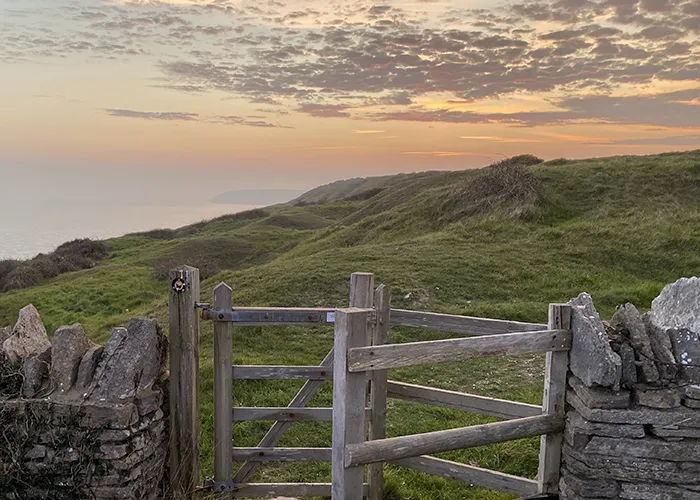
The village is a superb base for walking. Here are the main routes, from a short stroll to a half-day coast path circuit.
| Walk | Distance | Time | Difficulty | Highlights |
|---|---|---|---|---|
| Spyway to Dancing Ledge | ~4 miles return | ~2 hrs | Easy–Mod | Sea views, tidal swimming pool, smuggling history, wildflowers |
| Priest's Way to Worth Matravers | 3 miles one-way | ~1.5 hrs | Easy | Ancient track, quarry landscape, Square & Compass pub at Worth |
| Keates Quarry Dinosaur Footprints | ~2.5 miles return | ~1.5 hrs | Easy | 100+ dinosaur prints including Diplodocus metre-wide tracks |
| Dancing Ledge – Winspit Quarry loop | 5.9 miles | ~2 hrs 40 min | Moderate | Coastal drama, sea caves, quarrying heritage, views to Portland |
| Langton circular via Acton | ~4 miles | ~1.5 hrs | Easy | Quiet limestone plateau, working quarries, dry-stone walls |
| Dancing Ledge – Seacombe Cliffs loop | 4.2 miles | ~2 hrs | Moderate | Clifftop paths, Seacombe Quarry caves, Channel views |
Langton Matravers is surrounded by some of the finest attractions in the Isle of Purbeck, most within a short drive or walk.
Try stone carving under expert guidance, a hands-on way to experience the quarrying tradition that built this village. 0.7 miles away.
Visit Burngate
Over 100 fossilised dinosaur tracks at Keates Quarry, including Diplodocus prints a metre across. Free to visit, accessible on foot. 1 mile.
Find the footprints

The limestone cliffs around Dancing Ledge are famous sea-cliff climbing venues, with routes for all grades on perfect Purbeck stone. 1.3 miles.
Climbing in Purbeck
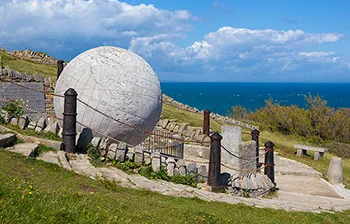
Clifftop country park with a Victorian castle, visitor centre and the South West Coast Path, reachable on foot or a short drive from Langton.
Explore Durlston
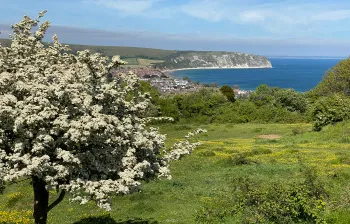
A Dorset Wildlife Trust reserve rich in wildflowers, butterflies and chalk downland habitats on the edge of Swanage.
Townsend Nature Reserve
Sources used for the history, walks and visitor information on this page: