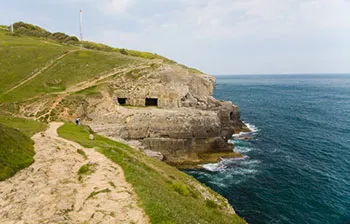
Tilly Whim Caves
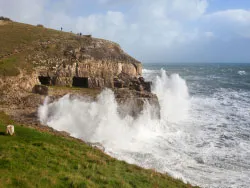
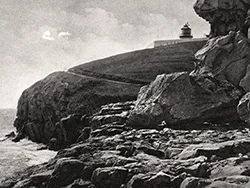
Just 0.1 miles from the lighthouse, 18th-century clifftop quarry galleries carved into the Portland limestone.
Explore Tilly Whim

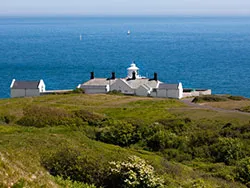
A white stone tower on the Jurassic Coast cliffs above Swanage, built in 1881 to guide ships through the English Channel, one of Trinity House's most picturesque lighthouses.
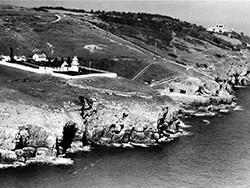
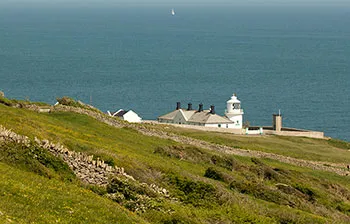
Anvil Point Lighthouse stands at the eastern end of the great Portland limestone ridge that forms the spine of the Isle of Purbeck, at the point where the cliffs of Durlston begin to give way to the more sheltered waters of Swanage Bay.
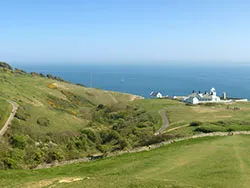
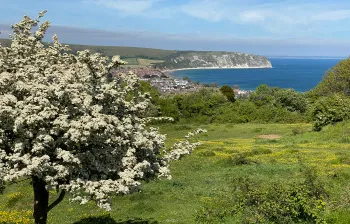
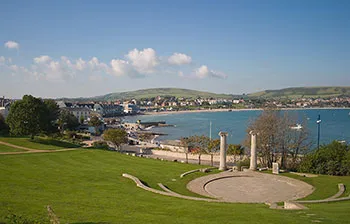
Built from locally quarried Portland limestone and completed in 1881, the lighthouse sits within the grounds of Durlston Country Park and can be reached by a pleasant walk south from Swanage town centre, about two miles uphill through the country park. The lighthouse and its associated buildings are Grade II listed and form a handsome group on the clifftop, with fine views east along the Jurassic Coast towards Old Harry Rocks and the chalk stacks of Handfast Point, and west along the limestone cliffs past Tilly Whim towards St Aldhelm's Head.
Anvil Point marks the eastern boundary of the Portland limestone and Purbeck beds that stretch westward from Durlston Head to St Aldhelm's Head. The dramatic limestone cliffs below the lighthouse are a popular destination for rock climbers, and the rock platform and reefs at their base have been a hazard to shipping for centuries, the reason the lighthouse was built here in the first place.
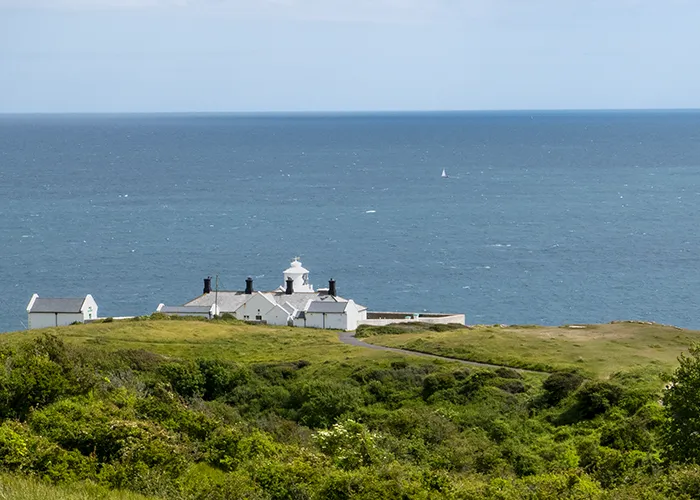
Trinity House constructed Anvil Point Lighthouse in 1881 to give vessels a waypoint on the busy English Channel route, guiding eastbound ships clear of the Christchurch Ledge and into the Solent, and westbound ships around the treacherous rocks and reefs of the Purbeck cliffs, giving a clear line from Portland Bill to the west.
The lighthouse was opened by Joseph Chamberlain, who was at the time President of the Board of Trade (the role that oversaw Trinity House), not, as sometimes stated, Minister of Transport, a post that did not exist in its modern form in 1881. Joseph Chamberlain was also the father of future Prime Minister Neville Chamberlain, adding a historical footnote that connects this quiet Dorset lighthouse to twentieth-century British politics.
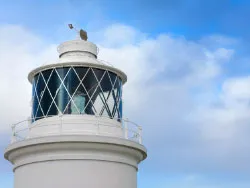
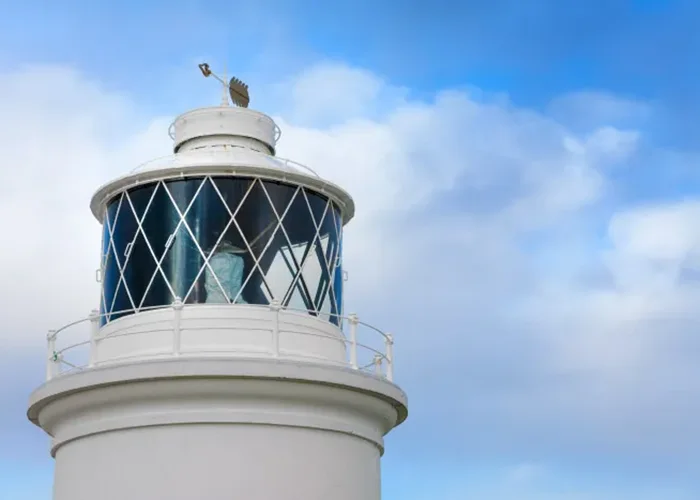
The tower itself is a circular white-painted structure approximately 12 metres (40 feet) high, built from dressed local stone. The light sits 45 metres (148 feet) above mean high water, making it visible over a wide arc of the Channel. The original light was illuminated by a paraffin vapour burner, and the fog signal was a small cannon that fired a loud blast every five minutes. The lighthouse was also equipped with a specialised clockwork mechanism to drive the rotating lens, a clock calibrated to produce the lighthouse's original unique signature of one flash every 16 seconds (later changed to the current 10-second period). One of these original lighthouse clocks sold at auction in 2024 for several times its estimate.
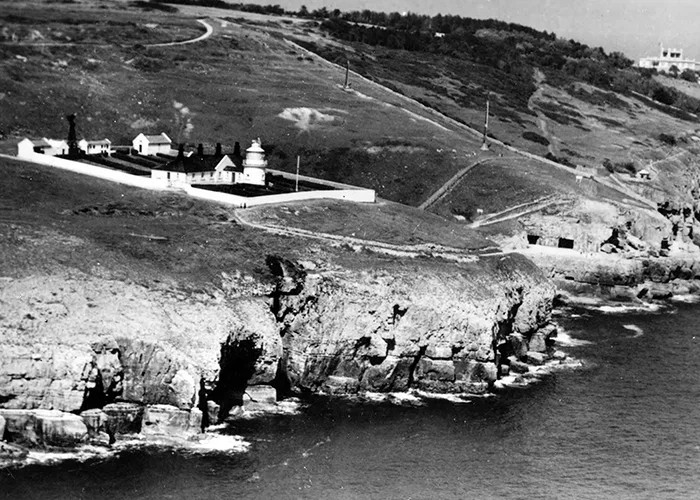
The lighthouse remained essentially unchanged in character through the early twentieth century, with keepers living in the associated cottages and maintaining the paraffin vapour light and cannon fog signal. In 1960 a major modernisation programme converted the lighthouse to run on mains electricity, greatly simplifying the keepers' work.
In 1981, exactly a century after the lighthouse was built, a further modernisation replaced the old cannon fog signal with new automatic equipment, a stack of thirty tannoy-style emitters positioned on the seaward edge of the compound, sounding a triple-frequency electric signal. The fog signal was later discontinued entirely in 1988, reflecting advances in ship navigation that had made audio fog signals less essential for most vessels.
Anvil Point Lighthouse was fully automated on 31 May 1991, when the last resident keeper was withdrawn. It is now monitored and controlled remotely from Trinity House's Operations and Planning Centre at Harwich, Essex, along with more than 60 other lighthouses around England, Wales and the Channel Islands. In 2012 an LED lamp was installed above the original rotating fourth-order Fresnel lens to serve as the main light, maintaining the same light character, a white flash every 10 seconds (Fl W 10s), but using far less energy. The original lens, though no longer in active use, remains in place in the tower. The lighthouse now produces 1,080 candela and has a nominal range of 9 nautical miles.
Some of the former keepers' cottages have been refurbished as self-catering holiday accommodation, and the lighthouse is occasionally open to the public for guided tours, check with Durlston Country Park or Trinity House for current availability.
The lighthouse is the centrepiece of a wonderful section of the Jurassic Coast, with Durlston Country Park, Tilly Whim Caves and the South West Coast Path all within easy walking distance.
Just 0.1 miles from the lighthouse, 18th-century clifftop quarry galleries carved into the Portland limestone.
Explore Tilly Whim
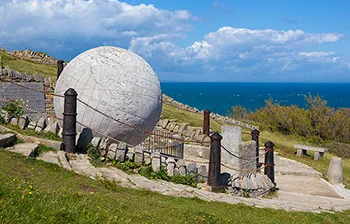
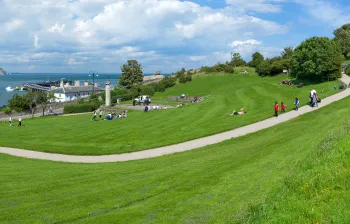
The lighthouse sits within this award-winning country park, with the Victorian Durlston Castle, visitor centre and café just 0.3 miles away.
Visit Durlston
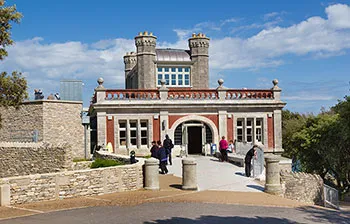
The Victorian folly and visitor centre, with a restaurant, exhibitions and one of the finest views on the Jurassic Coast, 0.4 miles from the lighthouse.
Durlston Castle

The lighthouse sits on the South West Coast Path, walk east to Old Harry Rocks or west along the limestone cliffs towards Worth Matravers and St Aldhelm's Head.
Walking routes

The Portland limestone cliffs below Anvil Point are a major destination for rock climbing, with routes of all grades on the clean white rock faces.
Climbing in Purbeck
The official authority responsible for all lighthouses around England, Wales and the Channel Islands, includes the official Anvil Point page.
Trinity House website
Sources used to verify and expand the information on this page: