Anvil Point Lighthouse
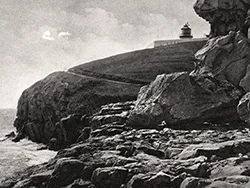
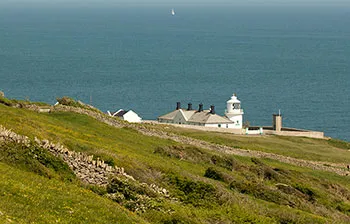
The elegant 1881 Trinity House lighthouse sits just minutes' walk south of the caves along the coastal path. Sometimes open to the public. 0.1 miles.
Visit the lighthouse

Three disused limestone quarries cut horizontally into the Jurassic cliffs south of Swanage, worked by hand for over a century, opened as a Victorian pleasure attraction in 1887, closed since 1976, and now a silent refuge for bats, seabirds and the sea.
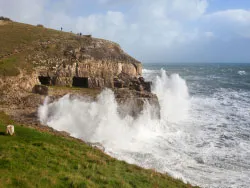
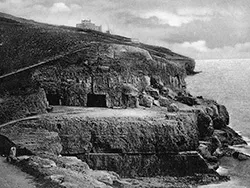
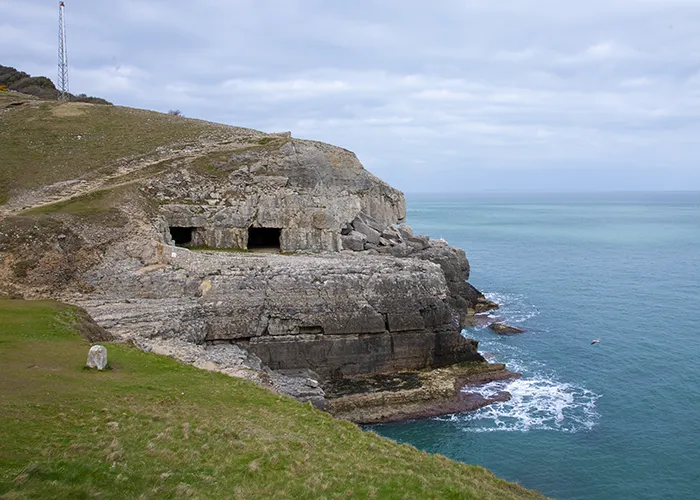
Tilly Whim Caves are not caves in the natural sense, they are the galleries of three old stone quarries, driven horizontally into the Portland limestone cliffs between Anvil Point and Durlston Head, one mile south of Swanage.
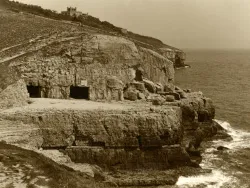
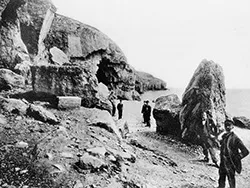
The galleries follow the natural horizontal strata of the Jurassic limestone, cut back deep into the Purbeck ridge by quarrymen working with metal punches, wedges and hammers, the same simple tools that shaped the stone of churches and cathedrals across England. In front of each gallery mouth, a flat ledge overhangs the sea, where the finished stone was loaded onto barges far below using a wooden crane called a whim, a name that, combined with that of the quarry's owner or a local worker named Tilly, gave these caves their distinctive and enduring title.
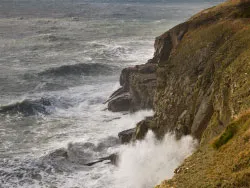
The caves now sit behind locked gates on the coastal path through Durlston Country Park, visible but inaccessible, closed to the public since 1976 after rockfalls made the galleries unsafe. In their solitude they have become something else entirely: an undisturbed roost for bats, a nesting ground for cliff-dwelling seabirds, and one of the most evocative industrial monuments on the Jurassic Coast. The quarried ledge where Victorian tourists once stood and stared at the English Channel remains, the iron gates stand, and the sea thunders against the cliff far below, just as it did when the last blocks of Purbeck stone were lowered into a waiting barge in 1812.
The Tilly Whim quarries were worked predominantly during the eighteenth century, exploiting the Portland limestone that underlies the cliffs between Anvil Point and Durlston Head. This is among the finest building stone in England, dense, pale, weather-resistant, and the demand for it was seemingly endless. It had been used for St Paul's Cathedral after the Great Fire of London in 1666, and it would be used again and again for the fortifications, barracks and sea defences that lined the south coast of England during the Napoleonic Wars.
The quarrying technique was unusual, dictated entirely by geography. Because there was no road to the site, and no practical way of building one, no stone could ever be transported inland. The only exit was downward, to the sea. Quarrymen drove the galleries horizontally into the cliff face, following the natural planes of the Jurassic strata and splitting the rock into workable blocks using metal punches, wedges and hammers. The work was hard and dangerous: the roofs could collapse, and the heavy stone had to be manoeuvred in confined, dimly lit spaces by men and boys working side by side. Stone columns were left standing to support the roof, you can still see them in the gallery mouths.
Once cut and dressed to size, the stone was lowered from the ledge in front of the quarry to barges waiting below using the whim, a simple but effective wooden crane or derrick, operated with a winch and often driven by a donkey harnessed to a capstan. The barges, when loaded, either sailed directly to the stone yards on Swanage Quay or transferred their cargo to larger sailing ketches anchored offshore. This operation could only be carried out in the summer months, when the sea was calm enough and the barges could approach safely below the cliff face. Up to fifty tons of stone could be removed from the galleries in solid blocks before being broken down to manageable sizes.
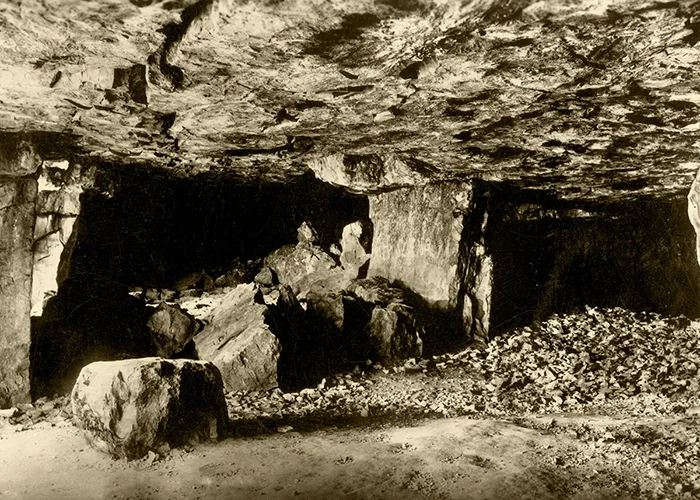
Purbeck stone found its greatest wartime purpose during the Napoleonic Wars of 1793–1815. The threat of French invasion spurred the construction of fortifications, gun batteries, barracks and defensive earthworks along the entire south coast of England, from the South Foreland to the Lizard, and the Portland limestone of the Purbeck cliffs was in urgent demand for all of them. The quarries at Tilly Whim were pushed to capacity. Barges worked the summer months continuously, shuttling the dressed stone down the coast and round to sites as far west as Plymouth.
When the wars ended, and with them the threat of invasion, the demand for stone collapsed almost overnight. The quarries were no longer economical to operate: the accessible seams had been largely worked out, the cliff-side extraction method was labour-intensive and dangerous, and cheaper stone from more accessible sites was increasingly available. Quarrying at Tilly Whim stopped around 1812, in the closing years of the conflict, and the galleries have not been worked since.
For the remainder of the nineteenth century the caves sat empty and unused, known locally, visited occasionally, and appearing in engravings and early photographs of the Purbeck coast. They became part of the landscape's character, dramatic openings in the clifftop that drew the eye of every artist and writer who came to Swanage. The wood used in the roof supports and the whim mechanism came largely from ships wrecked on the Purbeck shore, a reminder that the sea which carried the stone away also regularly gave back the timber that made the quarrying possible.
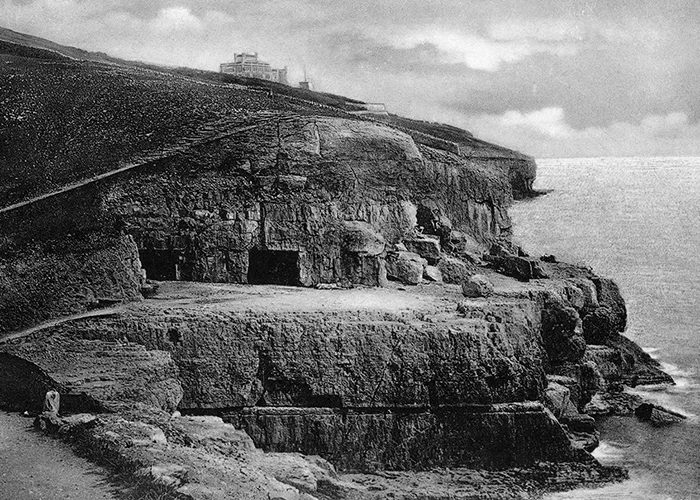
The caves' second life came in 1887, when the Swanage businessman George Burt opened them as a tourist attraction for his Durlston estate. Burt was one of the most remarkable figures in Victorian Swanage, a builder and entrepreneur who had amassed a fortune through construction contracts in London and who used that wealth to reshape the southern headland of Swanage into an extraordinary pleasure ground for the Victorian tourist trade.
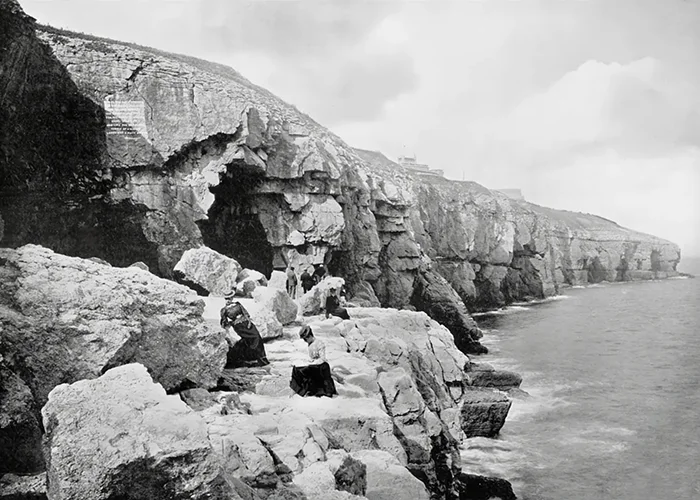
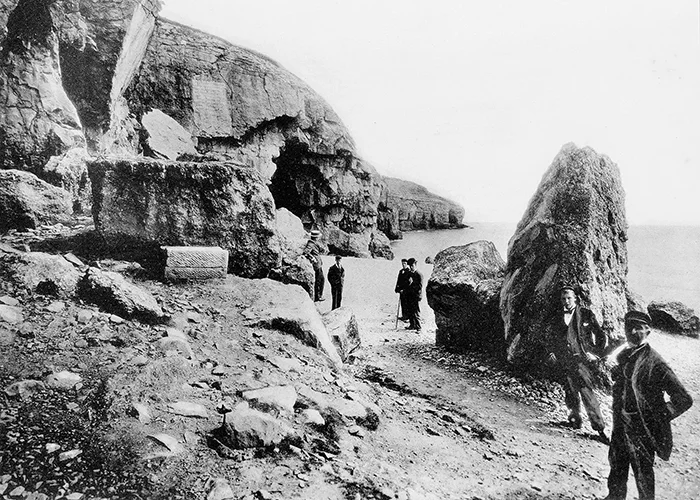
In 1887 alone, Burt built Durlston Castle, not a castle at all, but a restaurant and viewing platform for his estate, and commissioned the Great Globe at Durlston Head, a map of the world as it was in the 1880s, carved from forty tons of local Portland limestone and assembled in fifteen segments at the Greenwich stoneyard of his uncle, John Mowlem. He laid out most of the paths through the park that visitors still walk today. And he had inscriptions commissioned and engraved on plaques dotted around the cliffs, including quotations from Shakespeare and the Bible. Near the entrance to the Tilly Whim Caves, he had a passage from Shakespeare's The Tempest carved into the rock face, a theatrical gesture that linked the drama of the sea and the stone to the great literature of the English imagination.
The caves, opened alongside the castle and globe as part of this grand Victorian vision, became a popular stop on the Durlston circuit. Visitors would descend to the ledge in front of the quarry mouths, peer into the darkened galleries, and look out over the Channel from the very shelf where blocks of stone had once been winched down to waiting barges. The combination of industrial relic, geological drama and vertiginous sea views made a compelling attraction, one that drew crowds for nearly ninety years.
From Jurassic seabed to quarry to Victorian pleasure ground to wildlife sanctuary, the story of Tilly Whim spans three centuries and four very different lives.
The Portland limestone of the Purbeck cliffs is laid down in a warm Jurassic sea, the same geological event that created the building stone of cathedrals and the rock record of the Jurassic Coast.
The Tilly Whim quarries open. Quarrymen drive horizontal galleries into the cliff face, extracting Portland limestone by hand and loading it onto barges using a wooden crane, the whim, from the ledge outside the cave mouths.
Demand surges during the Napoleonic Wars as Purbeck stone is used for fortifications along the entire south coast of England. The quarries work at full capacity. Stone is shipped as far as Plymouth.
With the wars drawing to a close and demand collapsing, quarrying at Tilly Whim ends. The galleries fall silent. No stone has been removed since.
Victorian businessman George Burt opens the caves as a tourist attraction for his Durlston estate. A passage from Shakespeare's The Tempest is carved into the rock face nearby. The caves attract visitors for nearly ninety years.
The poet T. S. Eliot visits the Tilly Whim Caves while studying at Merton College, Oxford, one of many writers and artists drawn to this dramatic fragment of Purbeck's industrial past.
Following rockfalls and concerns about structural safety, the caves are permanently closed to visitors. The iron gates are locked, and the galleries are left undisturbed for the first time in two and a half centuries.
The closed caves are now an undisturbed roost for bats and a nesting ground for seabirds. The ledge and cliff face are a lookout point for grey seals, dolphins and the porpoises that patrol this stretch of the Channel. The caves remain clearly visible from the coastal path.
The origin of "Tilly Whim" is pleasingly ambiguous. The most likely explanation is simply occupational: Tilly was probably a quarry worker, possibly a man named George Tilly, who gave his name to this stretch of cliff in the way that quarry workers across Purbeck named their sites after themselves or their families. Whim refers to the wooden crane or derrick used to lower the dressed stone from the quarry ledge to the barges below, one of the most distinctive pieces of equipment in the sea-quarrying process. Together, the two words describe both the person and the tool at the heart of the operation.
A more romantic theory holds that Tilly Whim is an anglicised form of the Gaelic Tulach Uamh, roughly translating as "knoll cave", though this seems geographically and linguistically unlikely given the thoroughly English character of the Purbeck quarrying tradition. A nearby field called Tilly Mead may offer a further clue, suggesting the name had local currency long before the caves were quarried. Whatever its origin, the name has stuck, distinctive, slightly mysterious, and perfectly suited to these strange, gated openings in the cliff face that hint at a whole world of work and weather and sea.
The caves are reached on foot along the South West Coast Path through Durlston Country Park, a short walk south of Durlston Castle along the tarmac path toward Anvil Point Lighthouse. From the path above, the iron gates and the cave mouths are visible below, and on clear days the quarry ledge offers views across the English Channel toward the Cotentin Peninsula of Normandy. Allow around fifteen to twenty minutes' easy walking from the castle car park.
No, the caves have been closed to the public since 1976 and cannot be entered. The entrance gates are locked for safety reasons following rockfalls. You can walk right past them on the South West Coast Path through Durlston Country Park, see the cave mouths clearly, and enjoy the clifftop views from the ledge above. The walk from Durlston Castle is short, easy and spectacular.
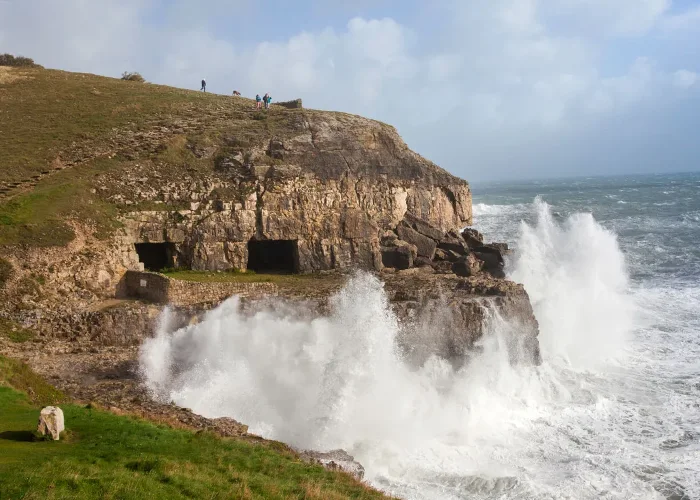
Tilly Whim is best visited as part of a walk along the Durlston clifftops, pairing naturally with the castle, the Great Globe, the lighthouse and outstanding wildlife watching.
The elegant 1881 Trinity House lighthouse sits just minutes' walk south of the caves along the coastal path. Sometimes open to the public. 0.1 miles.
Visit the lighthouse
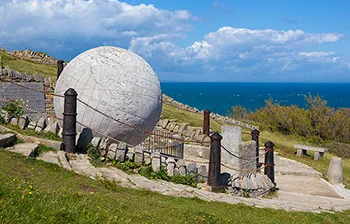
The Nature Reserve surrounding the caves, with a superb visitor centre, live seabird webcams, underwater hydrophone and wildlife sightings board. 0.2 miles.
Explore Durlston
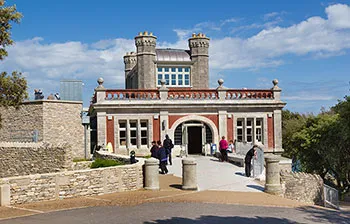
George Burt's 1887 clifftop restaurant-turned-visitor-centre, home to the Great Globe — forty tons of Portland limestone engraved with a world map of the 1880s. 0.3 miles.
Visit Durlston Castle
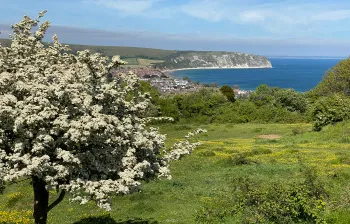
A Dorset Wildlife Trust reserve rich in chalk grassland wildflowers and butterflies, connecting the Durlston clifftops to the outskirts of Swanage. 0.9 miles.
Visit Townsend Nature Reserve
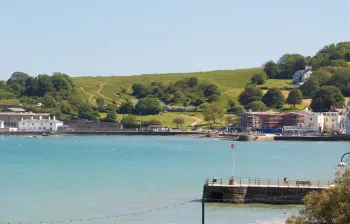
The open clifftop downland between Peveril Point and the town centre, with panoramic views across Swanage Bay and back toward Old Harry Rocks. 1 mile.
Visit The Downs
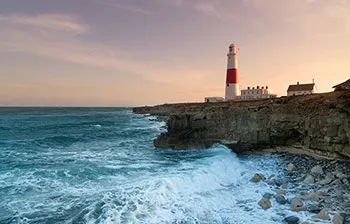
The limestone quarried at Tilly Whim is part of the World Heritage Site's geological record, laid down 150 million years ago in a Jurassic sea.
Visit The Jurassic Coast
The Tilly Whim Caves are permanently locked and cannot be entered, rockfalls have made the galleries unsafe and the gates will not be reopened to the public. The cliffs around the caves involve sheer drops and there is no access to the sea or the quarry ledge from below. Swimming in the sea around these cliffs is extremely dangerous: the water is deep and cold, the tidal currents are strong, and there is no safe landing point on the shoreline. Please keep to the marked coastal path.
Sources used for the history, wildlife and visitor information on this page: