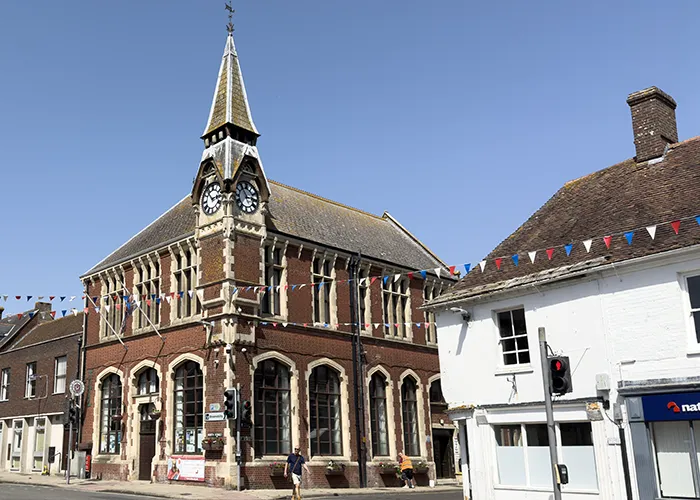
Wareham Town Museum
A free local museum in the town hall, covering Wareham's story from prehistory to T.E. Lawrence.
About the museum

More than a thousand years of history on a low island between two rivers, ancient earthen ramparts, Saxon churches, a riverside quay, and the gateway to the Isle of Purbeck.
On the northern edge of the Isle of Purbeck, set on a low island of dry ground between the rivers Frome and Piddle, Wareham is one of the oldest and most atmospheric towns in Dorset.
Built where firm ground rises from the surrounding marshy river plains, Wareham occupied a natural crossing point and became an important cross-Channel port in Saxon times. That strategic setting, guarding the land route into Purbeck and the head of navigation up from Poole Harbour, shaped more than a thousand years of history, and the town wears that history openly. Earthen ramparts still ring three sides of the town, Saxon churches stand among Georgian streets, and the quay on the Frome remains the heart of the place.
Today Wareham is a thriving, independent-minded market town: a grid of handsome red-brick and Purbeck-stone streets lined with cafés, galleries and shops, with riverside pubs, a Saturday market, and a station on the main line that makes it the natural gateway for anyone arriving in Purbeck. Evidence of human activity nearby stretches back astonishingly far, excavations at Bestwall have revealed traces of Mesolithic people from around 9,000 BCE.
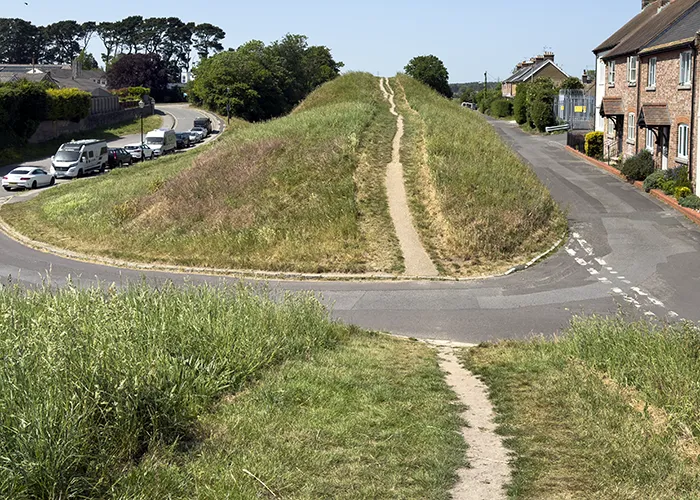
Wareham's oldest and most remarkable features are the great earthen ramparts that still enclose the town on three sides, with the River Frome forming the fourth. These walls are thought to have been raised by Alfred the Great in the late 9th century, when Wareham was one of his fortified "burhs", a network of defended towns built to resist Viking raids. They are among the finest surviving Saxon town defences in the country, and you can walk along much of their grassy crest today.
The defences were sorely tested. A Danish force seized and occupied Wareham in 876, leaving only after Alfred brought up an army and terms were agreed. The Danes returned to attack again in 998, and in 1015 an invasion associated with Cnut (Canute) left the town in ruins. Wareham was important enough to be a Saxon royal burial place, and after the Norman Conquest William the Conqueror built a castle here, of which almost nothing now remains, its site later occupied by a private house near the quay.
Walking the ramparts, you pass features such as the old "Bowling Green" and the original gaps where ancient trackways entered the town, a circuit that traces the very shape of Saxon Wareham.
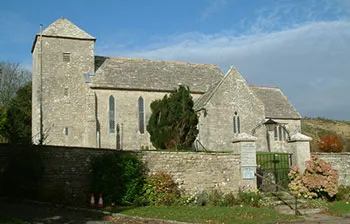
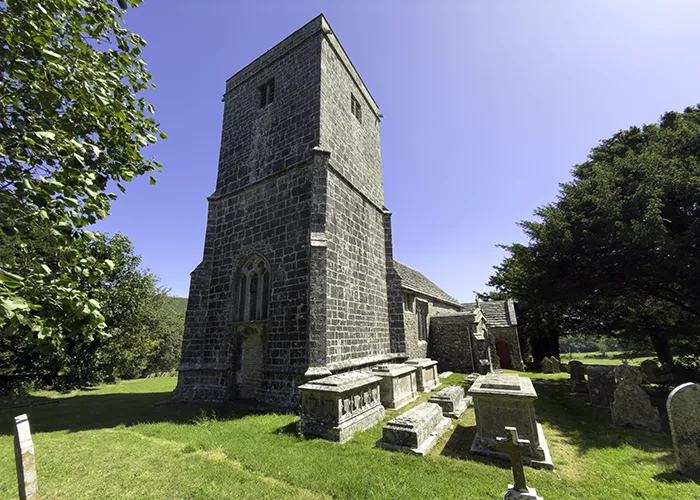
Wareham has two ancient churches of Saxon origin. The Lady St Mary church, near the quay and built of local Purbeck stone, has roots reaching back to around AD 700, though it was largely rebuilt in the medieval and Victorian periods. It was a burial place of Anglo-Saxon kings, and treasures inside include a rare hexagonal Norman font carved with the apostles, medieval knight effigies, and the lower St Edward's Chapel.
The town's link to Edward the Martyr is one of its most poignant. The young Saxon king was murdered in 978, by tradition near Corfe Castle, the victim of palace intrigue, and his body was first buried here at Lady St Mary before being moved with great ceremony to Shaftesbury Abbey, where he was venerated as a saint.
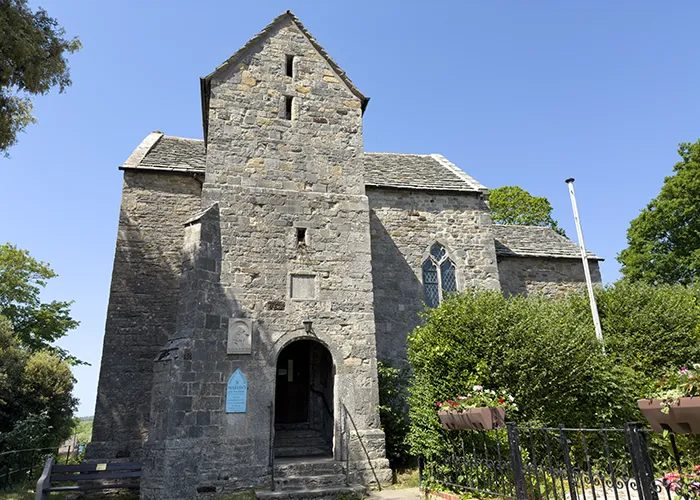
Smaller but even more complete is St Martin's-on-the-Walls, on North Street, the most intact Saxon church in Dorset, dating in its present form to around 1030. Inside are remarkable 12th-century wall paintings of St Martin and faded later texts, and its survival through the centuries (it even sheltered families made homeless by the great fire) makes it one of the town's quiet wonders.
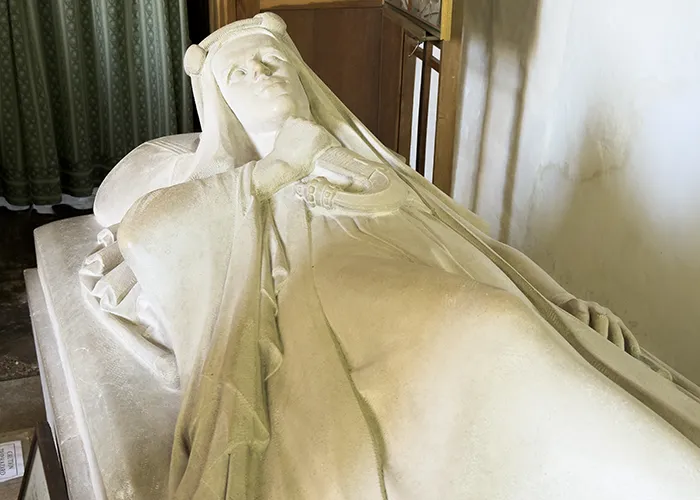
One of Wareham's most surprising treasures lies inside little St Martin's church: a carved stone effigy of T.E. Lawrence, "Lawrence of Arabia", depicted at rest in full Arab dress, his head on a camel saddle. It was created by his friend, the artist Eric Kennington, and is a place of quiet pilgrimage for admirers of the soldier, scholar and writer.
Lawrence spent his final years in this corner of Dorset. Serving in the ranks of the RAF and Tank Corps under an assumed name, he was based at nearby Bovington Camp and made his home at the tiny cottage of Clouds Hill, where he wrote and retreated from fame. In May 1935, only weeks after leaving the service, he was fatally injured in a motorcycle crash on the lanes near the cottage.
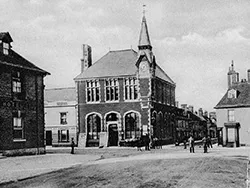
His story threads through the whole area. Clouds Hill, now cared for by the National Trust, can be visited a short drive away, and Wareham Town Museum, free to enter, in the town hall on East Street, has a dedicated display on Lawrence alongside its account of the town from prehistory to the present.
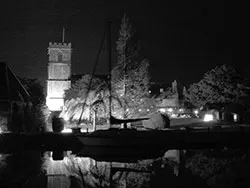
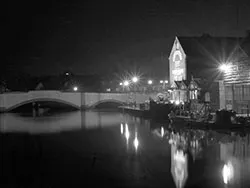
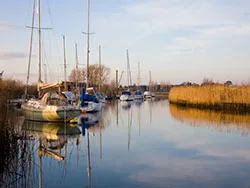
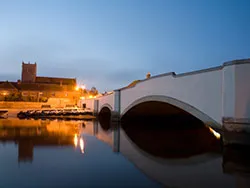
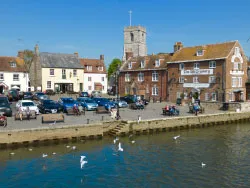
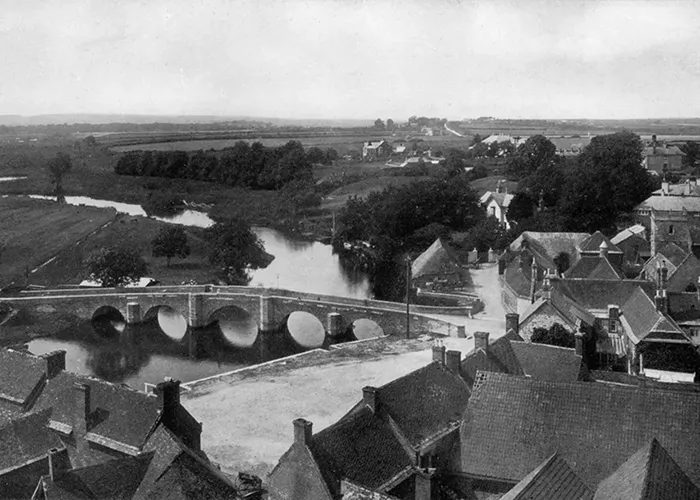
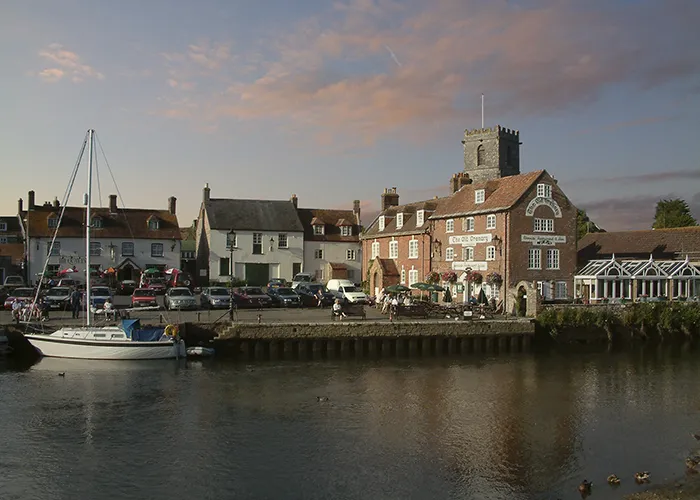
The picturesque Wareham Quay, on the bank of the River Frome below the bridge, is the town's social heart. Once a working port that traded until its channel silted up and Poole took its trade, it is now a relaxed riverside spot where you can watch boats drift by, hire a craft of your own, or settle outside the Old Granary and other waterside pubs with the Purbeck Hills rising in the distance.
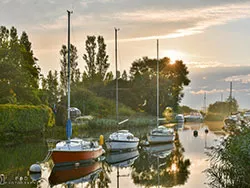
From the quay, seasonal pleasure-boat trips run along the gentle Frome, with options ranging from a short round-trip river cruise to longer journeys down towards Poole Harbour. Kayaking and paddling on the slow-moving river are popular too, and the riverside paths along both the Frome and the Piddle, through quiet water meadows rich in wildlife, make for lovely, level walks straight from the town centre.
The quay also anchors the town's events calendar. A market is held nearby on Saturdays, and in summer the hugely popular "Wareham Wednesdays" transform the quayside with music, stalls, fairground rides and fireworks.
Much of Wareham's elegant, unified appearance dates from a single catastrophe. In 1762 a great fire swept through the town and destroyed around two-thirds of its buildings. Wareham was rebuilt in the fashionable Georgian style of red brick and Purbeck limestone, but, crucially, along the original medieval street pattern, which is why the modern town still feels so old.
The town is neatly quartered by its two main streets, North, South, East and West, which cross at right angles at the central crossroads by the town hall. Look closely and you'll find survivors of the fire woven among the Georgian frontages: the medieval almshouses escaped the flames, some thatched cottages such as those by the King's Arms in North Street remain, and a number of elegant Georgian façades simply mask older buildings behind them.
Wandering the four quarters, past hanging baskets, independent shops, galleries and tucked-away side streets, is one of the great simple pleasures of a visit, a stroll through more than a thousand years of layered history.
The town makes an ideal base, these are some of the best things to see nearby
A free local museum in the town hall, covering Wareham's story from prehistory to T.E. Lawrence.
About the museum

Heathland and ancient oak woodland on Poole Harbour, home to sika deer, Dartford warblers and sand lizards.
Visit Arne
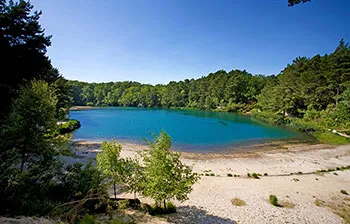
A former clay pit whose mineral waters shimmer through shades of blue and green, with woodland walks.
Visit Blue Pool
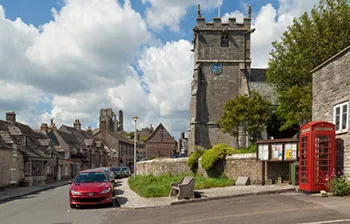
The dramatic ruined castle and stone village in the gap of the Purbeck Hills, slighted in the Civil War.
Discover Corfe
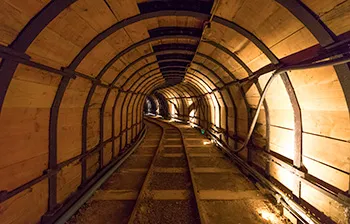
The story of Purbeck's ball-clay mining heritage, at Norden near Corfe Castle.
Mining heritage
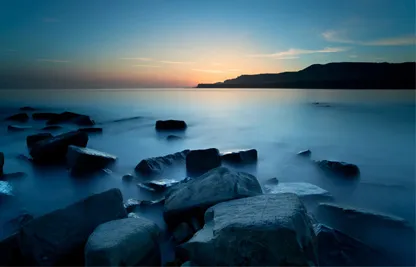
The wider landscape of hills, heaths and coast that Wareham opens onto, with forest and harbour trails.
Explore Purbeck
Sources used for the history, heritage and visitor information added to this page: