Purbeck Mineral & Mining Museum
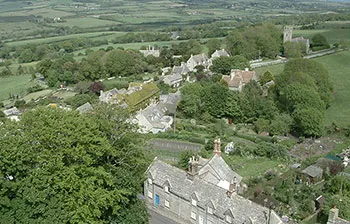
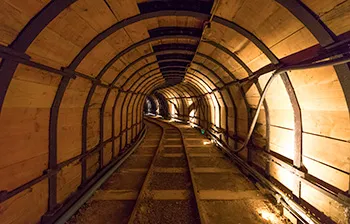
Just 1.4 miles away, dedicated to the ball clay mining heritage that created the Blue Pool, with narrow-gauge railway exhibits and industrial artefacts.

A former Victorian clay pit, now a shimmering nature reserve and SSSI on the Furzebrook Estate near Wareham, where ancient woodland, rare heathland wildlife, and an otherworldly turquoise lake combine to create one of Purbeck's most singular days out.
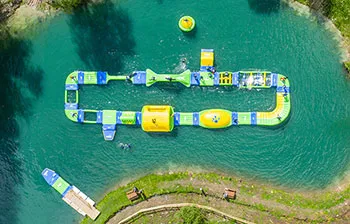
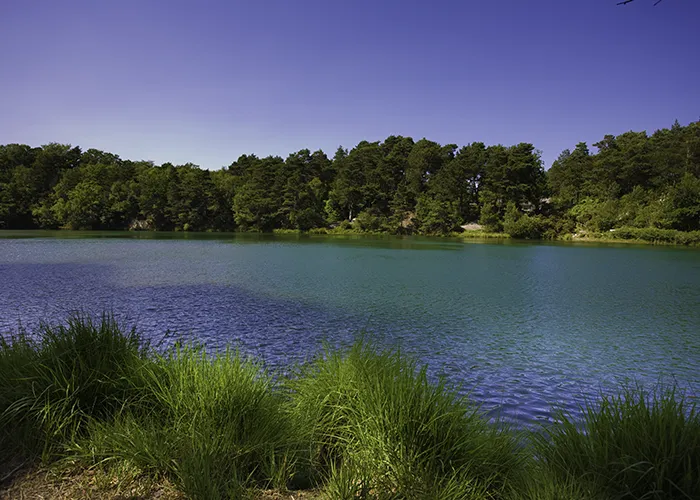
Few places in Dorset surprise first-time visitors quite like the Blue Pool. Tucked into the heathland and ancient oak woodland of the Furzebrook Estate, the pool's extraordinary colour, shifting from vivid turquoise to deep jade depending on weather, light and viewpoint, is entirely natural, and entirely unlike anything else in the Isle of Purbeck.
The pool began its industrial life early in the 17th century as a chalk pit, later transitioning into a ball clay extraction operation that ran from the mid-17th century until it fell silent before the First World War. When clay extraction ceased, the pit gradually filled with rainwater, and the fine-grained Purbeck ball clay left behind in the water began its transformation of the landscape. Minute particles of clay held in colloidal suspension within the water diffract light at different angles, producing a colour that can appear intensely blue from above, or shift to green, teal or grey depending on where you stand, how bright the sky is, and how high the water level sits.
The estate opened to the public in 1935, and the tearoom that opened alongside it, now a beautiful Art Deco building with American cedar shingle roof, has been serving visitors for nearly a century. In 1985 the site was formally designated a Site of Special Scientific Interest (SSSI), long before environmental protection became mainstream, in recognition of its exceptional habitat diversity. Today the Blue Pool forms part of the wider Purbeck Heaths National Nature Reserve and sits within the 300-acre Furzebrook Estate.
The Blue Pool's story is inseparable from the wider history of ball clay extraction on the Isle of Purbeck, an industry that shaped the landscape, economy and trade routes of the area for centuries. Purbeck ball clay, named for the ball-shaped lumps in which it was traditionally dug, is a fine, highly plastic clay prized by pottery manufacturers for producing brilliant white ceramics after firing. The Furzebrook pit was one of many across the heathland of east Purbeck, and the clay it produced found its way to renowned British pottery companies including Josiah Wedgwood's Staffordshire factories, where it was used to create fine ceramics including plates, teapots, cups and smoking pipes.
The extraction was originally carried out entirely by hand, workers digging into the soft heathland and loading the clay into horse-drawn wagons. A network of narrow-gauge railways once ran across the estate, linking extraction sites to coastal shipping points at Poole Harbour, from where the clay was shipped around Britain and exported abroad. The industrial archaeology of these railways is still visible in places across the Furzebrook Estate, a reminder of how the tranquil woodland paths visitors walk today were once working industrial corridors.
Ball clay is still extracted from other pits in the Purbeck area today, the industry did not end, only the Furzebrook pit did. The nearby Purbeck Mineral and Mining Museum at Creech is the best place to explore the full story of this extraordinary industry.
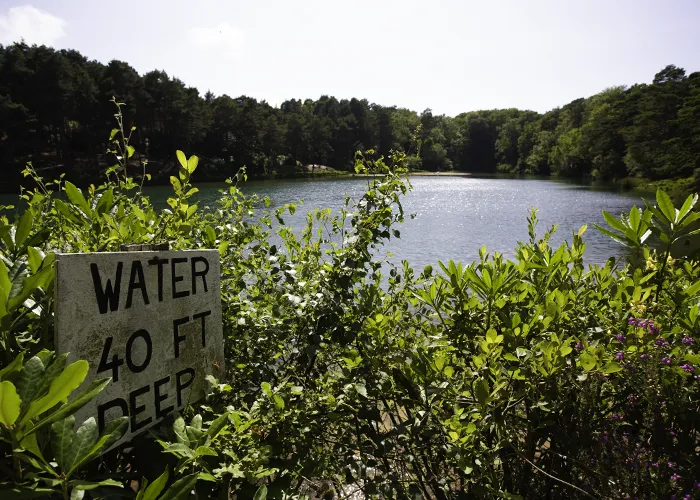
The Blue Pool's famous colour is not a trick of photography, it is a genuine and continuously changing optical phenomenon rooted in physics. When the clay pit was abandoned and filled with rainwater, the fine particles of Purbeck ball clay that remained in and around the pit were gradually suspended within the water in colloidal form. These particles are extraordinarily fine, much smaller than sand or silt, and they remain suspended almost indefinitely rather than settling to the bottom.
When light enters the water and strikes these suspended particles, it is scattered and diffracted rather than absorbed uniformly. The shorter wavelengths of visible light, blues and greens, scatter more readily than longer wavelengths such as reds and yellows, producing the characteristic turquoise to blue appearance that gives the pool its name. The effect is similar in principle to why the sky appears blue, though the mechanism at the pool involves clay particles rather than atmospheric molecules.
The colour is never quite the same twice. On a bright sunny day with deep blue sky reflected from above, the pool can appear an intense, almost tropical turquoise. Under cloud or in flat light it shifts to a softer grey-green. Viewed from the water's edge looking across the surface, it reads differently to the same water seen from the high viewpoints above the pool. Water level also plays a role, the concentration of clay particles in suspension varies with rainfall and evaporation. All of which makes the Blue Pool endlessly photogenic and justifiably one of Dorset's most talked-about natural spectacles.
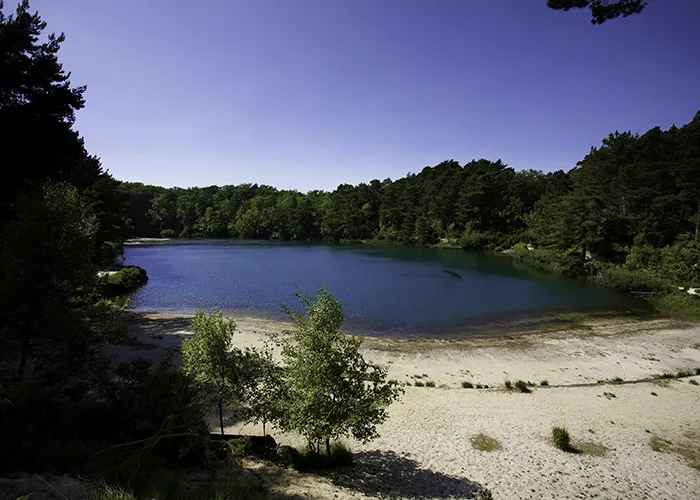
The Furzebrook Estate is one of the most ecologically diverse habitats in the United Kingdom, combining rare lowland heathland, ancient woodland, open water, wet meadows and gorse scrub in a mosaic that supports an exceptional range of species. The Blue Pool was designated a Site of Special Scientific Interest in 1985, and the reserve also forms part of the Purbeck Heaths National Nature Reserve, recognised as arguably the most ecologically diverse area of lowland heathland in the country.
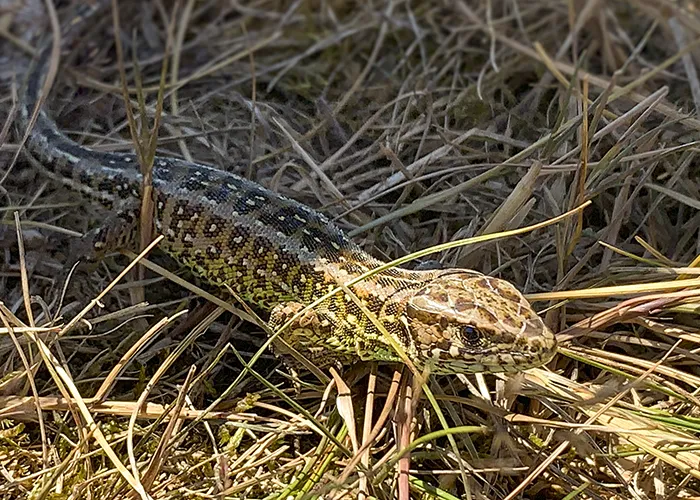
Birdwatchers stand a good chance of encountering the elusive Dartford Warbler perching in the yellow-flowering gorse, one of Britain's rarest breeding warblers and a specialist of lowland heath. Magnificent dragonflies hover over the water lilies at the pool's edge. Above the canopy, buzzards circle on the thermals, watched by red squirrels and their grey cousins in the oaks. Sika deer, introduced to Dorset from Japan in the nineteenth century and now thoroughly naturalised in the Purbeck heathlands, move quietly through the thickets of rhododendron, gathering among the birch groves at dawn and dusk. Badgers are present on the estate though far more secretive. On warm sunny days, rare sand lizards bask on the open sandy banks, the heathland heaths of Purbeck support one of the strongest populations in Britain.
The pool itself attracts a range of waterfowl and wading birds year-round, while the surrounding woodland provides nesting habitat for a wide range of common and less common woodland species. Guided nature safaris across the Furzebrook Estate are available for those who want to explore the wildlife in more depth.
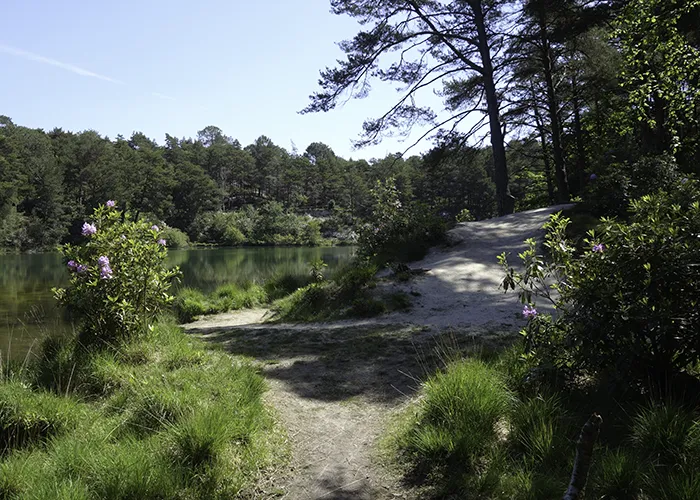
The Blue Pool's 25 to 30 acres of grounds are laced with sandy paths shaded by ancient oak trees, passing through heath, woodland and the gorse scrub that so perfectly captures the essence of a Purbeck summer. Paths are varied in character, some suitable for pushchairs and wheelchairs, others involving steeper steps into the woodland, so most visitors are well catered for regardless of mobility.
A major attraction in its own right is the suspension rope bridge, claimed as the UK's longest at 50 metres span, which crosses the reserve at a height of approximately 10 metres above the ground. The bridge provides a dramatic aerial perspective across the pool and reserve below, and its bounce and sway makes it particularly popular with children and the more adventurous. A maximum of six people are permitted on the bridge at any one time for safety. The height of the bridge also puts the depth of the original clay pit into perspective, the pit descends well below the water surface.
In 2025 the estate added the Trail of Enchanted Doors, a new family-oriented woodland experience winding through the trees, where the woodland is home to fairies, mythical characters and other surprises hidden along the route. The estate runs seasonal events and activities, particularly during school holidays. Sandy paths, woodland glades and views across the pool to the surrounding heathland also make the grounds a wonderful photography destination at any season, spring bluebells, summer heather and autumn colour all offer their own rewards.
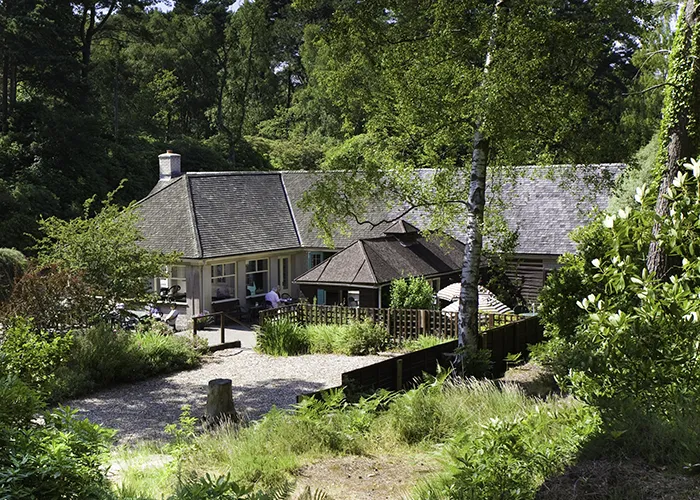
The Blue Pool Tearooms are as much a part of the experience as the pool itself. The building, a handsome structure with an American cedar shingle roof, was established at the same time the estate opened to the public in 1935, and retains much of its original Art Deco and Art Nouveau character inside. It is widely regarded as one of the most attractive tearooms in Dorset.
The menu covers light lunches, cakes, cream teas and refreshments, with locally sourced Purbeck ice cream a particular draw. The tearoom has outdoor seating to enjoy on good weather days, and the gift shop alongside it stocks a range of gifts, local produce and mementos. There is a well-equipped children's playground on site, making the Blue Pool a genuinely all-day family destination. The large car park is free with admission, and there are cycle racks for those arriving by bike.
The estate is dog-friendly, with most areas of the grounds accessible to dogs on leads, always worth confirming current rules on the Blue Pool website before visiting. Most areas of the reserve are wheelchair accessible, though some of the more adventurous paths involve steep steps. The nearest rail and bus connections are at Wareham, from which the estate is about 3 miles south by road.
The Blue Pool sits in the heart of the Isle of Purbeck, with Corfe Castle, the Purbeck Mining Museum, Wareham and Arne all within easy reach.
Just 1.4 miles away, dedicated to the ball clay mining heritage that created the Blue Pool, with narrow-gauge railway exhibits and industrial artefacts.
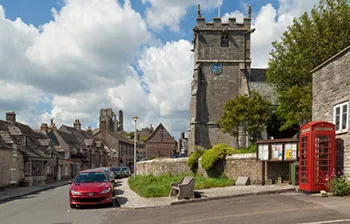
About 1.6 miles from the Blue Pool, the iconic ruined Norman castle atop its gap in the Purbeck Hills, one of the most recognisable sights in Dorset.
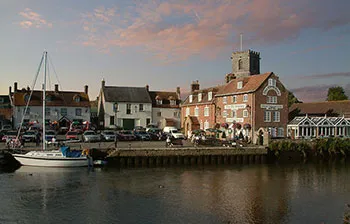
The nearest market town, about 2.5 miles north, a Saxon walled town with good independent shops, pubs, cafés and a station on the Weymouth-London line.
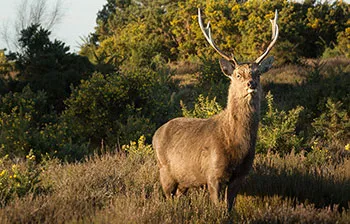
The RSPB reserve at Arne, 3.8 miles away, protects the same type of lowland Purbeck heathland, famous for its Dartford Warblers, Sika deer and panoramic Poole Harbour views.
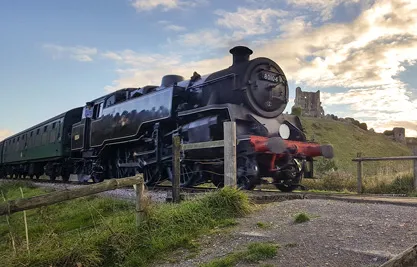
The heritage steam railway runs from Swanage through Corfe Castle to Norden, combine a Blue Pool visit with a steam train ride for a full Purbeck day out.
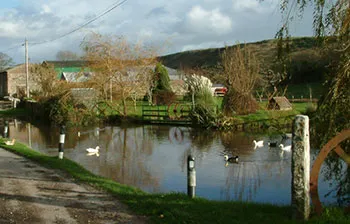
The hamlet of Creech lies just 0.5 miles from the Blue Pool, with the wooded ridge of Creech Barrow Hill, one of the finest viewpoints across the Purbeck heaths, within easy walking distance.
Sources used to research and expand the information on this page: