Kimmeridge
A small Purbeck village above one of the most famous fossil bays on the Jurassic Coast, where dark Jurassic shale, clear rock pools and a clifftop folly meet the sea.
Cottages and Fossils
A village & its famous bay
Tucked into the south-west corner of the Isle of Purbeck, about six miles south-west of Wareham, Kimmeridge is a small, peaceful village with an outsized place in the history of science.
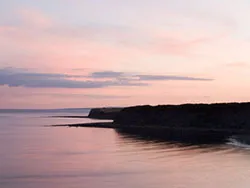
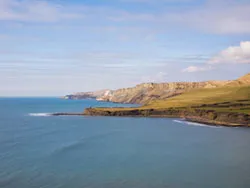
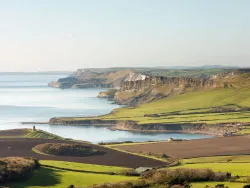
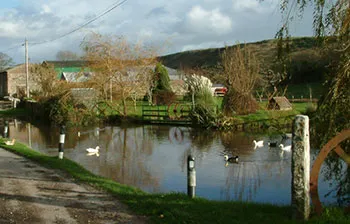
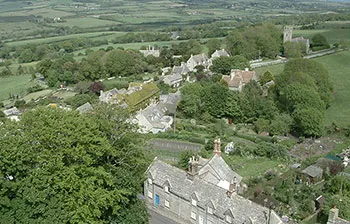
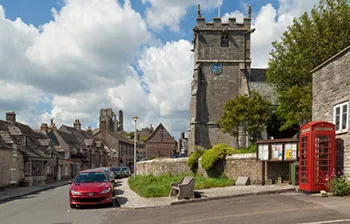
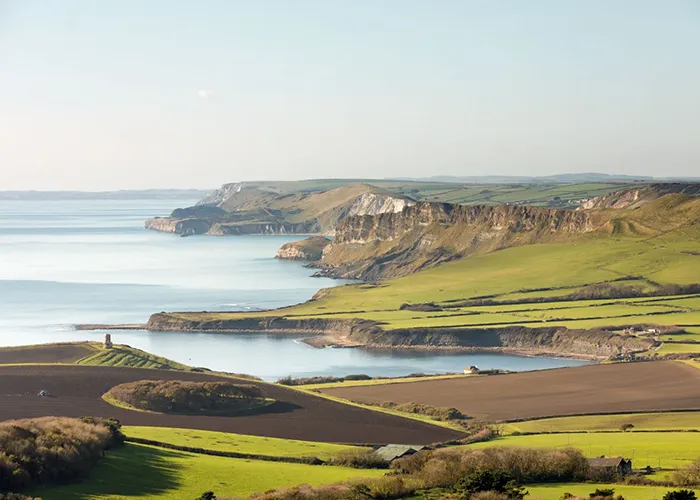
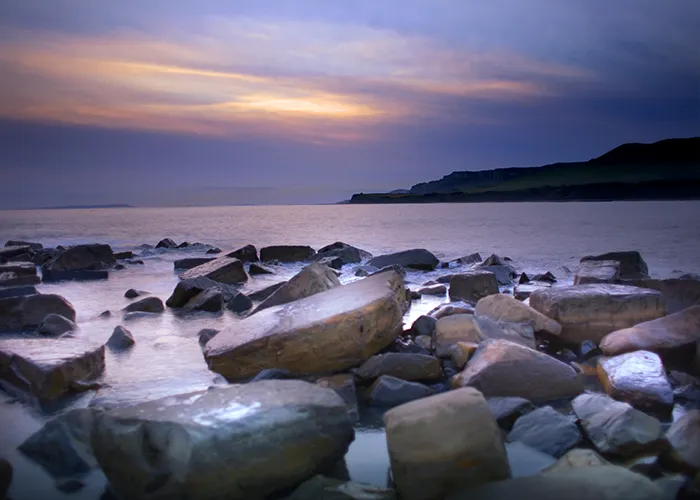
The village itself is a cluster of traditional stone and thatched cottages, many dating from the 17th and 18th centuries, set back from the coast amid quiet farmland. A short distance away, the land tips down to Kimmeridge Bay - a wide, sheltered, rocky bay whose dark shale cliffs and stepped stone ledges are world-renowned among geologists and fossil hunters. The whole coastline here forms part of the Jurassic Coast, England's only natural UNESCO World Heritage Site.
Kimmeridge has given its name to a whole chapter of Earth's history: the Kimmeridge Clay, laid down here around 155 million years ago, is the "type" rock for the Kimmeridgian stage of the Late Jurassic, studied by scientists the world over. Yet for all that scientific weight, it remains a wonderfully unspoilt and tranquil place to spend a day by the sea. Most of the land belongs to the long-established Smedmore Estate, which has helped keep development at bay.
155 million years
Fossils & the Kimmeridge Clay
The cliffs around the bay are made of the Kimmeridge Clay - dark, organic-rich mudstones and shales deposited on a deep Late Jurassic seabed. Harder bands of limestone within the clay form the distinctive ledges that step out into the sea. As these soft cliffs erode, they constantly release the remains of the creatures that once swam above: ammonites, belemnites, bivalves, fish, and the bones of marine reptiles such as ichthyosaurs and plesiosaurs.
This is a place of genuine scientific firsts - the exceptional preservation here has yielded extraordinary finds, including, remarkably, fossilised ammonite eggs. (It's worth noting these were sea creatures, not dinosaurs; the popular idea of "dinosaur bones" on the beach is a common mix-up.) The cliffs and foreshore are a protected Site of Special Scientific Interest, so hammering the rock is not allowed; responsible collectors look only for loose fossils washed onto the beach.
The bay is also one of the most dangerous spots on the Dorset coast to collect, with sheer, unstable cliffs and tides that reach their base - so good timing and caution matter as much as a keen eye.

A world-class museum
The Etches Collection
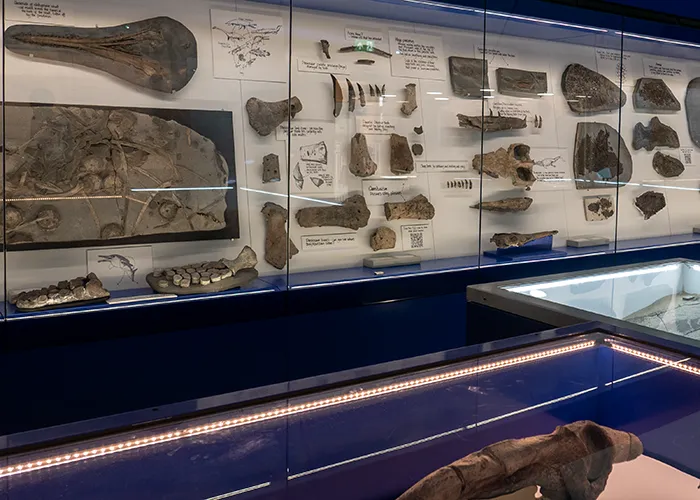
In the heart of the village stands one of the finest small museums in the country: the Etches Collection, Museum of Jurassic Marine Life. It houses the life's work of Dr Steve Etches MBE, a local fossil collector who has spent decades carefully excavating, preparing and studying specimens from the Kimmeridge cliffs - many of them entirely new to science.
What makes the museum so special is that every fossil on display was found in and around Kimmeridge Bay itself, making it a deeply local window into "deep time." The beautifully presented galleries are accompanied by interactive exhibits, video guides, and a working laboratory where you can often watch preparation in progress - and sometimes meet Dr Etches himself. The displays are pitched to delight children without ever talking down to adults.
The purpose-built museum opened in 2016 and has become a destination in its own right, drawing visitors and researchers from around the world to this tiny Dorset village.
The clifftop landmark
Clavell Tower & village heritage
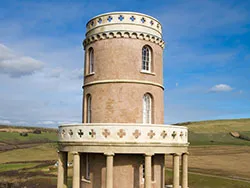
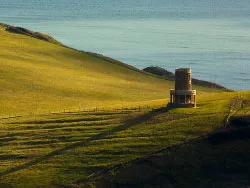
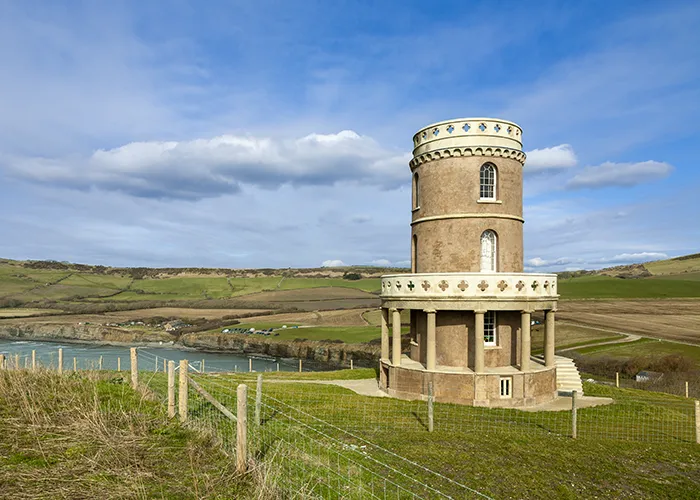
Crowning the cliff on the east side of the bay is Clavell Tower, a round, columned folly that is Kimmeridge's most photographed sight. It was built around 1830 by the Reverend John Richards Clavell of nearby Smedmore House, as an observatory and folly, and later served sailors and smugglers as a navigation marker. The novelist Thomas Hardy is said to have courted here, and the tower features on the cover of a P.D. James novel.
By the early 2000s, coastal erosion had brought the tower to the very edge of collapse. In a remarkable feat of conservation, the Landmark Trust dismantled it stone by stone and rebuilt it some 25 metres back from the cliff edge in 2008. It is now let as a holiday property, and the Trust opens it to the public on a handful of days each year.
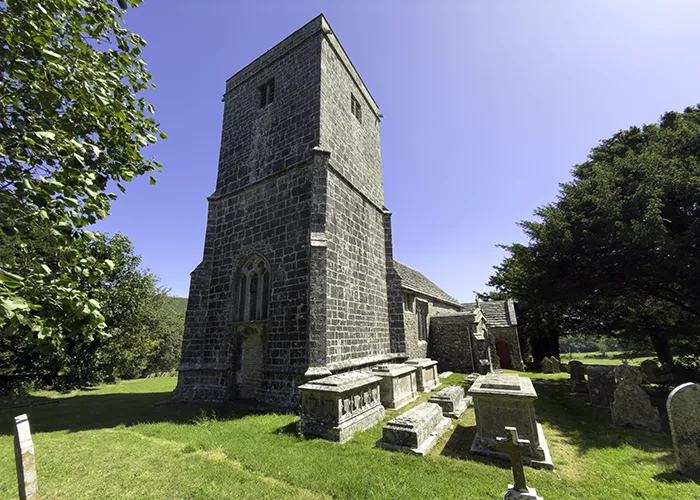
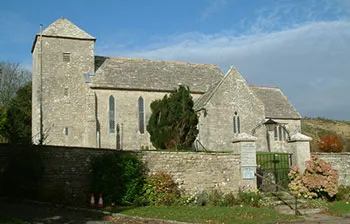
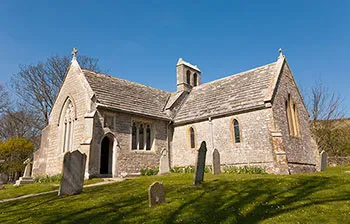
The village's other heritage runs deep too: the parish church of St Nicholas has medieval origins, and the surrounding land is part of the Smedmore Estate, centred on Smedmore House - a Grade II listed manor built by the Clavell family in the 17th century and still in the hands of their descendants.
Beneath the waves
Rock pools & the marine reserve
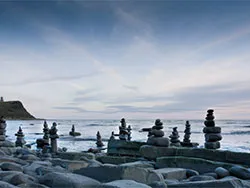
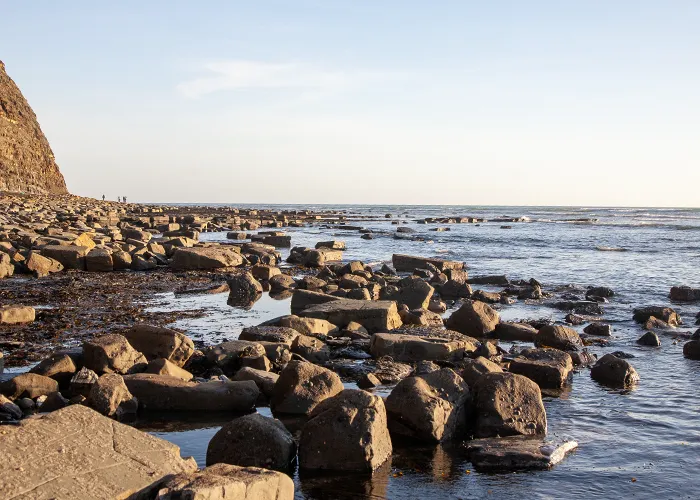
Because Kimmeridge Bay is a broad wave-cut platform of rock rather than a simple sandy beach, it is one of the very best places in the country to explore the seashore. At low tide the ledges reveal a maze of pools teeming with life - sea anemones, crabs, blennies, starfish and countless invertebrates - making it a paradise for rock pooling with children.
The bay lies within the Purbeck Marine Wildlife Reserve, and its sheltered, shallow, clear waters are ideal for safe snorkelling; there is even an underwater snorkel trail to follow in summer. Down by the shore, the Dorset Wildlife Trust runs the Fine Foundation Wild Seas Centre, with an aquarium, exhibitions and a busy programme of events and guided rock-pool rambles. Lucky visitors may spot seals, dolphins or even barrel jellyfish offshore at certain times of year.
Above the water, the cliffs host seabirds including guillemots, razorbills and other species, while down on the beach you can still find traces of the bay's wartime past, including a pillbox and anti-tank defences.
A surprising industry
Oil, alum & energy
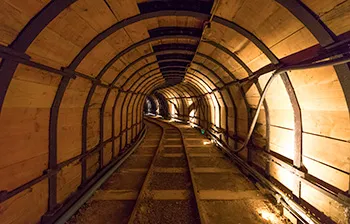
The same organic-rich shale that makes Kimmeridge so fossil-rich also made it, for centuries, a source of fuel and chemicals. As far back as the early 1600s, Sir William Clavell established alum works and a glass industry at the bay, using the local shale and shipping goods from a small quay. In the 19th century, oil shale was mined from the cliffs and distilled to make products such as paraffin, varnish, paint and lubricating grease.
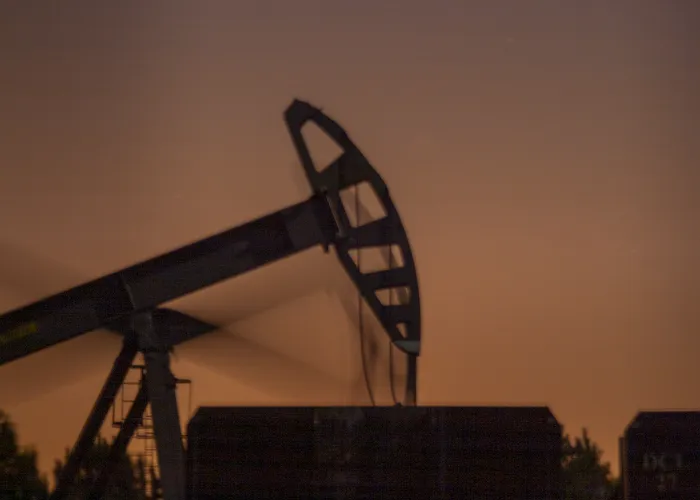
Kimmeridge's most surprising claim is modern: a "nodding donkey" oil pump still works away quietly on the cliff top above the bay. Drilled by BP in the late 1950s and producing a modest output, it is often described as one of the oldest continuously working oil pumps in the country. The Kimmeridge Clay is no minor curiosity, either - as a petroleum source rock it is one of the most important in the North Sea and Wessex Basin.
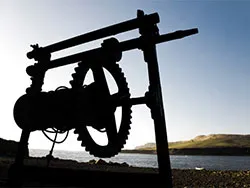
You can still spot evidence of this layered industrial past around the bay, from the old quay and winch to the gentle nod of the pump - an unexpected counterpoint to the timeless rock pools below.
Visiting
When's the best time to go?
Aim for low tide. That's when the ledges and rock pools are exposed, fossils wash up on the beach, and the snorkel trail is at its most rewarding. Check a tide table before you set off — and note the bay is reached by a small toll road.
Visiting Kimmeridge
- Location
- South-west Isle of Purbeck, about 6 miles SW of Wareham, Dorset
- Getting to the bay
- Via the village and a small private toll road down to the beach car park
- Best conditions
- Low tide for rock pools, fossils & the snorkel trail - check a tide table
- Fossil collecting
- SSSI - no hammering; loose beach finds only, and keep clear of the cliffs
- Firing ranges
- Parts of the coast adjoin the Lulworth Ranges; sea/coast access may close during firing
- Facilities
- Museum, marine centre, parking, toilets; pub & refreshments in the area
Tips before you go
- Time your visit for low tide - at high tide the ledges and rock pools disappear and the beach narrows considerably
- The shale cliffs are soft, steep and prone to rockfalls; keep well away from the base and never climb them
- Tides reach the foot of the cliffs and can cut you off - only explore eastward along the foreshore on a falling tide, and watch the water
- Collect only loose fossils from the beach; hammering the protected cliffs and ledges is not permitted
- The ledges are slippery with seaweed - wear sturdy footwear with good grip for rock pooling
- Check Lulworth Ranges firing times if you plan to walk the coast path west towards Tyneham or Worbarrow
References & further reading
Sources used for the geology, heritage, wildlife and visitor information added to this page:
- The Etches Collection - Kimmeridge Bay & Village (Clavell Tower, Smedmore, oil history, marine life)
- British Geological Survey - Kimmeridge Bay (Kimmeridge Clay, ammonite eggs, rock pools)
- Geological Society - Kimmeridge Bay geosite (SSSI, marine reserve, oil reservoir, source rock)
- The Landmark Trust - Clavell Tower (history and the 2008 relocation)
- Wikipedia - Kimmeridge (village, St Nicholas Church, general history)
- UK Fossils - Kimmeridge Bay (cliff stratigraphy, tides & collecting safety)
- Visit Dorset - Lulworth Range Walks (firing ranges & coastal access)