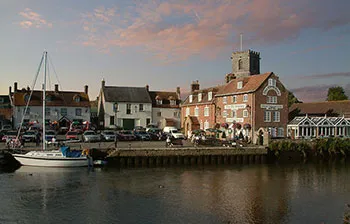
Getting There
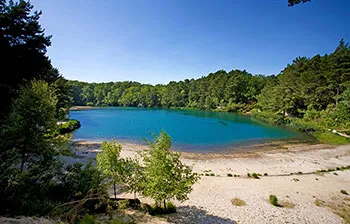
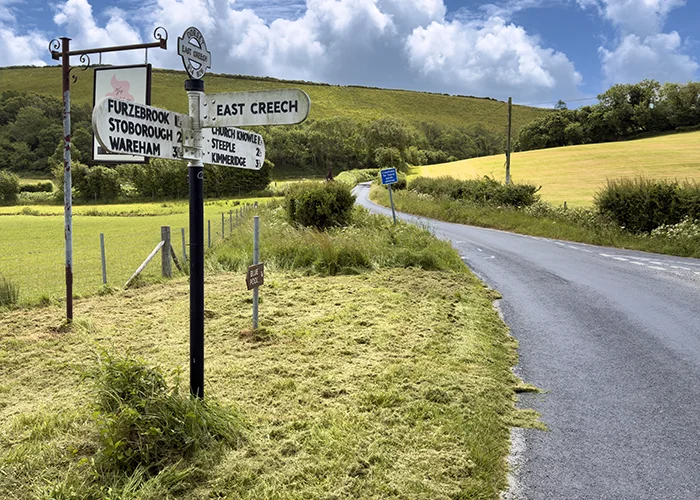
From the A351, turn off at the Blue Pool roundabout, continue ~2 miles to the junction signed for Creech, then follow that lane ~1 mile. For the ridge, continue up Grange Hill to the Creech Hill viewpoint car park.

Tucked beneath the northern slope of the Purbeck Hills near Wareham, Creech is small in size but large in story: an Elizabethan country house, a private chapel built from the stones of a dissolved abbey, and the most photographed folly in Purbeck silhouetted on the ridge above.
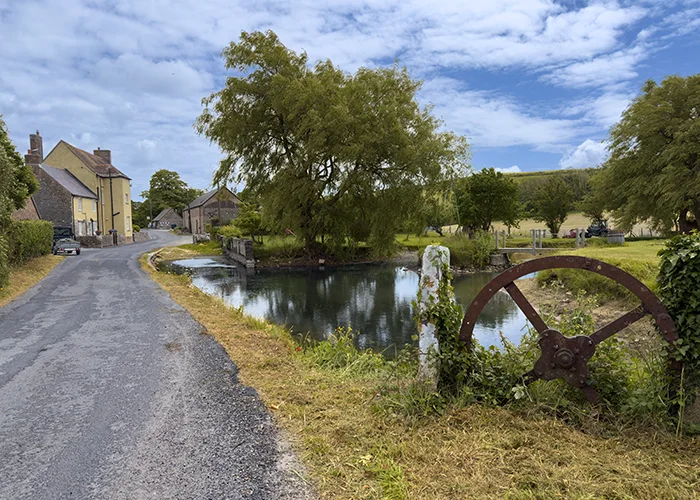
Creech lies on the northern, sheltered side of the Purbeck Hills, a few miles south of Wareham, in a quiet pocket of farmland and woodland between the chalk ridge and the heaths of the Frome valley.
It is a small place, more a scatter of houses and farmland around the grand estate of Creech Grange than a conventional village, but its setting is exceptional. The chalk ridgeway rises immediately to the south, carrying one of the finest ridge walks in southern England, while the wooded estate grounds fold into the valley below. Administratively the Grange and the high ground above it sit within the parish of Steeple.
Getting there: from the A351, turn off at the roundabout signposted for the Blue Pool. Continue for roughly two miles to a side junction signed for Creech, then follow that lane for about a mile. The steep climb of Grange Hill takes the road up over the ridge towards the coast.
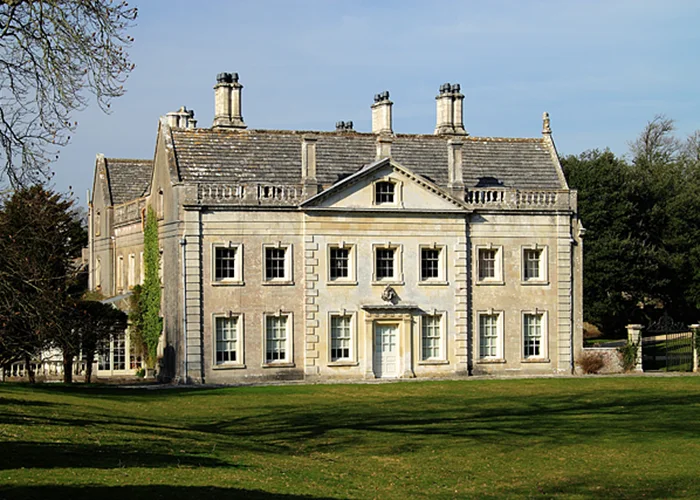
The heart of Creech is its great house. Creech Grange was built by Sir Oliver Lawrence (1507–1559), who acquired the land from the dissolved Bindon Abbey near Wool following Henry VIII's Dissolution of the Monasteries in 1539. Lawrence was brother-in-law to Thomas Wriothesley, 1st Earl of Southampton and Henry's Lord Chancellor, a connection that placed this remote Purbeck estate close to the centre of Tudor power.
The house was badly damaged by Parliamentarian forces during the Civil War and substantially rebuilt thereafter; the east and front facades were remodelled in the mid-19th century, giving the Grange the appearance it largely retains today. It is now a Grade I listed building, set in Grade II* registered parkland that includes formal gardens, woodland pleasure grounds, and contoured walks through Great Wood. Part of the estate is a designated Site of Special Scientific Interest, and the outbuildings are an important roosting site for greater horseshoe bats.
In 1691 the estate was bought by Nathaniel Bond, a wealthy barrister and Member of Parliament, after the Lawrence line died out. The Bond family went on to hold Creech Grange, and their wider Purbeck estates, including Tyneham, for nearly three centuries. The house remains a private residence and is not generally open to the public.
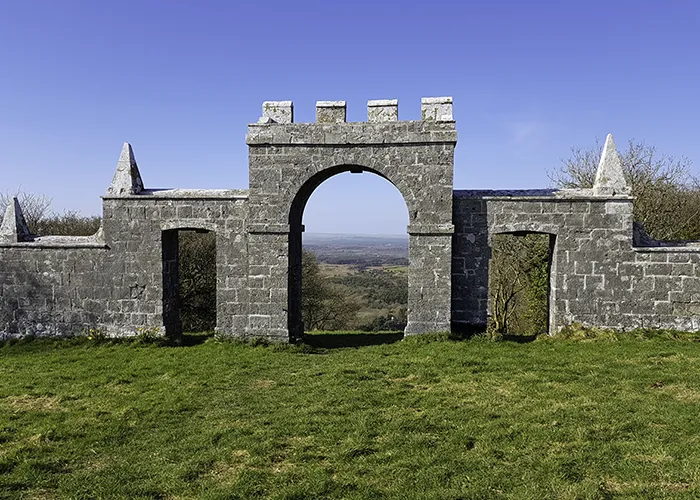
Crowning the ridge high above the Grange is one of Purbeck's most distinctive landmarks: Grange Arch, also known as Creech Arch or Bond's Folly. Built in 1746 by Denis Bond, Nathaniel's son and heir, it is an 18th-century folly in ashlar stone, formed as a triple archway with a battlemented central arch flanked by smaller openings and pinnacles. It stands near Ridgeway Hill, the second-highest point of the Purbeck Hills, at around 198 metres.
The arch is essentially a piece of theatre. It was designed to provide a focal point on the skyline as viewed from the grand south-facing rooms of Creech Grange in the valley below. Before the trees of Big Wood grew up to obscure the sightline, the arch framed the sky like a window, a statement of the owner's land, taste, and cultural ambition. Denis Bond spent around £1,300 on restoring the estate (close to £1 million in today's money), and the arch was the most conspicuous of his works.
In 1942 the arch and the land around it were given to the National Trust, becoming the first National Trust property in the Isle of Purbeck. It is a Grade II* listed building and is freely accessible on foot. From beside the arch you can look down through the deliberate gap in the trees to the house far below.
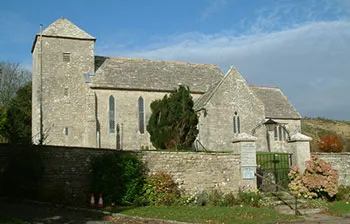
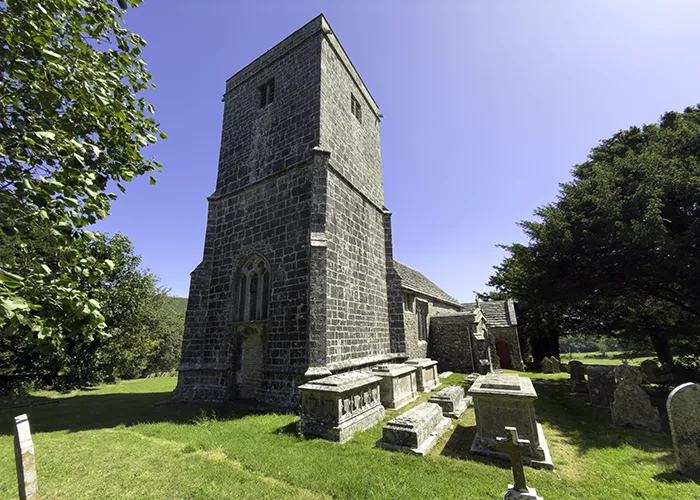
Close to the house stands the private estate Chapel of St John the Evangelist, a building with a curious and rather beautiful history. It was begun in 1746 by Denis Bond, the same man who raised Grange Arch in the same year, and it was conceived partly as a landscape feature to complement the grounds. Most remarkably, Bond incorporated into it a genuine 12th-century Norman chancel arch that he had removed from the ruins of a dissolved monastic site, variously recorded as East Holme Priory or Bindon Abbey, reusing medieval stonework eight centuries old.
Denis Bond died before the chapel was completed, and for around a century the building stood unfinished. It was eventually rebuilt and completed between 1849 and 1868 for the Reverend Nathaniel Bond, at the same time the east facade of the house was being remodelled. The result is a Grade I listed building of real architectural interest, blending genuine medieval fabric with 18th- and 19th-century Gothic work.
The chapel sits within the private grounds of Creech Grange and is not routinely open to the public, but its history is a fine illustration of how Purbeck's great estates recycled the stone of the dissolved abbeys into new buildings across the centuries.
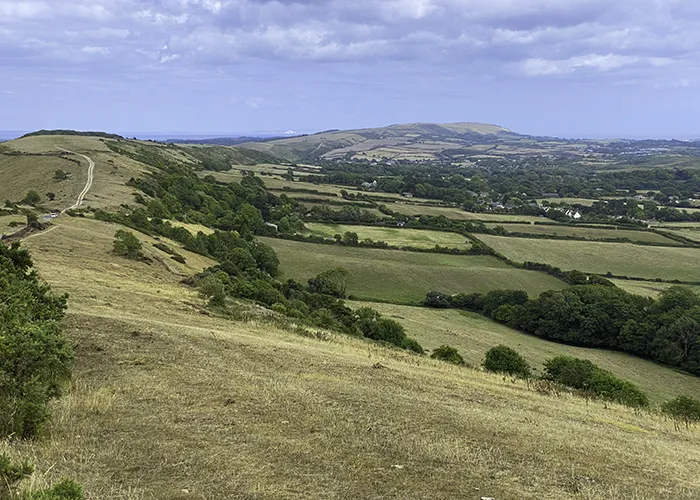
Creech is one of the best access points to the Purbeck chalk ridgeway, a magnificent green spine that runs roughly 20 kilometres coast to coast, from Ballard Down near Swanage in the east to Flower's Barrow above Tyneham in the west. The Isle of Purbeck Viewpoint car park at the top of Creech Hill (free, but on the edge of the MOD Lulworth Ranges, so check firing-time access before travelling) gives an immediate, sweeping panorama and a level walk east along the ridge to Grange Arch and on towards Corfe Castle.
The views from the ridge are some of the finest in Dorset. To the north lies Poole Harbour with the dark green of Rempstone Forest along its southern shore; to the east, the broken silhouette of Corfe Castle in the only gap in the hills; and on a clear day the chalk continues visibly across to the Needles on the Isle of Wight. Just to the west stands Creech Barrow Hill, a detached, conical outlier of the Purbeck Hills crowned with a prehistoric barrow, offering a 360-degree view for those willing to make the short, steep climb.
A popular there-and-back walk of about 3 miles runs from the Creech Hill car park to Grange Arch and Creech Barrow, all on the open downland of the ridge. Longer circuits link Creech with Steeple, Kimmeridge, and Corfe Castle. There are no refreshment facilities on the ridge itself; the nearest pubs are the New Inn at Church Knowle and the Scott Arms at Kingston.
Everything you need to plan a visit to Creech and the surrounding ridge.
From the A351, turn off at the Blue Pool roundabout, continue ~2 miles to the junction signed for Creech, then follow that lane ~1 mile. For the ridge, continue up Grange Hill to the Creech Hill viewpoint car park.
The free Isle of Purbeck Viewpoint car park sits at the top of Creech Hill, but it lies on the edge of the MOD Lulworth Ranges. Always check firing times before you travel.
Freely accessible on foot, owned by the National Trust. Walk east along the ridge from the Creech Hill car park, about 10–15 minutes. No charge, no facilities.
The house and its chapel are private and not generally open to the public. Both can be seen from public footpaths and from the ridge above. Please respect the estate's privacy.
No refreshments at Creech itself. The nearest pubs are the New Inn at Church Knowle (~0.8 miles) and the Scott Arms at Kingston, plus the Clavell at Kimmeridge.
OS Explorer OL15 (Purbeck & South Dorset) covers Creech, the ridge, Grange Arch, and Creech Barrow. Grange Arch grid reference: SY911821.