Museum website
The official Swanage Museum website has downloadable educational worksheets, opening times and information about the collections.
swanagemuseum.org.uk

A volunteer-run treasure house at the heart of Swanage, exploring the town's prehistoric past, stone quarrying heritage, Victorian seaside history, wartime story and the remarkable radar science that changed the world.
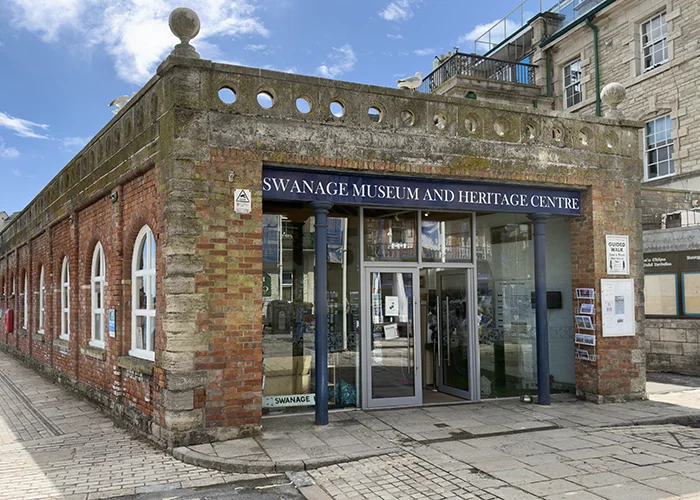
The Swanage Museum and Heritage Centre is housed in the Old Market Building at The Square, a Grade II listed building originally constructed in the 1890s on the site of the "Bankers", where locally quarried stone was stored before shipment by sea. The building itself is part of the story it tells.
Despite its modest scale, the museum packs an extraordinary range of Swanage and Purbeck history into its displays. It was established in 1976 by David Florence and Phyllis Mapley as the Tithe Barn Museum and Art Centre, later merging with the Heritage Centre and moving to its current location in 2005. It is entirely run by volunteers, a remarkable community achievement, and entry is free.
The museum sits at the intersection of the High Street and Institute Road, opposite the Square where locals and visitors gather. It is impossible to miss, and the displays inside reward far longer than the casual fifteen minutes many visitors initially plan. From fossils and dinosaur tracks to Victorian shopfronts, from quarrying families to wartime radar, the collection tells the full arc of Purbeck's human and natural history.
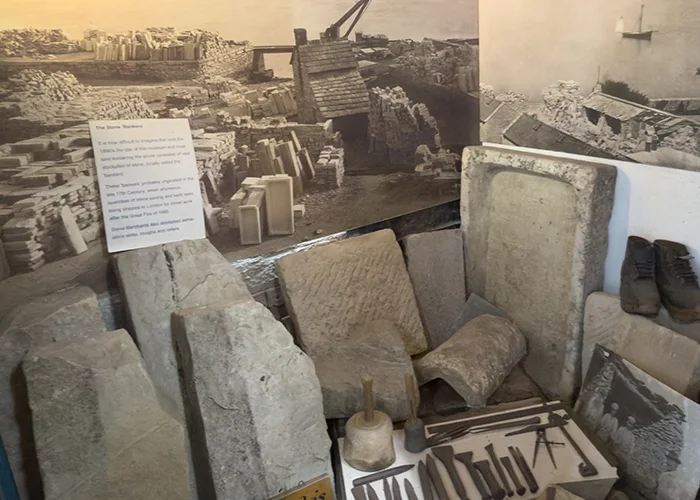
The museum's core collection is built around Swanage's stone trade, the industry that created the town and shaped everything about it, from the character of the buildings to the livelihoods of its families. Displays cover the full arc of Purbeck stone quarrying from Roman times through the great medieval cathedral-building era to the Victorian expansion, with samples of the different grades of stone, information about the quarrying families (several of whom worked the same quarries for generations) and explanations of the techniques used.
Purbeck marble, the dark polished limestone used so extensively in medieval cathedrals, features prominently, with examples that bring to life why this stone was so prized by the builders of Salisbury Cathedral, Westminster Abbey and Canterbury Cathedral. The museum also covers the London trade, including the rebuilding of London's streets after the Great Fire of 1666, when stone was shipped direct from Swanage beach.
The geological dimension extends to the Jurassic Coast more broadly, with displays on fossils, including examples found on Purbeck's beaches and cliffs, and information about the amazing geological diversity of the area, from the Jurassic rocks of the southern cliffs to the chalk of Ballard Down and the Tertiary sands and gravels of Studland.
One of the most distinctive aspects of Swanage is the remarkable collection of London architectural features scattered around the town, bollards, lamp standards, a clock tower, the facade of the town hall, that were brought to Swanage by the Victorian stone merchant and builder John Mowlem and his nephew George Burt as ballast on the return journey of stone ships. The museum tells this extraordinary story, explaining how Swanage became "Old London by the Sea" and providing directions to find these features on three specially devised Heritage Trails (available from the museum for a small charge).
The museum also maintains an extensive collection of local art, including large art folders displaying prints of the works of many artists who lived in or visited Swanage, a significant artistic heritage stretching back to the nineteenth century and reflecting the town's long popularity with painters attracted by the quality of the coastal light and the beauty of the surrounding landscape.
A well-stocked research room provides access to an extensive photograph and newspaper archive, early parish registers, burial records, rate books and trade directories, making the museum an important resource for family history research. Groups of up to 20 can be accommodated to watch a 10-minute educational video about the history of Swanage, and school visits are particularly welcomed.
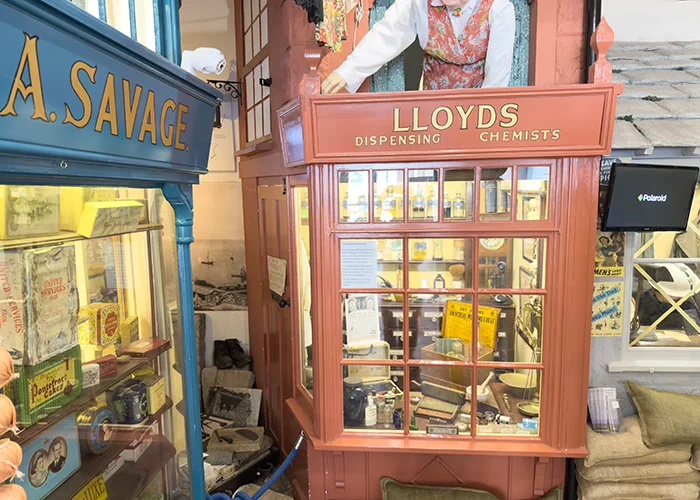
A dedicated section of the museum covers one of the most remarkable and least-known stories in modern British science: the development of radar at Worth Matravers, just four miles from Swanage, during the Second World War. The Telecommunications Research Establishment (TRE), which operated here from 1940 to 1942, developed the radar technologies that helped win the Battle of the Atlantic, the night bombing campaign and the Battle of Britain, a contribution whose significance is only now being more widely appreciated.
The museum's WW2 displays also cover the bombing of Swanage itself, the town received more air raid alerts than London, with historic photographs of the bomb damage on the High Street and Springfield Road, and accounts of the attacks. The story of the D-Day rehearsal at Studland (Exercise Smash) and the evacuation of Tyneham village are also covered, providing a comprehensive picture of Purbeck's wartime experience.
The museum also has downloadable educational worksheets covering The Stone Trade, Victorian and Edwardian Times, and World War 2 in Swanage, making it an excellent resource for schools planning visits to the area.
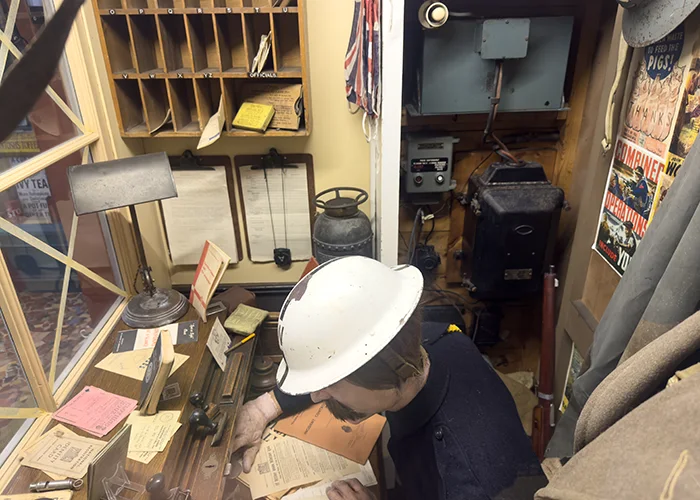
Entirely run by volunteers, entirely free to enter, and covering everything from prehistoric fossils to twentieth-century radar, the Swanage Museum is one of the best small local museums in Dorset.
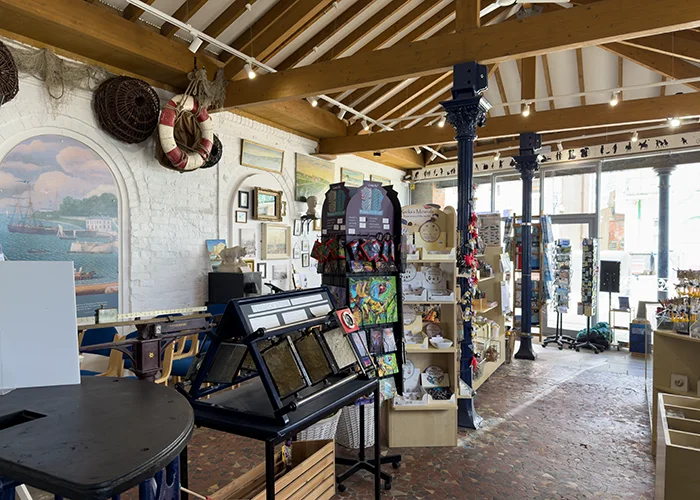
The museum is a perfect starting point for exploring Swanage and the Isle of Purbeck, pick up a Heritage Trail leaflet and discover "Old London by the Sea" on foot.
The official Swanage Museum website has downloadable educational worksheets, opening times and information about the collections.
swanagemuseum.org.uk
Explore the Victorian town that grew from the stone trade, with London architectural relics identified in the three Heritage Trails.
About Swanage
The museum's core theme, go deeper into the history of Purbeck stone extraction and the families that shaped the industry.
About quarrying
The museum covers the radar story and wartime bombing in depth, read the full education resource before or after your visit.
WW2 in Purbeck
The Victorian pier is just a short walk from the museum, another piece of the town's heritage that the museum interprets.
Visit the pier
The heritage steam railway runs from Swanage station to Corfe Castle and Norden, combine a museum visit with a steam journey.
Swanage Railway
Sources used to verify and expand the content on this page: