Lulworth & Durdle Door
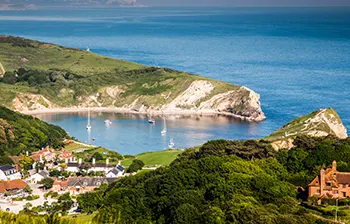
The famous limestone cove and sea arch, at the western end of the same range-bound coastline.
Discover Lulworth

A Dorset village frozen in 1943, its people evacuated for the war effort on the promise they could return, a promise that was never kept.
Hidden in a remote valley between the Purbeck Hills and the sea, about five miles west of Corfe Castle, Tyneham is Dorset's "ghost village", empty for more than eighty years, yet far from forgotten.
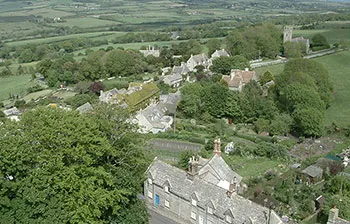
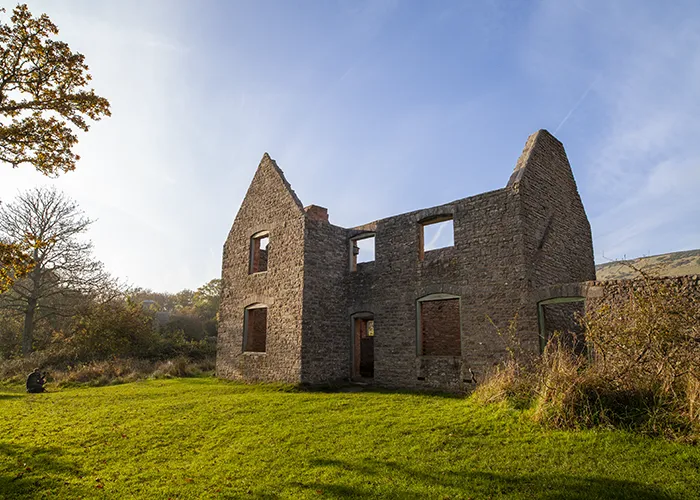
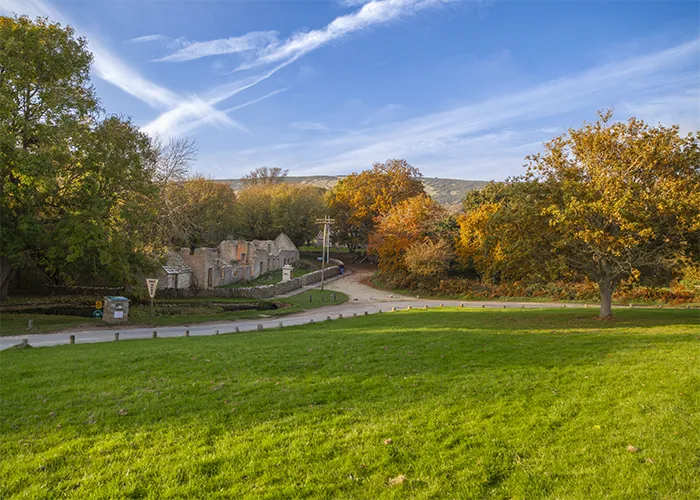
Once a small, self-contained farming community with a church, a school, a rectory, a post office and a scatter of stone cottages and farms, Tyneham was emptied of its people in December 1943 and never resettled. Today its roofless cottages stand as quiet shells along the village street, while the church and schoolhouse, carefully preserved, house exhibitions telling the story of the lives lived here. Walking through it is a strangely moving experience: peaceful, atmospheric, and steeped in both wartime history and the slow rhythms of the old Purbeck countryside.
Tyneham sits within the Dorset National Landscape and at the heart of the Lulworth Ranges, the Army's live-firing training area that has, paradoxically, sealed the valley away from modern development and left it one of the most unspoilt corners of the Dorset coast.
Tyneham's roots run deep. The settlement is recorded in the Domesday Book of 1086, and people had farmed and lived in this sheltered valley since long before then. For centuries it was a typical Purbeck estate village, its life centred on the land, the sea a short walk away at Worbarrow Bay, and the great house of Tyneham at its heart.
By the early twentieth century it was a quiet rural community of around 225 people. The parish church of St Mary's served the valley, the village school taught its children, and families worked the surrounding farms, many of them having lived in Tyneham for generations. It was, by all accounts, a slow and settled way of life, little touched by the modern world even into the 1940s.
That very remoteness, and the rugged coast and downland around it, would prove to be the village's undoing, for it made the valley ideal ground on which to train an army.
In November 1943, at the height of the Second World War, the War Office requisitioned Tyneham and some 7,500 acres of surrounding heath and downland for urgently needed military training. With the Allied invasion of Europe being planned, the area was needed to prepare troops and tanks for the D-Day landings. The villagers were given around a month's notice to leave everything behind.
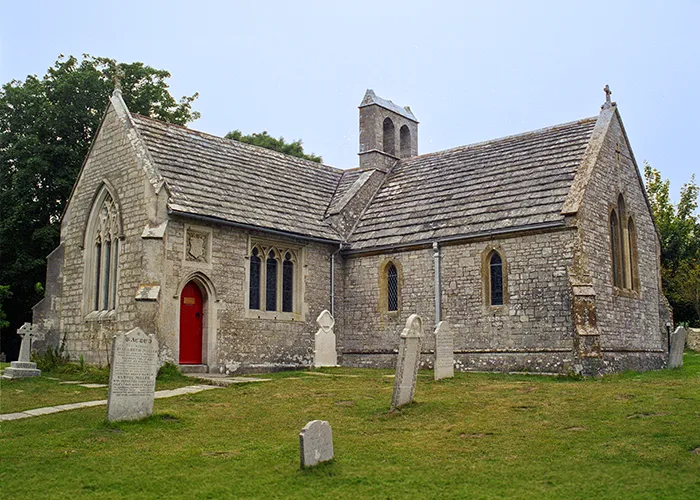
Just before Christmas, in December 1943, the last of Tyneham's roughly 225 residents left their homes. They went believing the move was temporary, a wartime sacrifice they would make for the duration and no longer. As the final villagers departed, one of them pinned a now-famous note to the door of St Mary's Church, asking that the village be treated kindly in their absence and expressing the hope that they would one day return.
They never did. A pledge had been given that residents could come home "after the emergency," but in 1948, with the Cold War deepening and the land judged too valuable for defence, the decision was made permanent through a compulsory purchase. Despite determined campaigns over the following decades, Tyneham was never handed back to its people.
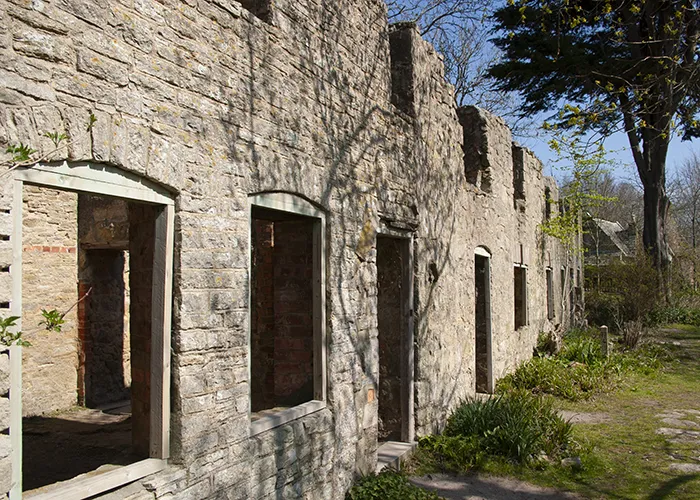
Decades of weather and the occasional stray of training took their toll, and most of Tyneham's buildings are now roofless, ivy-clad ruins, the post office, the rectory, the farmhouses and the row of cottages. Information boards stand outside the main buildings, each carrying archive photographs and the stories of the families who lived and worked there, so the empty shells regain their names and their people as you walk.
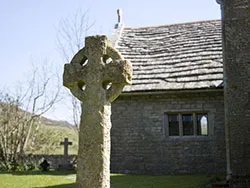
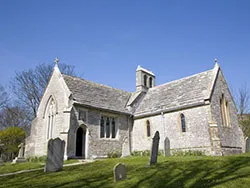
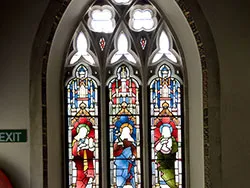
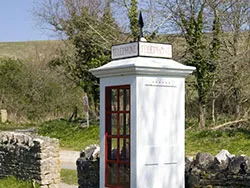
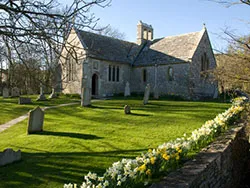
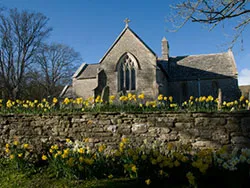
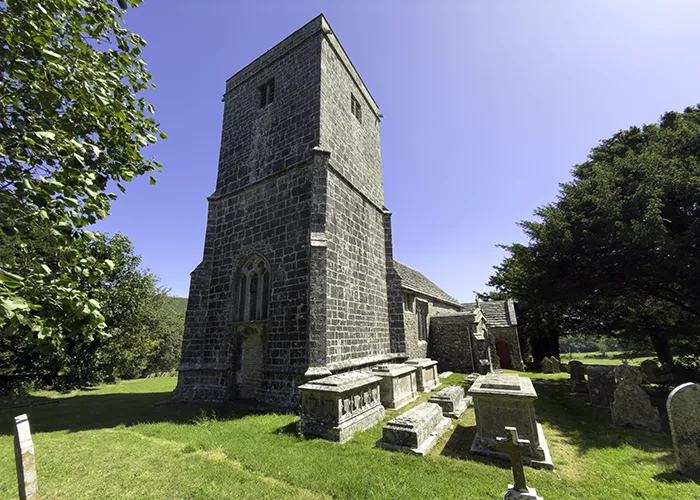
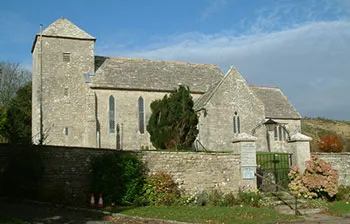
Two buildings have been saved and restored. St Mary's Church survives largely intact and now serves as a small museum, while the village schoolroom has been preserved almost exactly as it was left, with children's work on display and names still on the coat pegs, a detail that catches many visitors off guard. Tyneham Farm has also been opened up, with exhibitions about the valley's farming past. Outside, the old red telephone box and the water pump remain as quietly photographed landmarks.
It is worth knowing that Tyneham House, the village's manor house, no longer stands, it was stripped and later demolished during the military years, and is not part of the site you can visit.
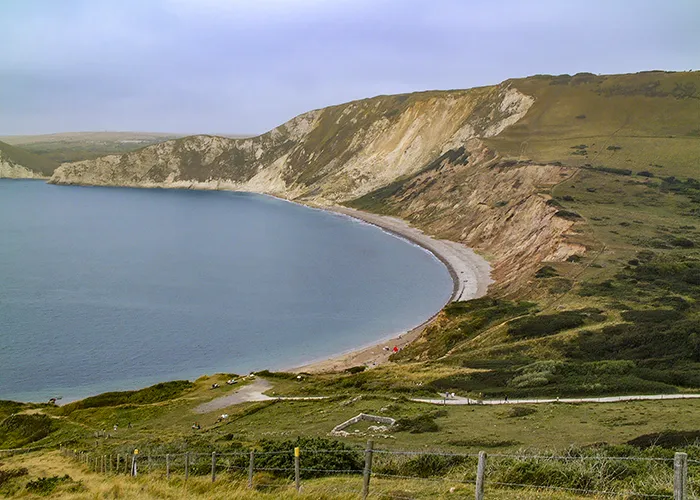
One of the great rewards of a visit is the walk down to the sea. From the village a gentle track follows the valley for about a mile, roughly twenty minutes, to Worbarrow Bay, a sweeping, unspoilt curve of shingle and cliff that, because of its protected position inside the ranges, feels wonderfully wild and quiet. From the bay you can climb the little headland of Worbarrow Tout, or take the steeper path up to the Iron Age hillfort of Flower's Barrow on the cliff edge, with sweeping views along the Jurassic Coast.
Ironically, decades of military control have made this one of the richest wildlife havens in Dorset. Spared from intensive farming and development, the valley and ranges shelter deer, badgers, butterflies and a wealth of birds, with flower-rich grassland and undisturbed coast. The whole coastline here is part of the Jurassic Coast World Heritage Site.
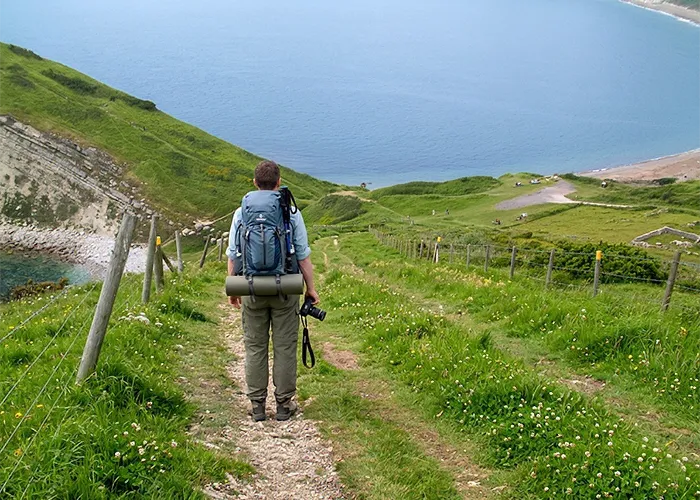
The Tyneham valley connects into the wider network of waymarked Lulworth Range Walks, which run along the coast between Kimmeridge Bay and Lulworth Cove. Walkers must keep strictly to the marked paths between the yellow-topped posts, as unexploded military debris can remain in the surrounding land.
No, and this is the most important thing to know. Tyneham lies inside a live firing range and only opens on certain days, usually most weekends and during main holiday periods. Always check the official access dates before you set out.
Tyneham pairs naturally with some of the finest coast and countryside in west Purbeck.
The famous limestone cove and sea arch, at the western end of the same range-bound coastline.
Discover Lulworth
A fossil-rich bay with rock ledges, a marine reserve and the Etches Collection museum.
Visit Kimmeridge
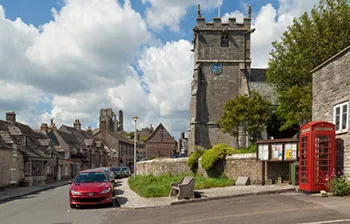
The romantic ruined castle and stone village guarding the gap in the Purbeck Hills, five miles east.
Discover Corfe
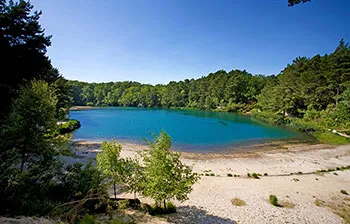
A former clay pit whose mineral waters shift through striking shades of blue and green.
About Blue Pool
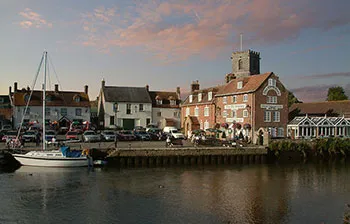
A historic walled Saxon town on the River Frome, the gateway to the Isle of Purbeck.
Explore Wareham
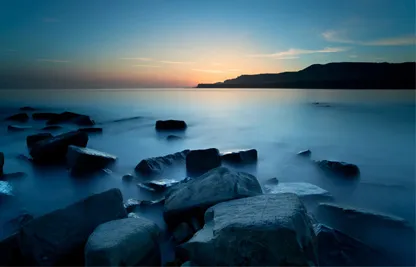
The wider landscape of hills, heaths and stone coast that surrounds the lost valley.
Explore Purbeck
Sources used for the history, visitor and access information added to this page: