Studland Village
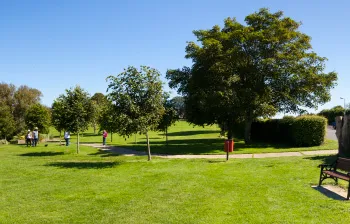
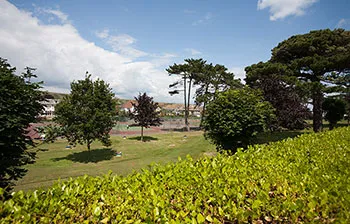
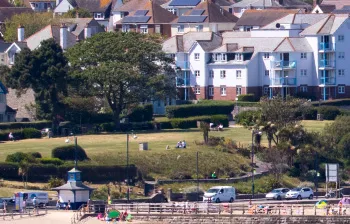
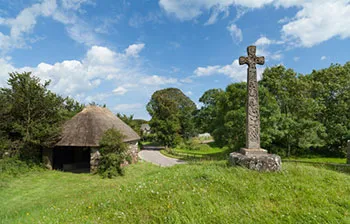
A Norman church among the finest in Dorset, a pub, and the Purbeck heathland stretching behind, a tranquil village just behind the dunes. 1.4 miles.
About Studland

Britain's best-known clothing-optional beach with a 900-metre stretch of golden sand at the northern end of Knoll Beach, backed by one of the richest wildlife reserves in England, and managed by the National Trust since the 1920s.
The naturist area at Studland Bay is, by most accounts, the most visited and best-known clothing-optional beach in Britain, a place where the tradition of bathing in the open air without clothes stretches back to at least the 1920s.
Studland Bay occupies four miles of the finest sandy coastline in the south of England, on the eastern shore of the Isle of Purbeck. The bay faces east and north across the mouth of Poole Harbour, with views to Old Harry Rocks to the south, the Isle of Wight on the horizon, and the sweep of Bournemouth Bay stretching away to the north. Behind the beach, the Studland and Godlingston Heath National Nature Reserve, one of the most biodiverse stretches of lowland heath remaining in the United Kingdom, provides a remarkable natural backdrop: heather, bog, freshwater lagoon, towering sand dunes and oak woodland, all within a short walk of the sand.
The whole of Studland Bay is managed by the National Trust, which owns the beaches, the car parks and the heathland behind them. The naturist area occupies a 900-metre section of Knoll Beach, at the northern end of the bay beyond the main car park. It is clearly marked with green-topped posts and signs, and the National Trust actively welcomes naturists to the site, working with British Naturism and the local community to ensure it remains a respectful, enjoyable and well-managed destination for everyone.
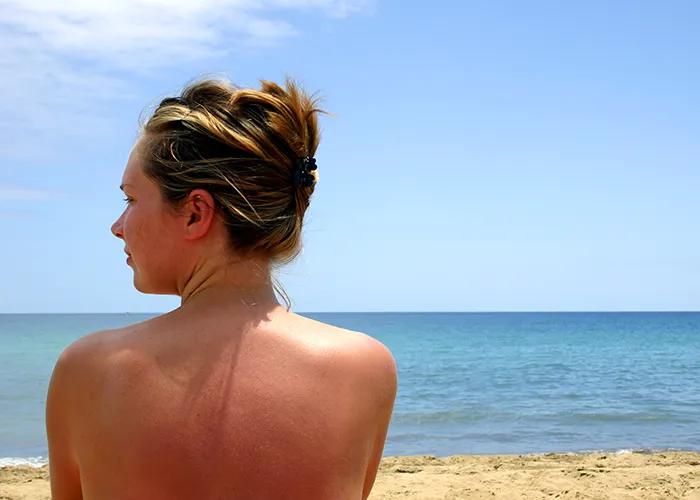
Naturism at Studland is not a recent development or a briefly fashionable experiment, it has a documented history stretching back to at least the 1920s, making this one of the oldest continuously used naturist beaches in the country. The wide, sheltered sands of Knoll Beach, the warm, shallow water and the privacy provided by the high dunes behind were attractive to naturists long before the practice received any official recognition or designation.
Among the beach's most celebrated early visitors were the playwright George Bernard Shaw and the children's author Enid Blyton, both of whom bathed here without clothes. Blyton's familiarity with Studland and the Purbeck landscape ran deep: the village of Studland was her inspiration for Toytown in the Noddy books, and the wider Purbeck countryside featured in her Famous Five stories. The beach has also appeared in other unexpected cultural contexts, Coldplay filmed the music video for their debut single Yellow on these shores in 2000.
The National Trust formally recognised and designated the naturist area at Knoll Beach, acknowledging the long-established tradition and providing a managed, clearly marked space for clothing-optional bathing. In April 2013 the Trust expanded the designated area following requests from naturist groups, extending the northern boundary approximately fifty metres inland to provide more space on the dunes. British Naturism holds regular organised beach days at Studland, and the site is considered one of the flagship naturist destinations in the United Kingdom.
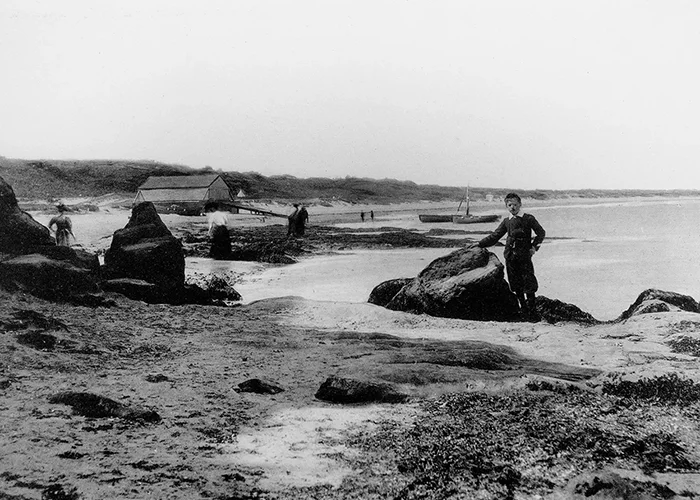
The designated naturist area occupies a 900-metre section of Knoll Beach at the northern end of Studland Bay. From the Knoll Beach car park, walk north along the beach, beyond the main beach area and through the dunes, and you will reach the start of the naturist zone, clearly marked with green-topped posts and signage on both the beach and the dune paths. The walk from the car park takes approximately thirty minutes.
The naturist area opens directly onto the same wide, golden sand as the rest of Knoll Beach, with gently shelving water ideal for swimming and the same sweeping views of the Isle of Wight and Old Harry Rocks. The dunes immediately behind provide shelter from the breeze and a degree of natural privacy, and the boundary of the area is extended inland to the dune tops in the northern section, marked by the green posts. The boundary is clear, and visitors are asked to dress before leaving the designated zone.
For those who wish to avoid the naturist area, an alternative route through the dunes is available: the Heather Walk trail runs parallel to the beach through the dune and heathland behind Knoll Beach, bypassing the naturist section entirely and rejoining the beach to the north of Shell Bay. The trail is waymarked and easy to follow, and passes through some excellent wildlife habitat.
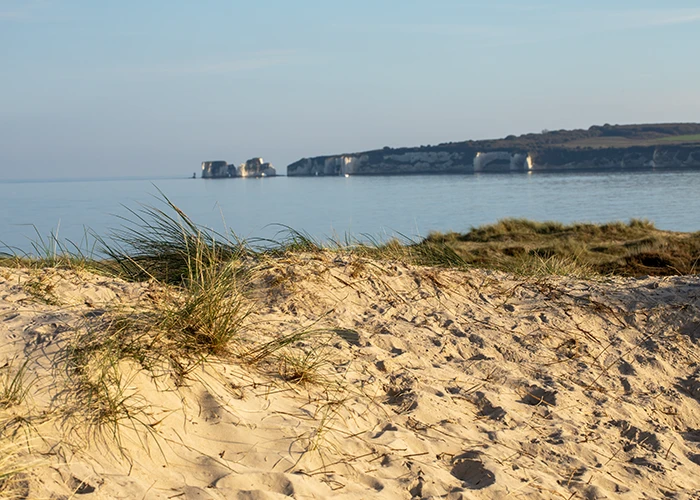
Knoll Beach is one of the finest stretches of sand on the south coast of England. The beach is broad, flat and shelves very gently into the sea, making the water exceptionally safe for swimming, shallow for a long way out, warm by midsummer, and free of the strong currents that affect some of the more exposed Purbeck beaches. The water is clean and clear, with good visibility on calm days, and the bay offers natural shelter from the prevailing south-westerly wind.
The naturist zone shares all these qualities. At low tide, a wide band of firm, pale sand is exposed, ideal for walking, sunbathing and games. At high tide, the beach narrows but remains generous. The dunes immediately behind the naturist area rise steeply to two or three metres, providing natural windbreaks and a sense of enclosure that many visitors appreciate. From the beach or the top of the dunes, the views are outstanding: Old Harry Rocks to the south, the chalk cliffs of the Isle of Wight on clear days to the east, and the long curve of Bournemouth and Poole Bay to the north-east.
Studland Bay does not have lifeguard cover at the naturist section, the nearest RNLI lifeguard patrol is on the main Knoll Beach further south. Swimmers should be aware of the tidal currents at the northern end of the bay near Shell Bay, which can be strong on an ebbing tide as water drains out of Poole Harbour through the narrow entrance channel. On an incoming or slack tide, the swimming throughout the bay is excellent.
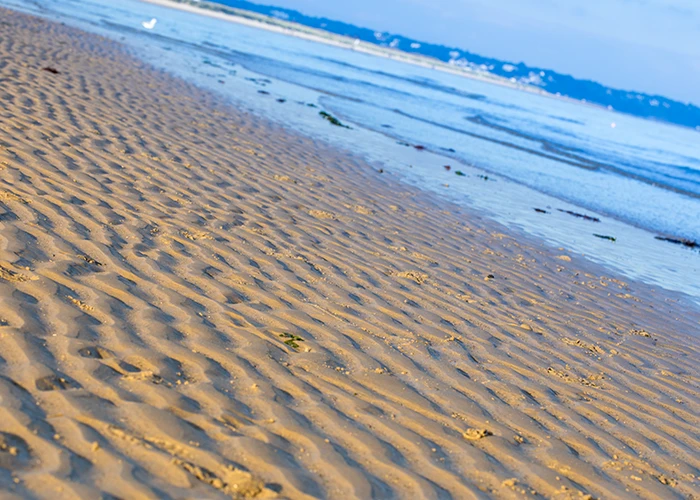
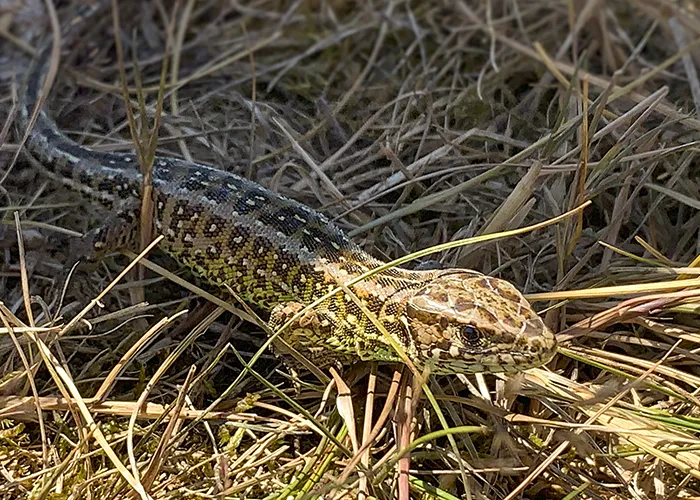
The beach at Studland is only half the story. Behind the dunes lies the Studland and Godlingston Heath National Nature Reserve, 631 hectares of lowland heathland, the largest and most pristine expanse of this increasingly rare habitat in Dorset. The heathland is managed by the National Trust with a herd of conservation cattle, and supports an extraordinary range of wildlife, including all six of the reptile species native to Britain: the adder, the grass snake, the smooth snake, the common lizard, the sand lizard and the slow worm.
The reserve's habitats span an unusual range in a small area. From the beach, you move through open sand dunes, stabilised by marram grass, with the characteristic hollow-and-ridge topography of a mature dune system, into dune slacks and wet heath, then onto the dry purple heather of the ridge, and finally to the freshwater lagoon of Little Sea at the heart of the heath. Little Sea is a former tidal inlet cut off from the sea by the growing dune system over the last few centuries, and is now a peaceful reed-fringed lake supporting wildfowl, dragonflies and otters.
In summer the heathland is alive with butterflies, including the rare silver-studded blue, which breeds on the heath in large numbers. Dartford warblers nest in the gorse, nightjars churr on warm evenings, and roe deer move quietly through the birch scrub at the heath margin. The National Trust offers guided ranger tours, kayaking to Old Harry Rocks, yoga in the dunes and beach clean events throughout the year, a full programme of outdoor activities that complement the naturist beach.
The naturist area at Studland operates on the basis of mutual respect, between naturists and clothed visitors on the wider beach, and among naturists themselves. The National Trust, working alongside British Naturism, the Studland Beach Users Action Group (SBUAG, established 2005) and Dorset Police, maintains an active presence to ensure the area remains welcoming and safe for all. Rangers and police patrol regularly and are available to assist with any concerns.
Photography and filming of other people without their explicit consent is prohibited throughout the naturist area, and the National Trust warns that drones and cameras may be confiscated as evidence. Indecent behaviour will not be tolerated and will be reported to the police, incidents should be reported on 999 in an emergency, and to the Studland team on 01929 450500. The approach is clear and consistent: the area is clothing-optional, not a licence for anything other than straightforward naturist beach use.
Visitors to the naturist area are asked to be clothed whenever they leave the designated zone, this applies to the car parks, the café, the toilets and the dune paths outside the marked boundaries. There are no facilities within the naturist area itself; the nearest toilets are at Shell Bay car park and Knoll Beach, and the café is next to the Knoll Beach car park. British Naturism's own guidance for beach users recommends sitting on a towel, being mindful of personal space, and treating all other visitors with consideration.

Studland is widely considered the most welcoming introduction to naturism in the UK. The designated area is clearly marked, the atmosphere is relaxed and inclusive, and the National Trust actively manages the site to ensure it stays that way. You don't have to remove any clothes, the area is clothing-optional, not clothing-prohibited, and many visitors simply enjoy the exceptional beach and wildlife in whatever they happen to be wearing.

If you would rather not pass through the naturist zone, take the Heather Walk trail, a waymarked path through the dunes and heathland that runs parallel to the beach and rejoins it north of the naturist boundary. Follow the signs from Knoll Beach car park. The walk adds only a few minutes to the journey and passes through outstanding wildlife habitat.
Studland's four miles of beach, ancient heathland and village make a full day out in their own right, or combine with Old Harry Rocks and the wider Purbeck coast.
A Norman church among the finest in Dorset, a pub, and the Purbeck heathland stretching behind, a tranquil village just behind the dunes. 1.4 miles.
About Studland
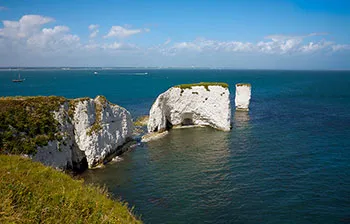
The dramatic chalk sea stacks at the southern end of Studland Bay, the eastern tip of the Jurassic Coast World Heritage Site. 1.8 miles.
Visit Old Harry Rocks
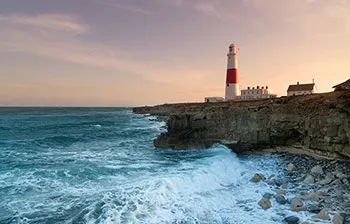
Old Harry Rocks marks the eastern end of this UNESCO World Heritage Site, 95 miles of Triassic, Jurassic and Cretaceous cliff reaching to Exmouth.
The Jurassic Coast
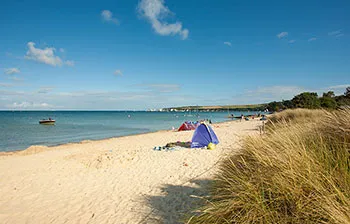
From Studland and Swanage to Kimmeridge and Dancing Ledge, the Isle of Purbeck has more variety of beach than anywhere else on the south coast.
All beaches
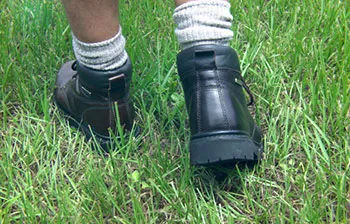
The heathland, dune and clifftop walks from Knoll Beach and Studland village are among the finest short walks in Dorset, waymarked by the National Trust.
Walking routes
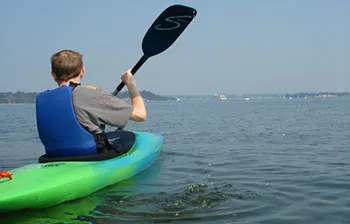
Kayak hire, paddleboarding and guided kayak tours to Old Harry Rocks are available from Studland Watersports at Knoll Beach.
Watersports
Sources used for the history, location and visitor information on this page: