Corfe Castle in Local Attractions
A thousand years of murder, siege and legend, written in stone, a dramatic ruined royal fortress standing guard over one of the prettiest villages in England.
A castle, a village & a gap in the hills
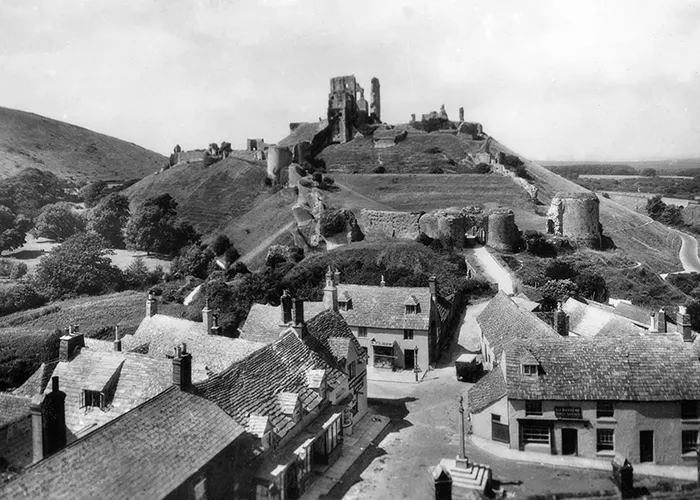
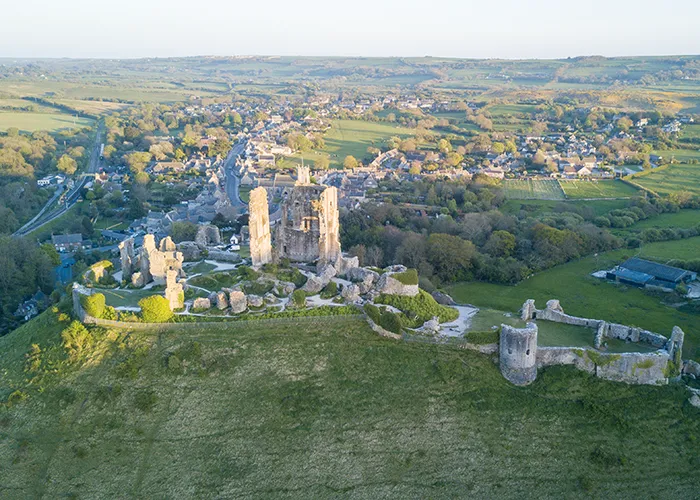
Halfway between Wareham and Swanage, the jagged ruins of Corfe Castle rise from a steep natural mound in the one great gap in the chalk ridge of the Purbeck Hills, a sight that stops travellers in their tracks.
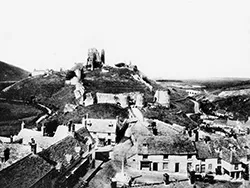
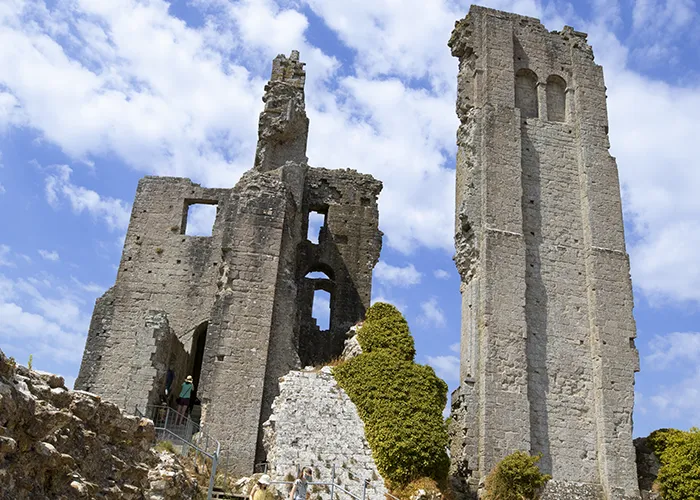
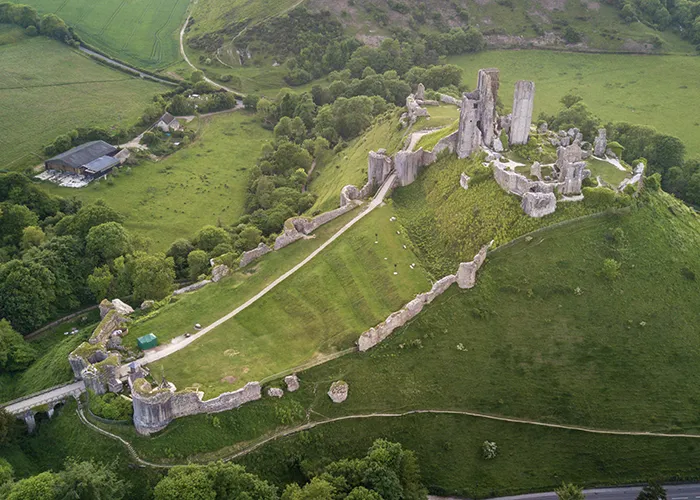
For more than a thousand years, whoever held this hill controlled the only easy route in and out of the Isle of Purbeck. That made Corfe one of the most important strongholds in southern England, a royal castle through the medieval centuries, and finally the scene of one of the most famous sieges of the English Civil War. Today its broken towers and leaning walls, dramatically blown apart in the 1640s, are among the most evocative castle ruins in the country, cared for by the National Trust.
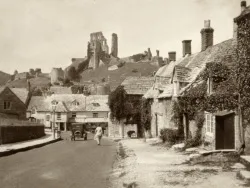
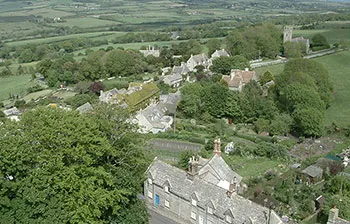
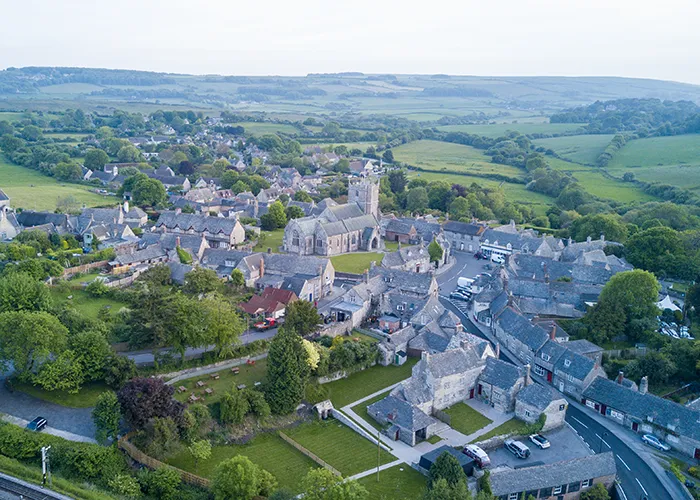
At its foot huddles the village of Corfe Castle, a tight weave of grey cottages built largely from Purbeck limestone, much of it taken from the ruined castle itself. With its market square, ancient church, tea rooms, pubs and a famous model village, and its own station on the heritage Swanage Railway, it is one of the most rewarding places to visit anywhere in Dorset.
Murder in 978
Edward the Martyr
Long before the stone castle rose, a Saxon hall stood on this hill, and it was the scene of one of early England's most notorious crimes. In March 978, the teenage King Edward rode to Corfe to visit his stepmother Ælfthryth and his young half-brother Æthelred. As he arrived, he was set upon and stabbed to death, a murder widely believed to have been arranged by Ælfthryth to put her own son on the throne.
Her plan succeeded: Æthelred became king, remembered to history as Æthelred "the Unready." Edward's hastily buried body was soon associated with miracles, and within a few years his remains were moved with great honour to Shaftesbury Abbey. He was canonised as Saint Edward the Martyr, and the village church is dedicated to him to this day.
It was a dark and dramatic beginning for a place whose later history would be no less turbulent, and the murder still lends Corfe an air of legend.
A royal stronghold
Kings, keep & crown jewels
The stone castle we see today is Norman in origin. After the Conquest of 1066, William the Conqueror raised the first great fortifications here to secure his hold over the defeated English; the towering stone keep that crowns the hill was built around 1100 in the reign of his son, Henry I. For most of the medieval period Corfe was a royal castle, one of the most formidable in the land, and it played its part in the civil war between King Stephen and the Empress Matilda, whose siege earthworks can still be traced nearby.
King John was especially fond of Corfe. He strengthened it, used it as one of his favourite residences and hunting bases, kept part of his treasure and crown jewels here, and also used it as a grim royal prison. Later, the deposed King Edward II was held captive at Corfe in 1326 before his removal to Berkeley Castle. In 1572 Queen Elizabeth I sold the castle out of royal hands to her Lord Chancellor, Sir Christopher Hatton, who fortified it further against the threat of the Spanish Armada.
By the 17th century, Corfe had passed to a new owner whose family name would become forever bound up with the castle's dramatic end.
The English Civil War
Brave Dame Mary & the great siege
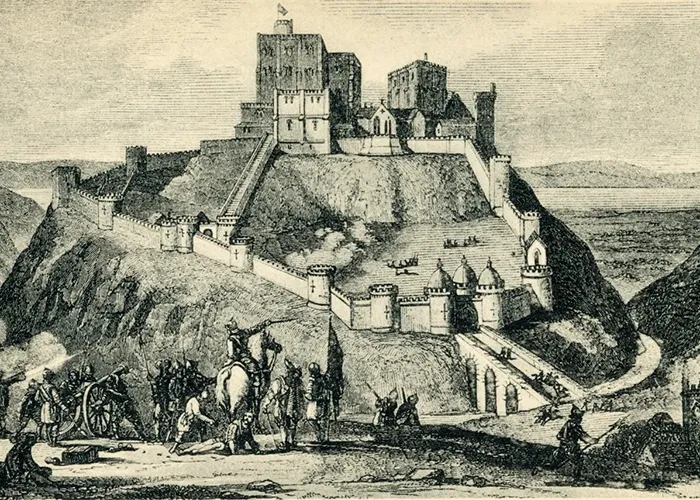
In 1635 the castle was bought by Sir John Bankes, Lord Chief Justice to Charles I. When civil war broke out, Corfe became an isolated Royalist outpost in a county that had largely fallen to Parliament. With Sir John away with the King, the defence fell to his wife, Mary, Lady Bankes, "Brave Dame Mary." In 1643 she and a tiny garrison famously held the castle through a six-week Parliamentary siege, at one point reportedly hurling stones and hot embers down from the battlements, until a Royalist force relieved them.
Sir John died in 1644, but Mary defended Corfe again in a second siege in the winter of 1645–46. This time the castle fell not to force but to treachery: one of her own officers, Colonel Pitman, smuggled in enemy soldiers disguised as reinforcements, and the garrison was overwhelmed from within. Lady Bankes and her people were allowed to leave with their lives, and, in a famous gesture of respect for her courage, she was permitted to keep the castle keys.
Parliament, determined the fortress should never be used again, voted to "slight" it. Engineers packed the towers and walls with gunpowder and blew them apart, leaving the great fragments tilting at impossible angles that you still see today.
At the castle's foot
The village of Corfe Castle
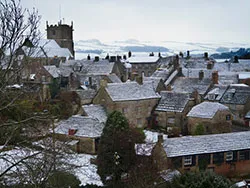
The village that shares the castle's name is a delight in its own right. Built of grey Purbeck stone, a great deal of it salvaged from the ruined castle after the slighting, its cottages, inns and shops cluster around a small market square beneath the castle gate. You can browse artisan shops and galleries, take a Dorset cream tea in one of the tea rooms, or call in at historic pubs such as the Greyhound and the Bankes Arms.
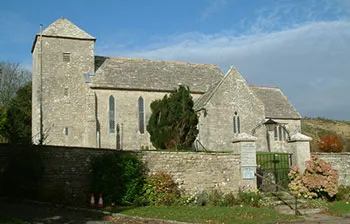
The parish church of St Edward, King and Martyr, dedicated to the murdered Saxon king, stands at the heart of the village; though medieval in origin, it was largely rebuilt in the Victorian era. Nearby you can visit the smallest town hall in England, now a free village museum, and the wonderful Corfe Castle Model Village, a 1:20 scale replica showing the village and castle exactly as they looked in 1646, just before their destruction, set in pretty gardens.
Corfe's storybook looks have made it famous beyond Dorset. It is widely believed to have inspired the castle and "Kirrin" setting in Enid Blyton's Famous Five books, and it has appeared on screen many times, from a 1950s Famous Five adaptation to Disney's Bedknobs and Broomsticks.
Exploring & arriving
Ridge walks & the steam railway
Corfe is a wonderful base for walking. The chalk ridge that the castle guards offers superb routes in both directions, east towards Ballard Down, Old Harry Rocks and Swanage, and west towards the Lulworth ranges, with the climbs rewarded by some of the finest views in Purbeck, taking in the castle, Poole Harbour and the sweep of the hills. Footpaths from the village also lead out over Corfe Common, a flower-rich expanse of unenclosed common land.
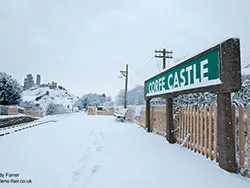
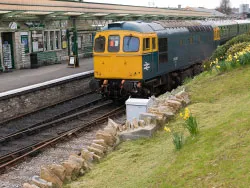
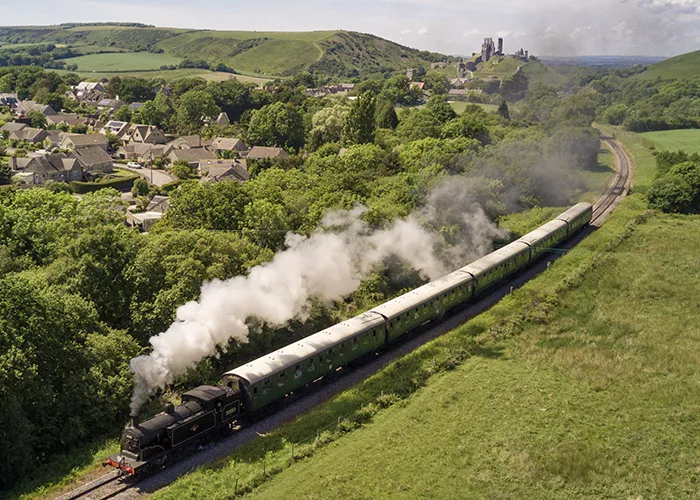
One of the most magical ways to arrive is by steam. The heritage Swanage Railway runs restored trains through the Purbeck countryside between Swanage, Corfe Castle and Norden, where there's a park-and-ride, a nostalgic and traffic-free approach with the ruins rising ahead of you. The line itself was lovingly rebuilt by volunteers after the original branch closed.
The castle and much of the surrounding estate are cared for by the National Trust. The Bankes family held Corfe for over 300 years; in 1982 Ralph Bankes bequeathed both the castle and the family's great house at Kingston Lacy to the Trust in one of its largest-ever gifts. The castle is open to visitors year-round (free to National Trust members), with a visitor centre, shop and tea room in the village.
Views of the castle
Where's the best view of the castle?
For the picture-postcard shot, climb West Hill or the ridge path from the village, the ruins seem to float above the rooftops. From the Swanage Railway, the view as the train curves towards Corfe is hard to beat.
Visiting Corfe Castle
- Location
- In the gap of the Purbeck Hills, midway between Wareham & Swanage, Dorset
- By road
- On the A351 Wareham–Swanage road; from Poole via Wareham
- By rail
- Heritage Swanage Railway from Swanage & Norden; nearest main-line stations Wareham & Poole
- Parking
- National Trust car park & village car park; or Norden Park & Ride
- The castle
- National Trust; open year-round, free to NT members; visitor centre, shop & tea room
- Don't miss
- The keep, St Edward's church, the smallest town hall in England, the Model Village
Tips before you go
- Arrive early or out of season, Corfe is one of Purbeck's busiest spots, and the narrow streets and car parks fill fast on fine days
- Make the journey part of the day: the steam train or the Norden park-and-ride avoids the village parking crush entirely
- The castle ruins involve steep, uneven ground and exposed drops, wear sturdy shoes and take care with children near the broken walls
- Check National Trust opening times and event days in advance, especially in winter, when hours are shorter
- For the classic view of the castle floating above the village, walk up West Hill or onto the ridge, bring a camera
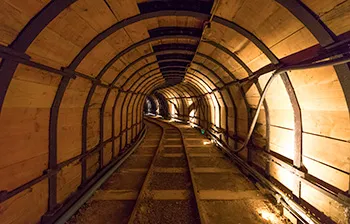
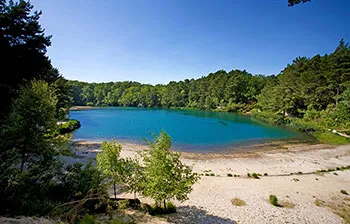
- Combine Corfe with a nearby attraction like Blue Pool, the Mining Museum or a ridge walk for a full and varied day
References & further reading
Sources used for the history, heritage and visitor information added to this page:
- National Trust, The history of Corfe Castle (Saxon hall, 978 murder, Norman building, sieges, 1982 bequest)
- History Hit, Corfe Castle: history and facts (Edward the Martyr, the keep, King John, Hatton & Bankes)
- Wikipedia, Corfe Castle (construction dates, royal use, Edward II, slighting)
- Wikipedia, Mary Bankes ("Brave Dame Mary") (the 1643 & 1645–46 sieges, betrayal, the keys)
- Corfe Castle village website, History of Corfe (Alfred, Elfrida, the keep, Colonel Pitman, the slighting)
- Corfe Castle village website, The Village (St Edward's church, Model Village, town hall museum, Blyton)
- Castles, Forts and Battles, Corfe Castle (Norman construction c.1090, Stephen & Matilda, Edward II)
- Wikipedia, Kingston Lacy & the Bankes family (Ralph Bankes, the new family seat, 1982 National Trust gift)