Wareham Town Museum
In the Town Hall, telling Wareham's story from its Saxon walls and Roman past, with a display on T. E. Lawrence, buried nearby at Moreton. Free entry.

Jurassic sea monsters, the story of Purbeck stone, a Tudor merchant's house, the cottage of Lawrence of Arabia and the world's finest tank collection, Purbeck and its neighbours are packed with small, characterful museums.
For such a small area, the Isle of Purbeck and its near neighbours are remarkably rich in places to explore the past, from 150-million-year-old fossils to the industries, wars and everyday lives that shaped these towns and villages.
Many of these museums are small, independent and run by volunteers, with free or low-cost entry and a real depth of local knowledge behind the displays. Together they tell the story of this stretch of the Dorset coast: the quarrymen who cut Purbeck stone and dug the ball clay, the fossil hunters of the Jurassic Coast, the railway that brought Victorian visitors, and the soldiers, sailors and writers who passed through.
Below is a guide to the principal museums in and around Purbeck. We've deliberately left out admission prices and opening times, these change with the seasons and many sites depend on volunteer availability, so please follow the official links to each museum for the most up-to-date details before you set out.
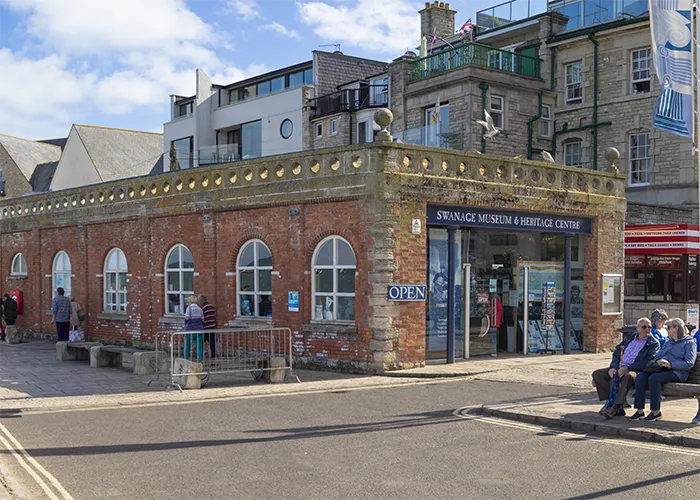
The natural place to start is right on the Swanage seafront, at The Square, on the site of the old stone yard known as "the bankers," where blocks of Purbeck stone were once stacked and loaded onto boats. The museum and heritage centre tell the story of the town and the wider Isle of Purbeck across the ages.
Displays range from the area's dramatic Jurassic geology and fossils, through the medieval and smuggling years, to the great Victorian transformation of Swanage by the contractors John Mowlem and George Burt, the men who shipped London's stone here and brought pieces of the capital back, earning Swanage its nickname of "Little London by the Sea." There are photographs, models and a local archive, and the friendly volunteers are a mine of information.
It makes an excellent introduction before exploring the town, the pier and Durlston, and entry is free.
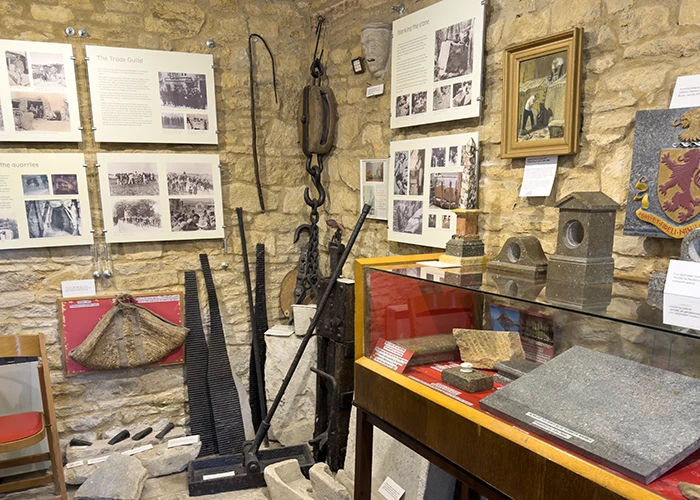
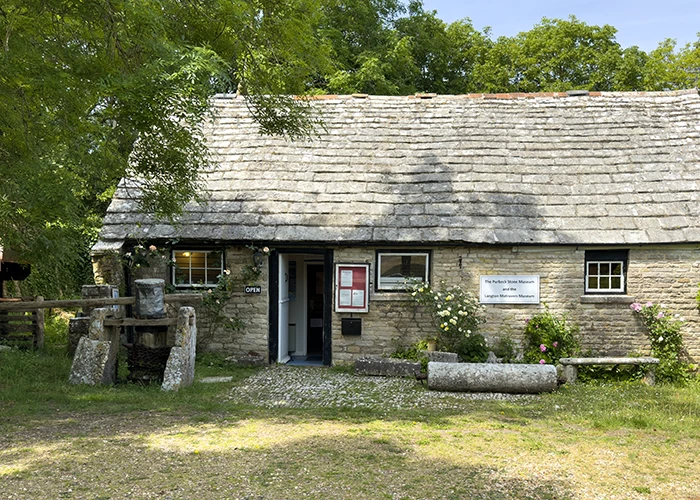
Tucked behind St George's Church in Langton Matravers, in an old coach house that once stabled the clergy's pony and trap, this tiny museum is the place to understand the stone that built Purbeck. It is run by the Langton Matravers Local History & Preservation Society and cared for by volunteers, with a collection of some 25,000 objects.
The heart of it is the story of the Purbeck quarrying industry, both Purbeck limestone and the prized "Purbeck Marble," polished and used in cathedrals and churches across England since Roman times. There's an authentic reconstruction of an underground quarry working and a rebuilt capstan, stonemasons' tools, apprentice pieces and old photographs that bring the quarrymen's world to life.
Less expected, and quietly remarkable, is the museum's display on radar: between 1940 and 1942 Langton Matravers and neighbouring Worth Matravers were home to the secret Telecommunications Research Establishment, where thousands of scientists developed the microwave radar that helped turn the course of the Second World War.
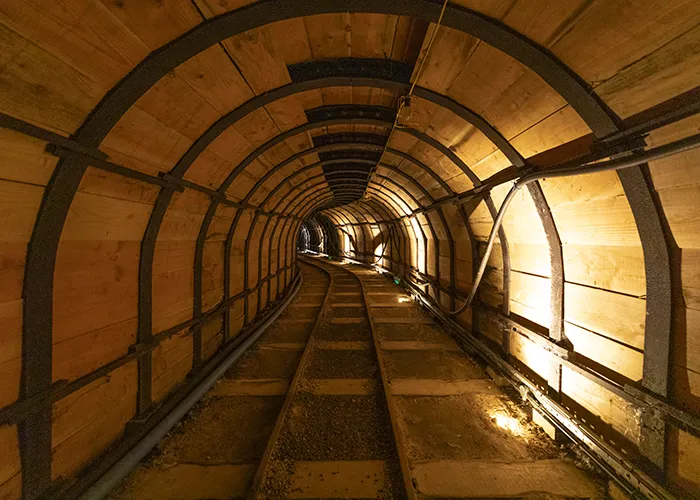
If Langton tells the story of Purbeck stone, this independent museum beside Norden station tells the story of what lay beneath it: ball clay. For two centuries this fine clay was dug from mines across the heath north of the Purbeck Hills and carried away on a web of industrial narrow-gauge tramways, eventually linking to the Swanage Railway branch line.
Run by enthusiasts under the wing of the Swanage Railway Trust, the museum lets you walk through a reconstructed section of underground clay mine and see restored narrow-gauge locomotives, wagons and equipment, including links to Secundus, the last surviving locomotive from the Pike Brothers' clay tramways. It's an evocative reminder of an industry that once shipped Purbeck clay to the Staffordshire potteries and far beyond.
It sits right at the Norden Park & Ride, so it's easy to combine with a heritage train trip to Corfe Castle and Swanage. Entry is free, with donations gratefully received.
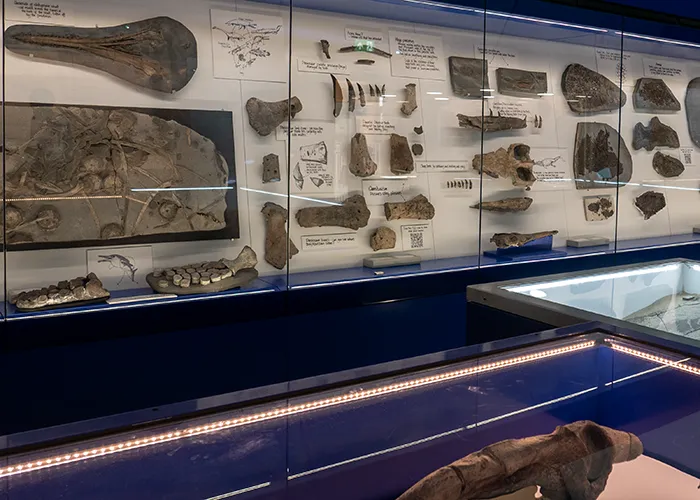
One of the finest additions to Purbeck in recent years, this modern, purpose-built museum in the village of Kimmeridge opened in 2016 to house an extraordinary collection of Late Jurassic marine fossils, all found by one man. Dr Steve Etches MBE, a local plumber, spent more than three decades collecting from the oil-rich Kimmeridge Clay along this stretch of the Jurassic Coast, amassing what is widely regarded as the finest single collection of its kind in the world.
The fossils date from around 152 to 157 million years ago, when Kimmeridge lay beneath a warm, shallow tropical sea. You'll meet ammonites, fish, and the great marine predators of the age, ichthyosaurs, pliosaurs and more, many of them new to science and of national importance. State-of-the-art CGI "Stories from Deep Time" bring the creatures swimming back to life above the cases, and you can often watch Steve cleaning and conserving his latest finds in the on-site workshop.
It pairs perfectly with a walk and a little fossil-hunting of your own down at Kimmeridge Bay.
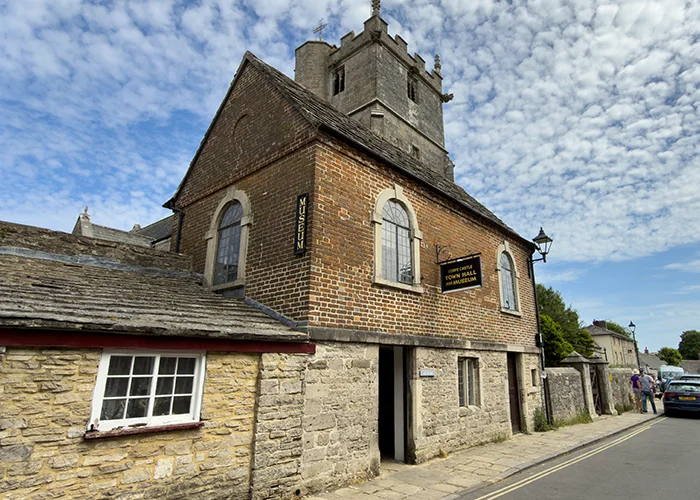
Reputedly Dorset's smallest museum, this single room sits on the ground floor of the Old Town Hall in West Street, said to be the smallest town hall in England. Built in 1774 and now Grade II* listed, the little building has in its time housed the meetings of the Mayors and Barons of Corfe, the village courts, the lock-up and the Purbeck Marblers. Entry is free and it's usually open daily.
Recently redisplayed by the Corfe Castle Town Trust's volunteers, it packs a great deal into a small space. Highlights include the remarkable Iguanodon dinosaur trackway, with a large-scale reconstruction by palaeo-artist Mark Witton, a Civil War cannonball, an original 16th-century stained-glass window from the castle, a recreation of the nearby Bucknowle Roman villa, and an audio quiz of wonderful old Dorset dialect.
It's the perfect ten-minute introduction to the village's long history before you climb up to the castle itself.
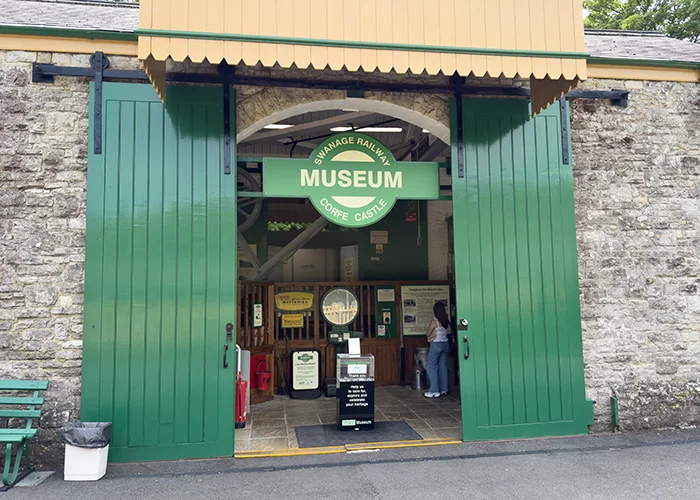
Also in Corfe Castle, but down at the railway station, is the Swanage Railway Trust's own museum, housed in the old Goods Shed beside the platform. It collects, preserves and tells the story of the Swanage branch line and the railways of southern England, and it's a treat whether or not you're riding the trains that day.
The displays gather photographs, signage, lamps, tickets, uniforms and the personal effects of the men and women who worked the line, alongside a beautifully restored vintage exhibition coach in the siding by the historic cattle dock. Audio handsets let you hear the recollections of those who knew the railway in its working days, and there's plenty for children, including a stamp-your-own-ticket activity.
Entry is free, with donations welcome; it's open on days the heritage trains are running between Norden, Corfe Castle and Swanage.
For a perfect introduction to the area, start at Swanage Museum. For something unforgettable, the Etches Collection at Kimmeridge is world-class. Travelling with children? Corfe's tiny museum, the Swanage Railway and the Tank Museum are all winners. Many are free, and most are run by volunteers who love to share what they know.
A few more, from the gateway town of Wareham out to Bovington, Dorchester, Poole and Weymouth — all within easy reach for a day out. Follow each link for current opening times and admission.
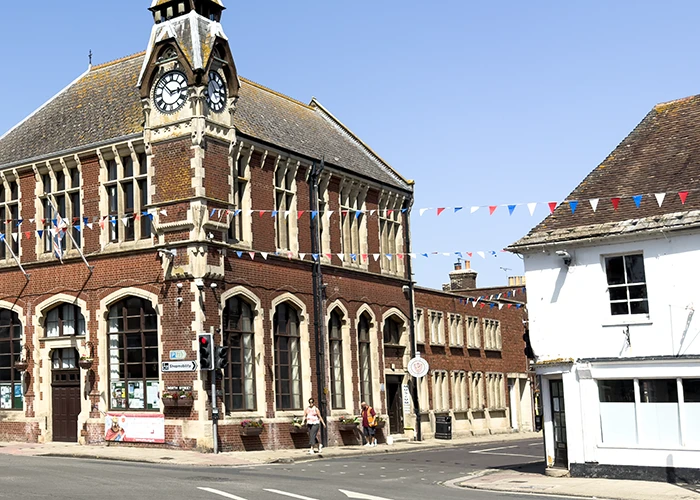
In the Town Hall, telling Wareham's story from its Saxon walls and Roman past, with a display on T. E. Lawrence, buried nearby at Moreton. Free entry.
At Bovington, the world's finest collection of armoured fighting vehicles, with hundreds of tanks and live "Tanks in Action" displays in summer. Just up the lane from Clouds Hill.,
The county's flagship museum in Dorchester, reopened in 2021 after a major redevelopment. Half a million years of Dorset, the world's largest Thomas Hardy collection, Roman mosaics and Jurassic giants.
In Dorchester's dramatic Victorian gatehouse "keep," telling the stories of the soldiers of Devon and Dorset over three centuries, with fine views from the battlements.
Near Dorchester, the story of the six farm workers transported to Australia in 1834 for forming a trade union, a landmark in the history of workers' rights. Free entry.
Formerly the Waterfront Museum; reopened in 2025 after a £10m transformation. Free, with maritime galleries, the ancient Iron Age Poole Logboat, Poole Pottery and medieval Scaplen's Court.
A Victorian sea fort (1860–72) guarding Weymouth Harbour, now an award-winning museum of coastal defence with underground tunnels, gun decks and a Cold War nuclear bunker.
One of Weymouth's best-preserved Tudor buildings (c.1600), furnished as the home of an early-17th-century merchant family and run by the Weymouth Civic Society.
Collections of Weymouth's local and social history. Currently in a town-centre pop-up while its long-time home at Brewers Quay is refurbished, check the website for the latest.
Visit each museum's own website for current opening times, admission and event details: