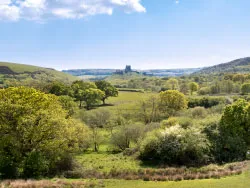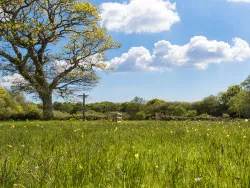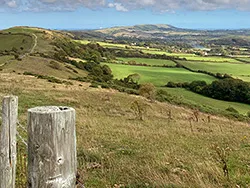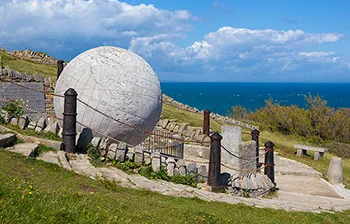
Durlston Country Park
A National Nature Reserve of clifftop downland and meadows on the southern coast, with a free visitor centre.
Explore Durlston

A beak-shaped peninsula of three landscapes in one — a stone coast of cliff-edge quarries, a chalk ridge running its spine, and rare lowland heath rolling down to Poole Harbour.
For walkers, cyclists and horse riders, few corners of England pack as much variety into so small an area as the Isle of Purbeck.
Purbeck isn't really an island at all, but a peninsula, bordered by Poole Harbour to the north, the English Channel to the south and east, and the water meadows of the River Frome inland. Roughly sixty square miles in extent, it has long had an "insular" character, cut off enough that the name "Isle" stuck. The whole peninsula lies within the Dorset National Landscape (formerly the Dorset Area of Outstanding Natural Beauty), and its southern and eastern coast forms part of the Jurassic Coast World Heritage Site.
What makes Purbeck so distinctive is its geology, which divides the land into three very different belts. A spine of Cretaceous chalk, the Purbeck Hills, runs east to west across the middle, separating the limestone country and dramatic cliffs of the south from the sandy heaths and wetlands of the north. The result is an extraordinary mosaic of habitats and scenery within a short walk or drive of one another: clifftop quarries, flower-rich downland, ancient woods, and one of the rarest heathland landscapes in Britain.
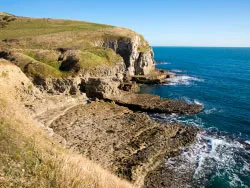
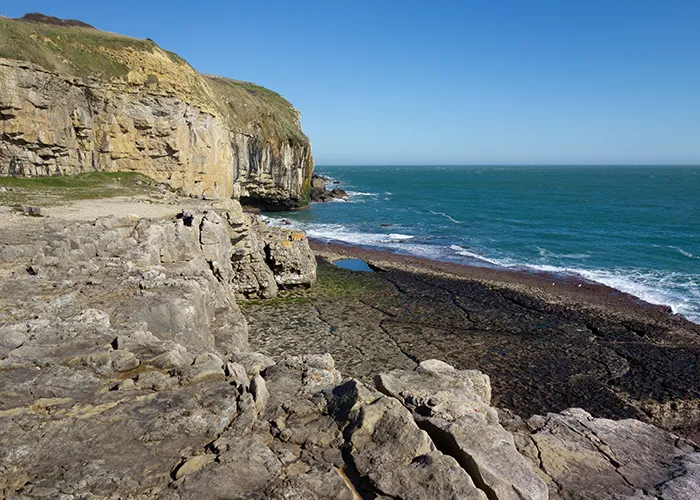
The southern edge of Purbeck is a wall of Portland and Purbeck limestone, rising in sheer cliffs above the sea from Durlston Head in the east to St Aldhelm's Head and beyond. For centuries this coast was worked for its stone, and the cliffs are pocked with the cliff-edge quarries that gave Purbeck its livelihood. The most famous can still be reached on foot: Dancing Ledge, Seacombe and Winspit, each a flat shelf or cavern cut into the rock where blocks were lowered straight onto waiting boats.
Purbeck stone built far more than local cottages. It was shipped from these ledges to London and beyond, and Purbeck and Portland stone from this coast can be found in Corfe Castle, Westminster Abbey, and countless other landmarks. Purbeck Marble which is not a true marble but a hard limestone that takes a polish and was prized by medieval cathedral builders. Quarrying continues in the inland pits around Acton and Langton Matravers to this day.
The stone villages of Worth Matravers and Langton Matravers sit just inland, linked to the coast and to Swanage by the ancient Priest's Way. The whole area is laced with footprints from a far deeper past, too: dinosaur tracks have been found preserved in the quarried beds, a reminder that this stone was laid down some 140 million years ago.
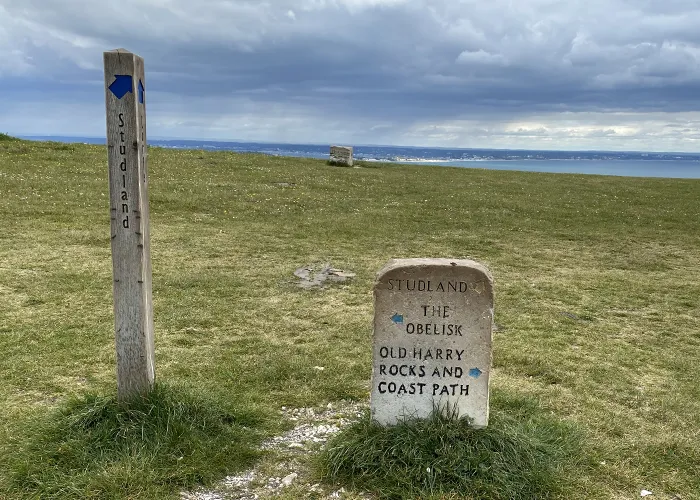
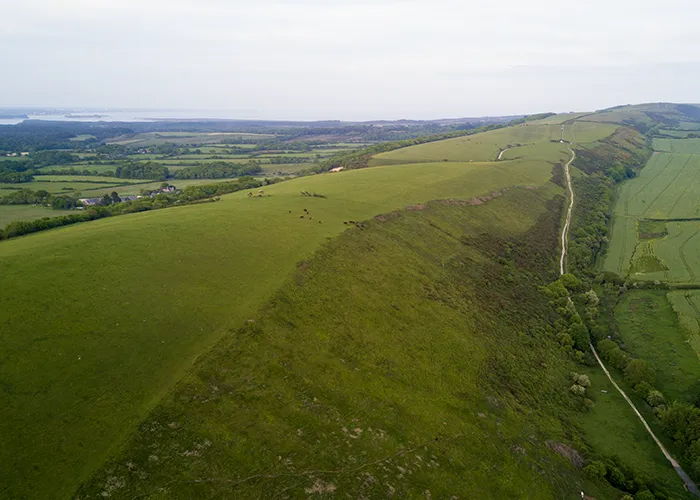
Running the length of the peninsula is the great chalk ridge of the Purbeck Hills, part of the same Cretaceous chalk formation that includes the Dorset Downs, Salisbury Plain and the Isle of Wight. It begins in the east at Ballard Down above Swanage, where it ends spectacularly in the white cliffs and sea stacks of Old Harry Rocks — and runs west through Corfe Castle towards the Lulworth ranges and the high point of the coast at the western end.
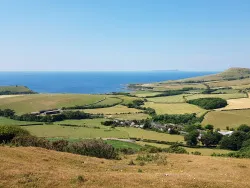
The ridge is breached only once, at Corfe, where a natural gap in the hills allowed a castle to command the only easy route between the north and south of Purbeck. Walking the crest of the ridge gives some of the finest views in southern England: across Poole Harbour and Brownsea Island to the north, over the wooded central vale, and out to the Channel in the south. On a clear day you can see from the Isle of Wight in the east to Portland in the west.
The thin soils over the chalk support flower-rich calcareous grassland, a habitat famous for its orchids, vetches and milkworts, and the butterflies and skylarks that depend on them. Corfe Common and the slopes of Ballard Down are among the best places to see this downland flora at its early-summer peak. The name "Purbeck" itself is thought to derive from Old English for a "beak-shaped ridge" frequented by birds.
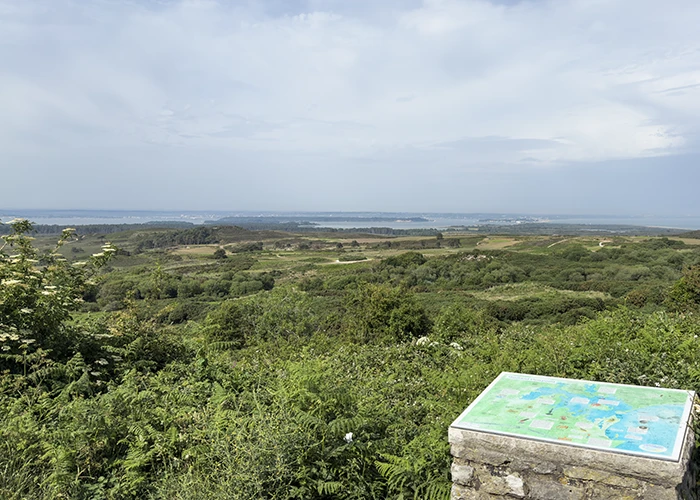
North of the ridge, the land falls away into a very different world: a low, sandy country of lowland heath, valley mires, acid grassland, woodland and saltmarsh fringing the shallow waters of Poole Harbour. This is part of the "Great Heath" immortalised by Thomas Hardy, and although Dorset's heaths once covered more than 150 square miles, today only fragments survive, making what remains here internationally important.
The Purbeck Heaths National Nature Reserve, one of the largest lowland heath reserves in the country, knits together Studland and Godlingston Heath, Hartland Moor, Stoborough Heath and Brownsea Island under the care of several partner organisations. It is one of very few places in the UK where all six native British reptiles live side by side, including the adder, Britain's only venomous snake, along with the rare sand lizard and smooth snake. The heaths also shelter heathland birds such as the Dartford warbler and nightjar, raptors, dragonflies and specialist plants.
Bordering the heath are the woods of the Rempstone estate and National Trust holdings such as Studland Wood, while the harbour's edge draws huge numbers of overwintering wildfowl and wading birds. It is a landscape best explored slowly, on the boardwalks and trails that thread through the reserve.
The Purbeck countryside is criss-crossed by an exceptional network of footpaths, bridleways and quiet lanes, making it superb territory for walkers, cyclists and horse riders alike. The South West Coast Path traces the entire southern cliff line, while inland the historic Priest's Way and the long-distance Purbeck Way link the villages, the ridge and the coast.
Highlights are easy to string together. The circular walk from Corfe Castle up onto the ridge and back is a Purbeck classic; the cliff walk from Swanage to Dancing Ledge takes in the heart of the stone coast; and the ridge walk from Swanage over Ballard Down to Old Harry and Studland is one of the most rewarding short coastal walks anywhere. Dry-stone walls of Purbeck limestone divide the fields, and waymarked heritage trails such as the Quarry to Castle route help tell the story of the landscape as you go.
Much of the finest countryside is cared for by the National Trust, the Dorset Wildlife Trust and other partners, and is open to explore year-round. Whether you want a gentle stroll, a long-distance trek or a quiet bridleway ride, Purbeck rewards every pace.
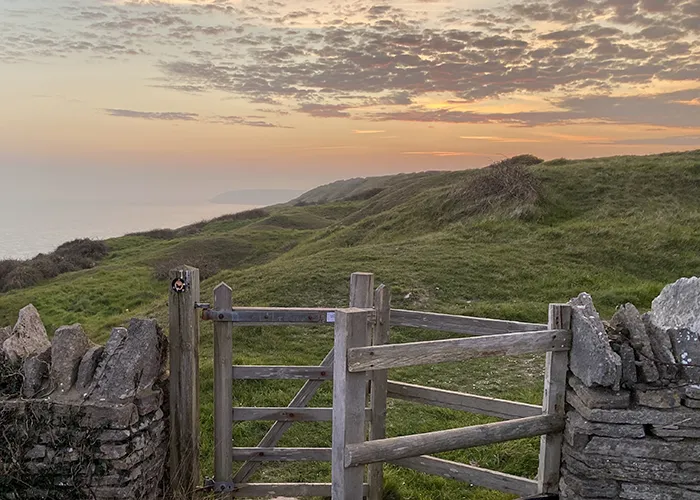
At each end of the ridge. In the east it ends in the white stacks of Old Harry Rocks; far to the west the same chalk gives way to the limestone arch of Durdle Door and the curve of Lulworth Cove.
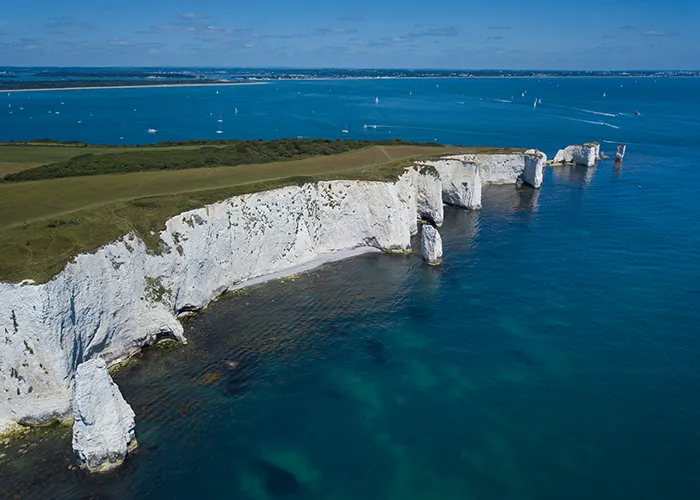
Some of the finest spots to experience each face of the Purbeck countryside.
A National Nature Reserve of clifftop downland and meadows on the southern coast, with a free visitor centre.
Explore Durlston
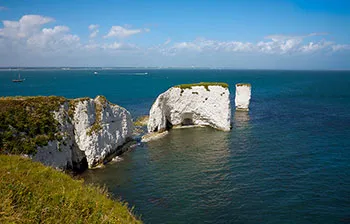
The chalk ridge's dramatic eastern end, white sea stacks at Handfast Point, reached by an easy walk from Studland.
Visit Old Harry
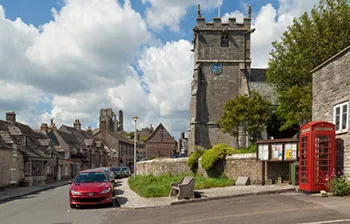
A romantic ruin guarding the only gap in the chalk ridge, above a picture-perfect stone village.
Discover Corfe
Atmospheric cliff-edge quarries on the stone coast, near the village of Worth Matravers.
Walk the stone coast
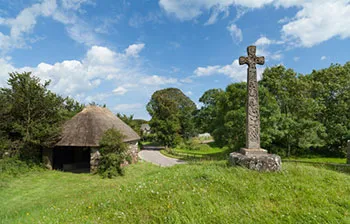
Part of the Purbeck Heaths National Nature Reserve, rare lowland heath teeming with reptiles and heathland birds.
About the heaths
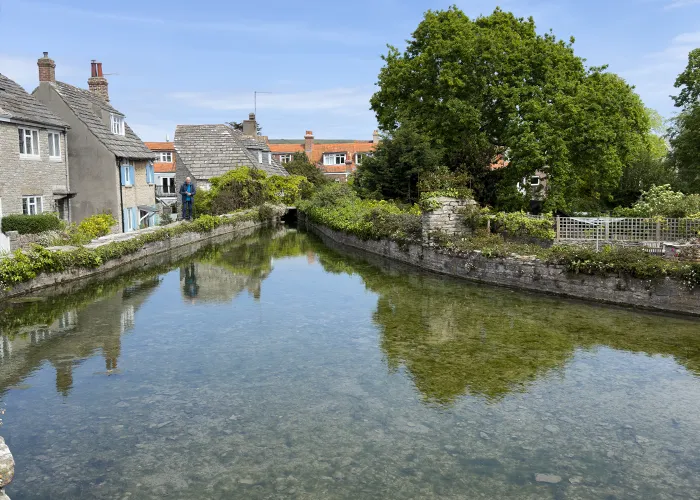
Worth Matravers, Langton Matravers, Kingston and more, grey limestone hamlets full of character.
Towns & villages